
Reducing Environmental Impact with Integrated 5MWh BESS for Farm Irrigation
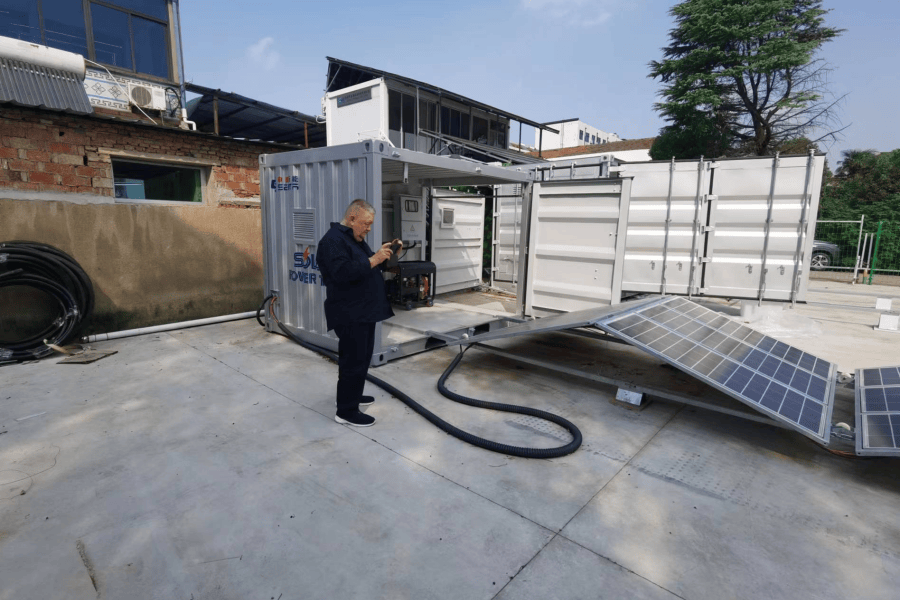
Table of Contents
- The Hidden Cost of "Green" Irrigation
- Beyond Carbon: The Full Environmental Footprint
- The All-in-One 5MWh Solution: More Than Just a Battery
- Case in Point: A California Almond Orchard's Transformation
- Making It Work: The Tech Behind the Impact
- The Future Field: What's Next for Smart Farm Storage
The Hidden Cost of "Green" Irrigation
Honestly, when we talk about modernizing agriculture, the conversation usually jumps straight to solar panels for the pump house. It makes sense on paper. But having been on dozens of farms across California's Central Valley and the plains of Spain, I've seen a recurring, frustrating pattern. A farm invests in a solar array to power its irrigation, aiming for energy independence and a smaller carbon footprint. But by 2 PM, when the sun is fiercest and the panels are cranking, the water demand might have peaked hours ago. Conversely, at 6 AM, when you need to start the pumps for the day, there's no sun. The result? They end up selling cheap excess solar back to the grid (often at a loss) and buying expensive, grid-power back later - frequently from fossil-fuel peaker plants. That "green" system is still leaning on the brown grid, and its environmental benefit is leaking away.
This mismatch is the core problem. According to the National Renewable Energy Laboratory (NREL), temporal arbitrage - storing energy when it's abundant and using it when it's needed - is the single biggest key to unlocking renewable potential in agriculture. Without storage, you're only solving half the equation.

Beyond Carbon: The Full Environmental Footprint
Let's agitate that problem a bit. The environmental impact of irrigation isn't just about the source of the electrons. It's about water itself. Inefficient, on-demand grid power means farmers might schedule irrigation based on energy cost, not optimal plant need. It's about land use. A piecemeal storage solution - scattered inverters, separate battery containers, complex wiring - eats up arable land. And it's about resilience. I've seen a whole season's precision irrigation plan get wiped out by a grid outage during a critical growth window, forcing a fallback to diesel gensets. Suddenly, that carbon footprint spikes.
The real goal isn't just solar-powered irrigation; it's optimally timed, resilient, and truly clean irrigation. Every kWh shifted from a dirty peak period to a clean solar period, and every drop of water applied with perfect timing, compounds the positive impact.
The All-in-One 5MWh Solution: More Than Just a Battery
This is where the concept of an all-in-one, integrated 5MWh utility-scale BESS becomes a game-changer. We're not just talking about dropping a battery bank in a field. Think of it as a self-contained energy plant, purpose-built for the agricultural environment. At Highjoule, when we designed our AgriCore 5000 system, we started with the environmental impact front and center.
The "all-in-one" design is crucial. By integrating the battery racks, thermal management, power conversion system (PCS), and medium-voltage transformer into a single, compact, UL 9540/ IEC 62933-certified enclosure, we slash the onsite footprint by up to 40% compared to modular setups. That's more land for crops, not concrete pads. More importantly, this integrated approach allows for a hyper-efficient thermal management system. Batteries perform best and last longest within a tight temperature range. Our system uses a closed-loop liquid cooling that maintains optimal temperature with minimal energy waste - honestly, it's something I wish more vendors focused on. This efficiency directly translates to a lower Levelized Cost of Storage (LCOS), making the whole project more viable and sustainable long-term.
Case in Point: A California Almond Orchard's Transformation
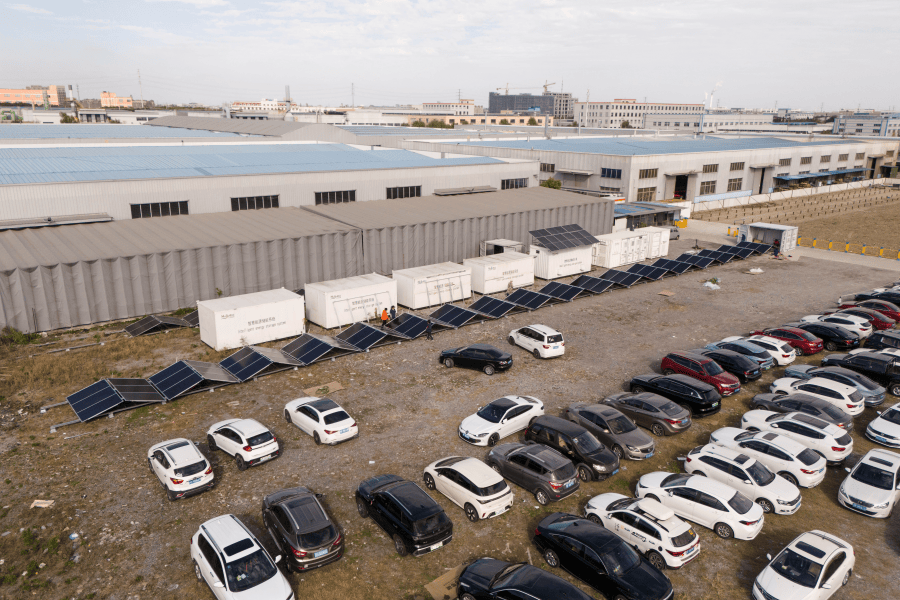
Let me give you a real example from last year. A 1,200-acre almond farm in Fresno County, California, was running a 1.2 MW solar array but was grid-tied with no storage. They faced massive demand charges and had to run pumps at night using grid mix. Their challenge was threefold: reduce operational costs, ensure water delivery during Public Safety Power Shutoffs (fire-prevention blackouts), and improve their sustainability marketing to buyers.
We deployed one 5MWh AgriCore 5000 system. The integration was smooth - it's essentially a "plug-and-play" container from a construction perspective, which minimized site disruption. Now, here's the environmental impact breakdown they're seeing:
- Carbon Reduction: By shifting over 85% of their irrigation load to their own stored solar, they've cut grid-related emissions by an estimated 740 metric tons of CO2e annually.
- Water Efficiency: With reliable, scheduled solar power, they've optimized their irrigation schedule to early morning, reducing evaporation loss. They estimate a 5-7% reduction in water use for the same yield.
- Eliminated Diesel Backup: The system provides 4+ hours of full backup power, removing the need to even consider firing up an old diesel generator during outages.
The financials worked, sure, but the farm manager told me the biggest win was the peace of mind and the story they can now tell their overseas customers about verifiable, clean cultivation.
Making It Work: The Tech Behind the Impact
For the non-engineers, let's demystify two key terms. First, C-rate. Simply put, it's the speed at which you charge or discharge the battery. A 5MWh system with a 1C rating can deliver 5MW of power for one hour. For irrigation, you often don't need a super-high C-rate; you need sustained, steady power over several hours (a lower C-rate). This allows us to use battery chemistry (like LFP) that's safer, has a longer lifespan, and uses more abundant materials - another environmental plus.
Second, Thermal Management. I've seen firsthand on site how passive air-cooled systems in hot climates like Arizona or Texas can struggle. Batteries heat up, their lifespan degrades, and you lose efficiency. Our active liquid cooling is like a precision HVAC system for the batteries. It keeps them in the "Goldilocks zone," ensuring you get the full 6,000+ cycle life promised, which again, reduces long-term waste and resource need. This attention to detail is what separates a commodity battery from a true, reliable agricultural asset built to UL and IEC standards for safety and performance.
The Future Field: What's Next for Smart Farm Storage
The 5MWh all-in-one unit is a perfect fit for mid to large-scale irrigated farms. But the story doesn't end at carbon-free pumping. The next step is integrating this energy hub with soil moisture sensors, weather forecasts, and irrigation control systems. The BESS becomes the brain's reliable power supply, enabling not just solar shifting, but true demand response - slightly adjusting pump schedules to support the local grid during stress events, creating another revenue stream.
The question for farm operators and agribusinesses isn't just "Can storage save me money?" It's becoming "What's the total environmental and operational cost of NOT having a resilient, optimized energy system?" The data from the field is clear: an integrated approach is where the real, lasting impact is made.
What's the one operational constraint on your farm that smarter energy management could solve?
Tags: BESS LCOE UL Standards Agricultural Irrigation Renewable Energy IEEE Standards Utility-Scale Energy Storage Environmental Impact
Author
James Zhang
20+ years agricultural energy storage engineer / Highjoule CTO