
Environmental Impact of All-in-one Integrated Hybrid Solar-Diesel Systems for Mining Operations
Beyond the Obvious: The Real Environmental Math of Hybrid Power for Heavy Industry
Honestly, when we talk about "environmental impact" in heavy industry, especially in remote operations like mining, the conversation often starts and ends with carbon emissions. And don't get me wrong, that's crucial. But after two decades on sites from the Australian outback to the Chilean highlands, I've learned the true impact - the one that moves the needle for a project's viability and its legacy - is a more complex equation. It's about fuel, yes, but also about waste heat, maintenance cycles, water usage for cooling, and the sheer logistical footprint of keeping diesel gensets running 24/7. Today, I want to pull up a chair and chat about how the modern, all-in-one integrated hybrid solar-diesel system is rewriting this equation, not just on paper, but in the dust and heat of real operations.
Quick Navigation
- The Hidden Cost of "Business as Usual"
- Beyond CO2: The Ripple Effect of Reliance
- The Integrated System Difference: It's in the Design
- A Glimpse from the Field: Stability in the Desert
- Making It Real: What Your Hybrid System Must Deliver
The Hidden Cost of "Business as Usual"
Let's be direct. The traditional model for remote mining ops is a diesel fortress. You have your primary gensets, your backups, and a constant, expensive, noisy convoy of fuel trucks. The problem everyone sees is the diesel bill and the emissions report. The aggravation - the part that keeps site managers up at night - is the volatility. According to the International Energy Agency (IEA), diesel generation can be 3 to 4 times more expensive per kWh than grid power in some regions, and that's before you factor in price spikes and supply chain risks. The environmental impact isn't just the CO2 from combustion; it's the risk of spills during transport and refueling, the NOx and particulate matter affecting local air quality, and the thermal pollution from inefficient, constantly-running engines.
Beyond CO2: The Ripple Effect of Reliance
I've seen this firsthand. A genset running at low load (which they often do when demand fluctuates) is horribly inefficient. It gums up faster, requires more frequent oil changes (and disposal of that waste oil), and its lifespan plummets. This means more spare parts shipped in, more maintenance downtime, and more embodied carbon in replaced equipment. The environmental impact spirals. Adding solar panels alone is a good first step, but without a sophisticated brain and a robust battery buffer - the essence of an all-in-one integrated system - you're just adding a variable that the diesel gensets struggle to follow, often leading to more inefficiency, not less.

The Integrated System Difference: It's in the Design
So, what changes with a properly engineered, all-in-one hybrid solution? The magic word is control. It's not just solar + diesel + battery in a box. It's a unified system where an advanced energy management system (EMS) acts as the conductor. Here's how it flips the script on environmental impact:
- Fuel & Emissions Slashing: The BESS (Battery Energy Storage System) smooths out solar intermittency and handles load spikes. This allows diesel gensets to be switched off for long periods or operated only at their optimal, high-efficiency load points. I've seen sites achieve 40-70% diesel fuel savings. That's a direct, massive cut in CO2, particulate, and NOx.
- Waste & Longevity: Fewer running hours mean less engine wear, fewer oil changes, and fewer consumables. You're reducing the environmental burden of manufacturing and disposing of these materials. The system's thermal management is also key - a liquid-cooled BESS, for instance, maintains optimal temperature with far less energy for cooling than air-cooled units, which is critical in hot climates like Mauritania's.
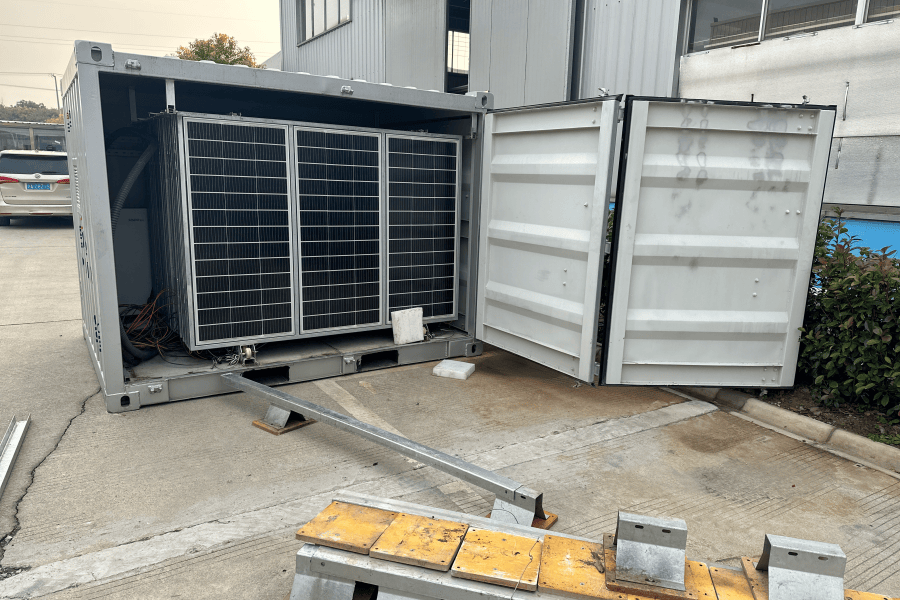
- Land & Logistics: An integrated, containerized solution from a provider like us at Highjoule minimizes site footprint. Pre-assembled, pre-tested units reduce on-site construction impact and the associated transport of multiple discrete components. Fewer fuel truck trips mean less road wear, dust, and accident risk.
A Glimpse from the Field: Stability in the Desert
Let me share a relevant experience, though the location differs. We deployed a system for a critical process load at a remote industrial facility in Nevada, USA. The challenge was similar: reduce diesel dependency, ensure 100% uptime for sensitive equipment, and do it within a tight space. The integrated system combined a 1MW solar canopy, a 2MWh UL 9540-certified BESS, and the existing diesel backup. The EMS was programmed for peak shaving and genset optimization.
The result? Diesel runtime dropped by over 60% in the first year. But more importantly, the power quality for the sensitive machinery improved dramatically because the BESS provided instantaneous voltage and frequency regulation - something the slow-responding gensets couldn't do. The reduced maintenance cycle on the gensets alone paid for the BESS's annual service contract. This is the kind of holistic environmental and operational win we design for.
Making It Real: What Your Hybrid System Must Deliver
If you're evaluating such a system, especially for a demanding environment, here's my blunt advice from the field. Look beyond the brochure's efficiency percentage:
- Safety as a Non-Negotiable: The BESS must be built to the highest local standards - UL 9540 in North America, IEC 62619 in Europe and many other regions. Ask about the cell-level fusing, the gas detection and venting systems, and the quality of the thermal management. A system that catches fire has a catastrophic environmental impact, full stop.
- True Integration, Not Just Coupling: The EMS must have proven, seamless logic for genset dispatch. It should be able to handle black starts, sudden cloud cover, and load surges without a hiccup. At Highjoule, we spend months simulating a site's specific load profiles and weather patterns before finalizing the control algorithms.
- Understand the LCOE (Levelized Cost of Energy): This is your true metric. A well-integrated hybrid system will have a lower LCOE than diesel-only over its lifetime, factoring in all capital, fuel, maintenance, and even carbon cost savings. That's the financial proof that aligns with the environmental benefit.
The bottom line? The environmental impact of an all-in-one hybrid system for mining isn't just a "green" story. It's an engineering story about efficiency, resilience, and smart resource use. It's about building operations that are not only less costly but also more sustainable and future-proof. The technology is here, it's proven, and it's ready to work under the toughest conditions. The real question is, what's the next step for your operation?
Tags: UL Standard BESS Mining Operations Environmental Impact Hybrid Power Systems Solar-Diesel Integration
Author
James Zhang
20+ years agricultural energy storage engineer / Highjoule CTO