
Real-world Case Study: LFP Off-grid Solar Generator for Telecom Base Stations
The Silent Revolution: How LFP Batteries Are Powering the Next Generation of Off-Grid Telecom
Hey there. Let's be honest for a minute. When we talk about the energy transition, the spotlight's usually on the big stuff: massive grid-scale storage, utility solar farms, you name it. But over my 20+ years of hauling batteries and inverters to some pretty remote corners of the world, I've learned that some of the most critical and challenging work happens far from the spotlight. I'm talking about off-grid telecom base stations. These unassuming towers are the backbone of connectivity in rural areas, and for years, keeping them powered has been a constant, expensive headache. Today, I want to share a story that's changing that narrative, centered on a technology that's finally living up to its promise: the Lithium Iron Phosphate (LFP) off-grid solar generator.
Table of Contents
- The Silent (and Costly) Problem
- Why the Old Solutions Fall Short
- The LFP Game-Changer: More Than Just Chemistry
- A Case in Point: Mountain Site, California
- Beyond the Battery: The System That Makes It Work
- What This Means for Your Operations
The Silent (and Costly) Problem
Picture this. A telecom tower on a remote hilltop in Northern California or a windswept plain in Scotland. For decades, the default power setup was a diesel generator, often paired with a bank of lead-acid batteries for basic backup. The problems? I've seen them firsthand on site. The fuel logistics are a nightmare and incredibly expensive - think helicopter drops in some cases. The generators are noisy, require frequent maintenance (which means sending a technician on a long trip), and frankly, they're a PR nightmare in an era focused on carbon footprints.
The lead-acid batteries weren't much better. In cold climates, their capacity plummets. They need regular equalization charges, have a short lifespan (maybe 3-5 years if you're lucky), and their performance degrades steadily. The result was a system with high operational expenditure (OpEx), unpredictable reliability, and a total cost of ownership that made finance teams wince. According to the International Energy Agency (IEA), telecom networks account for a significant portion of global diesel consumption for off-grid power - a number that's increasingly hard to justify.
Why the Old Solutions Fall Short
The core issue here isn't just cost; it's system intelligence and resilience. A diesel-gen set is a blunt instrument. It runs or it doesn't. Traditional battery banks are passive components. They can't communicate their true health, can't adapt to changing weather patterns (like a week of cloudy days), and they certainly can't be managed remotely with any real precision. This lack of visibility and control is what kills operational budgets. You're either over-maintaining or risking a catastrophic site outage - the ultimate sin in telecom.
The LFP Game-Changer: More Than Just Chemistry
Enter LFP chemistry. Now, you've probably heard the buzzwords: safer, longer life, more stable. And they're true. But from an engineer's boots-on-the-ground perspective, the real magic isn't just in the cell, it's in what the cell's inherent stability enables for the entire system.
LFP's thermal and chemical stability means we can design systems with simpler, less aggressive cooling. This directly translates to higher efficiency - less energy wasted on running fans and pumps. More importantly, that safety profile is a cornerstone for meeting stringent local codes like UL 9540 for energy storage systems and UL 1973 for batteries. Getting these certifications isn't just a checkbox; it's what allows us to deploy these systems in sensitive or remote locations without triggering a mountain of permitting headaches. It gives fire marshals and site owners peace of mind.

A Case in Point: Mountain Site, California
Let me give you a concrete example from a project we completed last year. A regional telecom provider in California had a site in the Sierra Nevada foothills. Grid connection was prohibitively expensive. They were running on dual diesel generators with lead-acid backup. Fuel theft was an issue, maintenance visits were weekly, and the carbon emissions were out of sync with the company's sustainability goals.
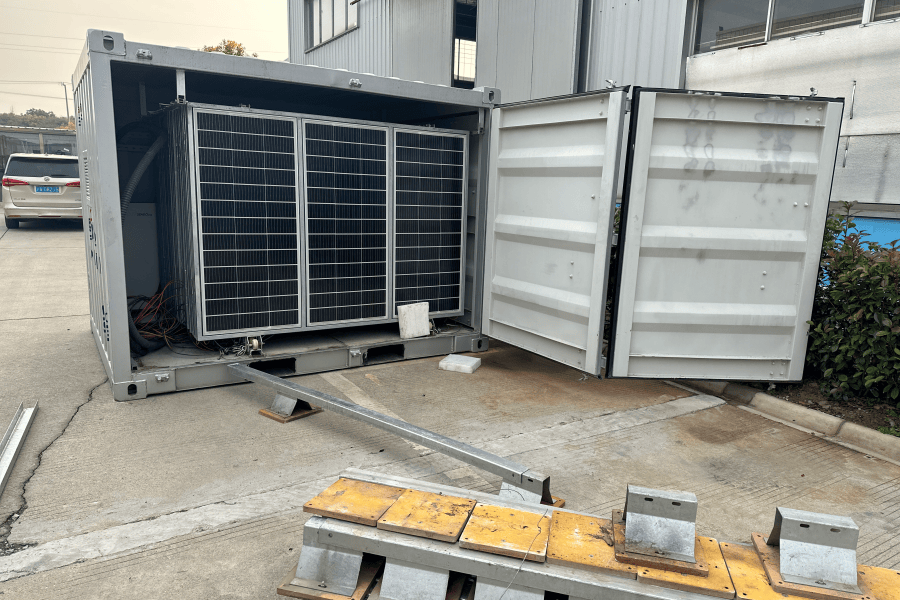
We deployed an integrated off-grid solar generator system built around a 120 kWh LFP battery. The solar array was sized to handle about 80% of the load on an average day. The key was the system's brain - an advanced controller that managed power flow between solar, battery, and a single backup generator (we could downsize it).
The LFP battery's high C-rate (basically, its ability to charge and discharge quickly) meant it could soak up solar power rapidly during peak sun and handle high load spikes without breaking a sweat. The thermal management was so efficient it used less than 2% of the system's energy, even in summer. But the real win was in the Levelized Cost of Energy (LCOE). By drastically cutting fuel consumption and generator run-hours, and extending the battery life to a projected 12+ years (versus 4 for the old lead-acid), the total cost over a decade plummeted. The site now runs 100% on solar + battery for over 300 days a year. The generator is just for the deepest winter stretches.
Beyond the Battery: The System That Makes It Work
An LFP cell alone isn't a solution. It's the heart of a system. At Highjoule, when we build these off-grid power plants, we're thinking about the whole organism:
- Intelligent Control: The system must predict weather, manage state-of-charge to prolong life, and autonomously decide when to call on the generator. It's about minimizing generator starts, not just avoiding them.
- Remote O&M: This is non-negotiable. We need full visibility into every cell voltage, temperature, and power flow. Most issues can be diagnosed and often resolved remotely, turning a potential 4-hour truck roll into a 10-minute software adjustment.
- Modular & Future-Proof Design: What if the site's data traffic grows? Our containerized and skid-mounted solutions, designed to IEC 61427 standards, allow for capacity expansion by simply adding more battery or solar modules. You're not locked in.

What This Means for Your Operations
So, if you're managing a portfolio of off-grid or weak-grid sites, the shift to LFP-based solar hybrids isn't just an "eco-upgrade." It's a fundamental operational and financial upgrade. You're swapping a high, variable OpEx (fuel, maintenance) for a predictable, lower CapEx with near-zero marginal energy cost. You're replacing reactive, manual maintenance with proactive, remote management. And you're future-proofing your assets against both fuel price volatility and evolving environmental regulations.
The technology has matured. The standards (UL, IEC, IEEE) are in place to ensure safety. The economics now pencil out, clearly. The question is no longer "if" but "how and when" to start modernizing your most critical - and most vulnerable - power assets. What's the one remote site in your network that keeps you up at night? Maybe it's time we talked about putting that worry to bed for good.
Tags: UL Standard BESS LCOE Off-grid Power Renewable Energy LFP Battery Telecom Infrastructure
Author
James Zhang
20+ years agricultural energy storage engineer / Highjoule CTO