
20ft High Cube 5MWh BESS for Utility-Scale & Rural Electrification: A Practical Comparison
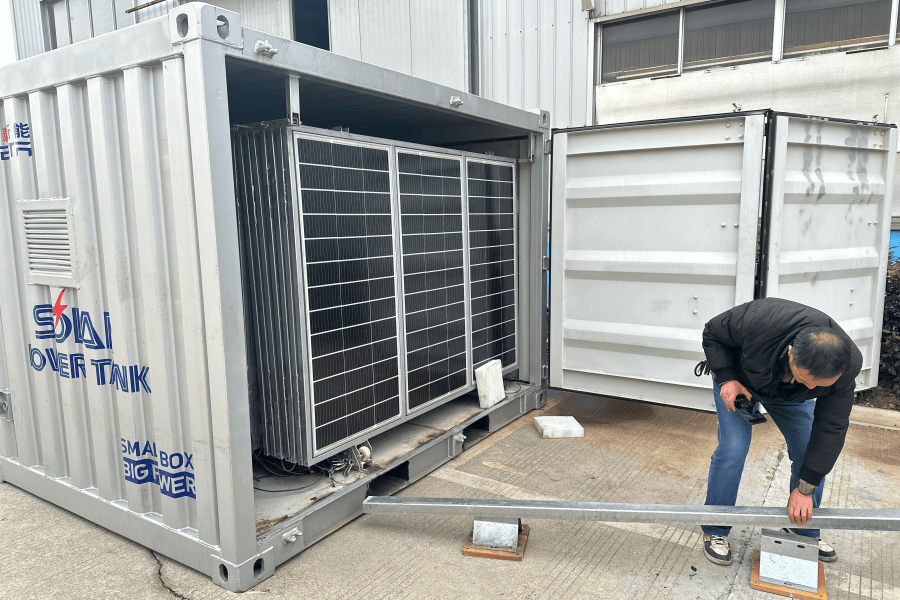
Scaling Up or Reaching Out: What a 5MWh Containerized BESS Really Means for Your Project
Let me be honest with you. Over the last two decades, I've stood in a lot of fields, industrial parks, and remote villages watching battery containers being craned into place. The conversation with clients often starts the same way: "We need megawatt-hours, we need it reliable, and we need the economics to make sense." But here's the thing I've seen firsthand on site C the "how" you deploy those megawatt-hours, especially with a standardized workhorse like a 20-foot High Cube 5MWh container, makes all the difference. It's not just a box of batteries; it's a strategic decision that plays out very differently if you're firming solar in California or powering a remote community. Let's talk about what that really looks like.
Quick Navigation
- The "One-Size" Fallacy in Grid Storage
- Where the Paths Diverge: Core Design Priorities
- Real-World Lessons: From German Farms to Island Grids
- Making the Choice: Key Questions for Your Project
The "One-Size" Fallacy in Grid Storage
On paper, a 20ft container with 5MWh looks like a perfect, scalable building block. And it is. But the moment you move from the spec sheet to the project charter, two distinct worlds emerge. In the US or Europe, you're typically looking at Utility-Scale Grid Services. Think of a 100MW/200MWh site built from forty of these containers. The pain points here are about peak shaving, frequency regulation, and maximizing ROI in a competitive energy market. The challenges are grid interconnection queues, complex control systems, and meeting stringent local standards like UL 9540 and IEEE 1547.
Now, take that same container and place it in a rural electrification context, like we see in projects across the Philippines or similar regions. Suddenly, it's not just a grid asset; it's the grid. The priority shifts from revenue optimization to absolute reliability and resilience. You're dealing with weak or non-existent grid infrastructure, harsh environmental conditions, and often, a less specialized local maintenance crew. The core technology might be similar, but the engineering philosophy? It has to adapt.
I remember a project lead for a microgrid in Southeast Asia telling me, "If this system goes down, the clinic loses refrigeration and the school has no lights." That's a different kind of pressure than missing a frequency response payment.
Where the Paths Diverge: Core Design Priorities
So, what does this mean for the BESS inside that standard footprint? Let's break it down.
Thermal Management & Environmental Hardening
For a utility farm in Texas, thermal management is about efficiency and longevity. You're cycling the battery hard, maybe even a 1C rate for some aggressive arbitrage. The cooling system has to be robust, but the ambient conditions are relatively predictable.
For a remote, tropical site? It's about survival. Salt spray, 95% humidity, and ambient temperatures consistently above 35C. I've opened cabinets where standard cooling loops corroded in months. The solution isn't just more cooling; it's a completely different approach to sealing, corrosion-resistant materials (think marine-grade), and redundancy. At Highjoule, for our off-grid and weak-grid focused containers, we often spec dual-independent cooling loops and positive pressure systems to keep dust and moisture out C features that add cost but are non-negotiable for true resilience.

Balance of System (BOS) & Grid-Forming Capability
This is the big one. A grid-tied BESS is a grid-following device. It connects to a stable voltage and frequency source provided by a strong grid.
A rural electrification or island microgrid BESS must be grid-forming. It has to create the voltage and frequency waveform from scratch, acting as the "anchor" for the entire mini-grid. This requires fundamentally different inverter software and hardware, often with black-start capability. According to a NREL report on microgrids, the stability challenge with high renewable penetration is the top technical hurdle. The BESS isn't just storing energy; it's performing the delicate dance of being the master clock for the local grid.
The Safety & Standards Lens: UL vs. IEC, and the Spirit of the Rule
We build to both UL and IEC standards because our clients operate globally. But here's my practical take: UL standards (like UL 9540A for fire testing) are often driven by a dense, interconnected grid environment where a fire risk could cascade. The focus is on containment and propagation prevention within a large farm.
For a remote site, the safety philosophy expands. It's about operational safety for a potentially less-trained crew. This means clearer labeling, more accessible emergency stops, and even built-in, simplified diagnostic tools. The standard is the baseline; the on-site reality dictates the extra layers. We design our containers with these "field-service-first" principles, because flying a specialist to a remote island for a reset is a week-long, expensive ordeal.
Real-World Lessons: From German Farms to Island Grids
Let's ground this with a couple of scenarios.
Case 1: Frequency Regulation in Germany (Utility-Scale Logic)
A developer in North Rhine-Westphalia needed a 30MW/60MWh site for primary frequency response. They used twelve 20ft 5MWh containers. The key metrics were response time (milliseconds), cycle life, and guaranteed availability for the grid operator. The design was optimized for high-power, shallow cycles. The major challenge was navigating the German grid code (BDEW) and ensuring the SCADA system could talk flawlessly to the TSO's control center. The LCOE calculation was purely financial: capex, opex, and revenue from the market.
Case 2: Solar Firming for a Philippine Island (Rural Electrification Logic)
A 5MWh single container was deployed to pair with a 2.5MWp solar farm, displacing diesel gensets for a cluster of villages. Here, the key metric was diesel displacement rate. The system was designed for deeper daily cycles (often 80-90% DoD). The challenges were logistical (getting the container onto a barge and then a poor-quality road), environmental (the hardening we talked about), and social (training local operators). The "LCOE" here was compared to the cost of shipped diesel fuel, which is volatile and high. The value included energy security and reduced emissions, not just euros per kilowatt-hour.

Making the Choice: Key Questions for Your Project
So, when you're evaluating a 5MWh containerized solution, don't just look at the headline capacity and price. Have a coffee with your engineering team and ask:
- Is the inverter truly grid-forming, or just grid-following? This dictates your application entirely.
- What's the real-world C-rate and cycle life under my specific duty cycle? A 0.5C for daily solar shift is different from a 1C for frequency regulation.
- How is the thermal system designed for MY climate? Ask for details on condensation control and ingress protection (IP rating).
- What does the safety and control system assume about the grid? Does it need a stable grid to wake up, or can it black-start?
- Is the LCOE calculation based on market prices or avoided fuel costs? This changes the financial model dramatically.
The beauty of the 20ft 5MWh container is its modularity. But its success lies in how acutely its internal design and surrounding systems reflect the reality on the ground C whether that ground is in a permitted utility facility in Ohio or on a windswept coast powering a community. That's where the real comparison begins.
What's the primary driver for your next storage project C revenue or resilience? The answer will point you to the right specification sheet.
Tags: UL Standard BESS LCOE Energy Storage Rural Electrification IEEE Standards Grid Stability Utility-Scale
Author
James Zhang
20+ years agricultural energy storage engineer / Highjoule CTO