
Environmental Impact of All-in-one Off-grid Solar Generators for Mining
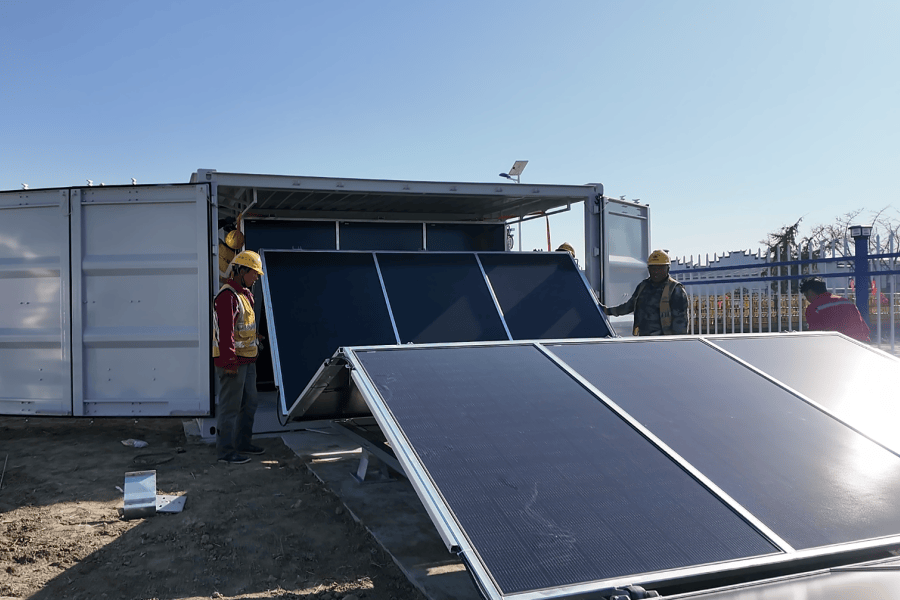
Table of Contents
- The Silent Cost of "Business as Usual" in Remote Power
- Why Mining in Places Like Mauritania Faces a Unique Challenge
- The Integrated Solution: More Than Just Panels and Batteries
- A Closer Look at the Tech: What Makes a Truly Robust System
- Beyond the Box: The Ripple Effect of a Cleaner Footprint
- Making the Shift: What to Look For in a Partner
The Silent Cost of "Business as Usual" in Remote Power
Let's be honest. For decades, powering remote industrial operations like mining has followed a simple, loud, and dirty playbook: ship in diesel, run the generators 24/7, and factor the fuel cost and logistics headache into the operating budget. We've all seen it. I've stood on sites where the constant drone of gensets is just background noise, and the smell of diesel is part of the air. The financial cost is visible on the balance sheet. But the environmental cost? That's often treated as a distant, abstract concern. Until now.
The game is changing. Global pressure for ESG compliance, investor scrutiny, and frankly, the sheer volatility of fossil fuel prices and supply chains are forcing a hard rethink. According to the International Energy Agency (IEA), industrial operations account for a significant portion of global energy-related CO2 emissions. For off-grid mines, that footprint is almost exclusively tied to diesel. Every liter burned is a direct hit to your environmental profile. It's no longer just about cost per kilowatt-hour; it's about the cost to your license to operate and your brand's future.
Why Mining in Places Like Mauritania Faces a Unique Challenge
Now, take this challenge and place it in a context like Mauritania. We're talking about extreme environments: blistering heat, abrasive sand, and sites that are hours, if not days, from reliable infrastructure or technical support. Deploying a standard solar-plus-battery system here isn't a simple plug-and-play. I've seen firsthand on site how dust infiltration can cripple inverters in months, and how thermal mismanagement in a standard battery rack can slash its lifespan in half under that relentless sun.
The traditional piecemeal approach - sourcing panels from one vendor, inverters from another, a BESS from a third, and then trying to integrate them on-site - is a recipe for finger-pointing and downtime. In Mauritania's harsh conditions, that downtime doesn't just mean lost production; it means scrambling for emergency diesel at a premium while your team battles the elements to fix a system that was never designed as a unified, hardened unit. The environmental goal gets lost in a scramble for basic reliability.
The Data Point That Matters: Levelized Cost of Energy (LCOE)
This is where we need to talk about LCOE, or Levelized Cost of Energy. It's the total lifetime cost of your power system divided by the total energy it produces. A diesel gen-set might have a low upfront cost, but its LCOE is sky-high due to volatile fuel and constant maintenance. A poorly integrated solar-storage system can have a worse LCOE than expected if it fails early or underperforms. The goal for mining in Mauritania isn't just to add solar; it's to achieve a lower, predictable, and cleaner LCOE over 15+ years. That's the real win.
The Integrated Solution: More Than Just Panels and Batteries
This brings us to the core idea: the all-in-one integrated off-grid solar generator. Think of it not as a collection of parts, but as a single, self-contained power plant engineered for its mission. The key word is integrated. At Highjoule, when we design these systems, we start from the enclosure up. It's a sealed, climate-controlled fortress for critical electronics.
I remember a project in a similar climate in Nevada, USA, for a remote processing facility. The challenge was dust and 45C+ summer heat. We didn't just drop off batteries and inverters. We deployed a pre-fabricated, containerized BESS with a dedicated, N+1 redundant cooling system designed to maintain optimal temperature and humidity inside the box, regardless of the inferno outside. The power conversion, battery management, and controls were all pre-wired and tested as one system in our factory, under UL and IEC standards, before it ever hit the site. On-site commissioning was about connection and startup, not complex integration. The result? A reliable, high-uptime system that dramatically cut diesel use from day one.

A Closer Look at the Tech: What Makes a Truly Robust System
So, what's inside that makes the environmental difference? Let's break it down in simple terms:
- Thermal Management is King: Batteries are like athletes; they perform best within a specific temperature range. An integrated system uses a dedicated HVAC system with precise control. This isn't an afterthought - it's central to the design. It prevents the 20-30% capacity loss and severe degradation that happens when batteries bake, directly extending the system's life and improving its environmental return on investment.
- Smart C-Rate Management: C-rate is essentially how fast you charge or discharge a battery. Drawing too much power too fast (a high C-rate) stresses the battery. Our systems use intelligent energy management to balance loads, ensuring the battery operates within its most efficient and gentle C-rate window. This, again, maximizes lifespan and ensures you get every kilowatt-hour you paid for out of the sun.
- Grid-Forming Capability: This is the magic that makes a true "generator." Unlike simple backup systems, these integrated units can create a stable, clean "grid" from scratch, powering heavy industrial loads and allowing for seamless integration of solar. This eliminates the need for diesel to provide grid stability.
Beyond the Box: The Ripple Effect of a Cleaner Footprint
The direct environmental impact of slashing diesel consumption is clear: lower CO2, NOx, and particulate emissions right at the source. But the benefits ripple outwards. Think about the logistics. Fewer fuel convoys mean less road wear, lower risk of spills, and reduced community disruption from truck traffic. The water used for washing dust off solar panels is minimal compared to the water risks sometimes associated with fuel handling.
For a mining operation in Mauritania, this translates into a stronger ESG story - one backed by hard data on emission reductions. It future-proofs the operation against carbon taxes or tighter regulations. And honestly, it changes the relationship with the local community and global stakeholders. You're not just taking resources; you're demonstrating a commitment to operating in a cleaner, more sustainable way.
Making the Shift: What to Look For in a Partner
Shifting from diesel dependence to a renewable-integrated microgrid is a major operational decision. It's not about buying a product off a shelf. You need a partner who understands the engineering rigor required for harsh environments and the compliance landscape of your home markets (like UL 9540 for energy storage systems in the US, or IEC 62933 standards).
Look for a provider with proven, pre-engineered solutions that are certified to these standards from the start. Ask about their thermal management design. Dig into their software's capability for remote monitoring and performance optimization - because you can't have a technician on-site every week. At Highjoule, we build this resilience and intelligence into every system, and we back it with performance analytics and remote support, so you have a clear window into your environmental and operational savings, every single day.
The question for mining operators is no longer if they should address their environmental impact, but how. Is your current power strategy a liability, or is it becoming a core part of your sustainability and operational resilience story?
Tags: UL Standard BESS LCOE Renewable Energy Off-grid Solar Mining Operations Environmental Impact
Author
James Zhang
20+ years agricultural energy storage engineer / Highjoule CTO