
Environmental Impact of All-in-one Solar Container for Farm Irrigation
Beyond Diesel: The Tangible Environmental Win of Solar-Powered Irrigation
Hey there. Let's grab a virtual coffee. If you're managing a farm, an agribusiness, or even a remote community project, you've probably heard the buzz about solar-powered irrigation. It sounds great on paper, right? "Go green, save money." But when you're on the ground, making decisions that affect your bottom line and your land's future, the real questions come up. What's the actual environmental impact? Is it just about carbon, or is there more to the story? I've spent over two decades on sites from California's Central Valley to the plains of Spain, and honestly, the shift from diesel gensets to integrated solar containers is one of the most tangible wins I've seen. Let's talk about why, beyond the marketing fluff.
Quick Navigation
- The Real Problem Isn't Just Fuel Cost
- The Impact: It's More Than Just Carbon
- A Real-World Case: From Theory to Field
- How the "All-in-One" Design Unlocks the Benefits
- Making It Real: What to Look For
The Real Problem Isn't Just Fuel Cost
We all know diesel is expensive and volatile. But the agitation point I see firsthand is the operational and environmental trap it creates. You've got a pump that needs to run when the sun is high and the crops are thirsty. A diesel generator does the job, but it's loud, it needs constant refueling (and security for that fuel), and the maintenance is a headache. More critically, you're locking yourself into a cycle of localized air pollution (NOx, particulate matter) and groundwater contamination risk from spills or seepage. The International Energy Agency (IEA) notes that agriculture's reliance on fossil fuels for off-grid operations remains a significant, and often overlooked, emissions source. It's not just an energy problem; it's a land and water stewardship problem.
The Impact: It's More Than Just Carbon
When we talk about the Environmental Impact of All-in-one Integrated Solar Container for Agricultural Irrigation, reducing CO2 is the headline. But let's dig into the data and see the full picture. A study by the National Renewable Energy Laboratory (NREL) on hybrid renewable systems for agriculture showed reductions of 70-95% in greenhouse gas emissions compared to diesel-only systems. That's massive.
But the impact cascade goes further:
- Water Conservation: Solar containers enable precise, demand-driven irrigation. You can power advanced drip or pivot systems without worrying about idling generator cost. This can reduce water usage by 20-30% by avoiding over-irrigation.
- Zero Local Pollution: No exhaust. No oil leaks. No fuel storage risks. You're protecting the soil microbiome and local air quality right where your workers and crops live.
- Noise & Ecosystem Impact: The silence of a solar-BESS system is profound. It reduces stress on livestock and doesn't disrupt local wildlife patterns - a small but real benefit for farm biodiversity.
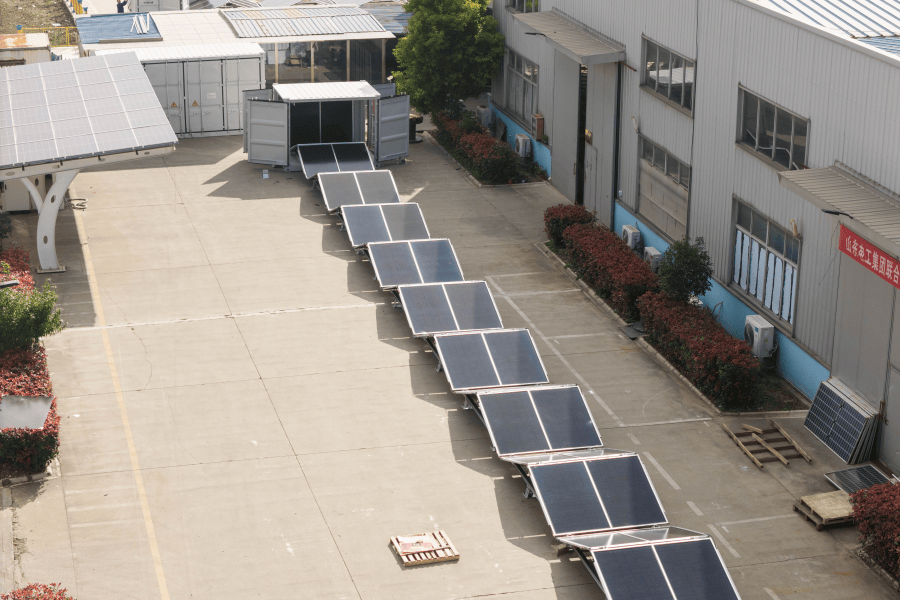
The solution here isn't just slapping some panels on a pump. It's the integrated container - the all-in-one unit that brings solar generation, smart battery storage, and power conversion into a single, plug-and-play system. This is what turns intermittent solar into a reliable, 24/7 irrigation power source.
A Real-World Case: From Theory to Field
Let me tell you about a project in Southern Spain we were involved with. A 500-hectare almond farm was entirely dependent on a aging diesel generator for its deep-well irrigation. Their challenges were classic: soaring fuel costs, generator breakdowns during critical irrigation windows, and increasing scrutiny on their environmental footprint.
We deployed a 120kW solar array coupled with a 240kWh UL 9540 certified battery storage system, all housed in a single, secure container. The thermal management was key - Spain gets hot. We used an independent, liquid-cooled system to keep the batteries at their optimal temperature, ensuring longevity and safety even in 45C (113F) ambient heat.

The result? They eliminated 85% of their diesel use immediately (keeping the gen-set only as a rare, automated backup). Their Levelized Cost of Energy (LCOE) - the total lifetime cost divided by energy produced - plummeted. They now irrigate mostly during the day on solar, using the stored energy for early morning or evening runs, matching the plant's needs perfectly. The local environmental benefit was immediate: cleaner air on the property and the removal of a 10,000-liter diesel tank that was a constant worry.
How the "All-in-One" Design Unlocks the Benefits
So, why does the integrated container approach make such a difference? From an engineering perspective, it's about control and efficiency.
- Optimized C-rate: In simple terms, the C-rate is how fast you charge or discharge a battery. For irrigation, you need a high, sustained discharge (a high C-rate) to start and run large pumps. An off-the-shelf, low C-rate battery would struggle and fail quickly. Our systems are engineered with the right battery chemistry and system design to deliver that pump-starting surge reliably, day after day.
- Built-in Safety & Compliance: Having everything - batteries, inverter, fire suppression, cooling - in a single, UL/IEC compliant enclosure isn't just neat. It ensures safety systems are integrated and tested as a unit. You're not wiring disparate components in a field shed. This is non-negotiable for insurance and peace of mind.
- Reduced Site Impact: The container itself has a minimal footprint. No pouring concrete for multiple pads, no complex civil works. We deliver it, place it on a simple gravel bed, connect the AC output to your pump control and the DC input to the solar field. It's dramatically less disruptive to the land than traditional builds.
Making It Real: What to Look For
If you're considering this path, my advice is practical. Don't just look at the sticker price. Evaluate the total environmental and financial lifecycle impact.
Ask your provider:
- "Is the battery system UL 9540 or IEC 62619 certified?" (This covers grid-connected and off-grid safety.)
- "How do you manage battery temperature in my specific climate?" (Passive air cooling often isn't enough for agriculture.)
- "Can you show me the projected LCOE versus my current diesel cost over 10 years?"
- "What's the real-world round-trip efficiency?" (A higher percentage means more of your solar energy actually powers the pump, not lost as heat.)
At Highjoule, our focus has always been on this kind of deployable, reliable reality. We've seen the difference a robust, well-engineered container makes - not just in ROI, but in creating a quieter, cleaner, more resilient operation. The environmental impact statement becomes something you can literally hear (the silence) and smell (the fresh air).
So, what's the one irrigation pump or remote load on your operation that, if switched to solar-storage, would make the biggest immediate difference? Let's start there.
Tags: UL Standard BESS Solar Container Agricultural Irrigation Microgrid Environmental Impact
Author
James Zhang
20+ years agricultural energy storage engineer / Highjoule CTO