
Environmental Impact of Black Start Capable Hybrid Solar-Diesel Systems for Construction Sites
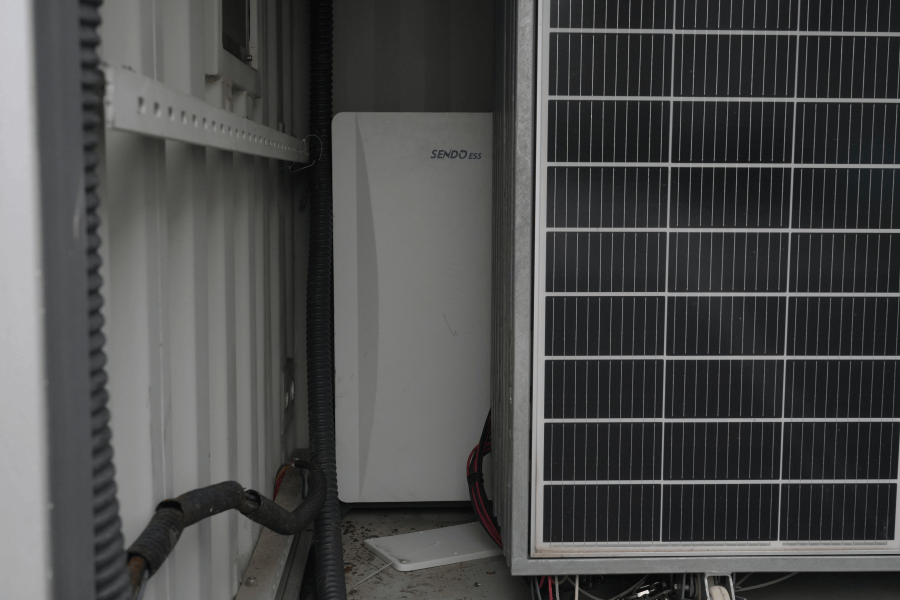
Table of Contents
- The Diesel Dilemma on Modern Job Sites
- Beyond Fuel Savings: The Real Environmental Cost
- The Hybrid Advantage: Solar, Storage, and Black Start
- A Case in Point: How It Works on the Ground
- Expert Insight: The Tech That Makes It Reliable & Safe
- Making the Shift: What to Look For
The Diesel Dilemma on Modern Job Sites
Honestly, if you've managed a construction site in the last decade, you know the drill. You roll in the diesel gensets - sometimes a whole fleet of them - to power everything from site offices and tool charging to cranes and temporary lighting. They're the reliable, familiar workhorse. But let's have a coffee-chat about the real cost. It's not just the fuel bill, which, as we all know, can be wildly unpredictable. I've been on sites where the noise is so constant it becomes a background hum, and the faint smell of diesel is just part of the "site air." The real issue we're waking up to now, especially under tightening environmental regulations in the EU and local emissions ordinances in US states like California, is the full environmental footprint. We're talking about continuous, low-load running, which is terribly inefficient for diesel engines, leading to excessive carbon emissions and soot - what we call "wet stacking." It's an old problem, but the pressure to solve it has never been greater.
Beyond Fuel Savings: The Real Environmental Cost
Let's agitate that pain point a little. The problem with traditional diesel-only setups for construction power isn't a singular one; it's a cascade. First, there's the direct CO2 emissions. The International Energy Agency (IEA) has highlighted that diesel generators are a significant source of carbon emissions in the off-grid power sector. On a 12-month project, you're looking at hundreds of tons of CO2 emitted just for base-load power. Then there's the local air quality impact - nitrogen oxides (NOx) and particulate matter (PM) that affect not just your workers' health but also community relations. I've seen firsthand on site how neighboring businesses or residents can file complaints, leading to delays and added scrutiny.
And then there's the fuel logistics: the constant truck rolls for delivery, the spill risks, and the storage issues. Every gallon trucked in adds to the overall carbon footprint of your project. The environmental impact statement for a major build now almost has to account for this temporary power. It's becoming a line item that shareholders and clients are starting to question.
The Hybrid Advantage: Solar, Storage, and Black Start
So, what's the solution? This is where the black-start capable hybrid solar-diesel system moves from a "nice-to-have" to a critical piece of site planning. The core idea is elegant: you integrate a solar PV array with a Battery Energy Storage System (BESS) and your existing diesel generators into one intelligent, automated system. The solar panels generate clean power during the day, directly offsetting diesel consumption. The BESS stores excess solar energy and provides instantaneous power for load spikes, preventing the gensets from having to ramp up inefficiently.
Now, here's the crucial part - the black start capability. This isn't just about having a battery backup. In a traditional setup, if your main genset fails, everything stops until you can get it restarted or a replacement brought in. A black-start capable BESS can act as the "spark" to restart your diesel generators from a dead stop, without needing an external grid connection. It turns the system into a self-healing microgrid. This reliability is what finally allows you to confidently downsize your diesel fleet and run the remaining units at their optimal, efficient load points, slashing fuel use and emissions by 40-70% based on projects we've deployed. The environmental impact is dramatically reduced across the board: lower emissions, fewer fuel deliveries, and a drastic cut in noise pollution.
A Case in Point: How It Works on the Ground
Let me give you a real example from a project we completed with a large civil engineering firm in Texas last year. The challenge was a remote highway extension site. They had three 500kVA diesel gensets running nearly 24/7. Their goals were to cut fuel costs, meet stringent site emission limits, and ensure absolute power reliability for critical surveying and comms equipment.
Highjoule's solution was a containerized, 500kWh lithium-ion BESS with black-start controllers, integrated with a 300kW solar canopy over the material storage area and two of the existing gensets. The system was designed to UL 9540 and IEC 62933 standards, which was a non-negotiable for their insurance and safety team. The intelligence was in the control system: it prioritized solar, used the battery for peak shaving and overnight base load, and only fired up a single diesel genset when absolutely necessary. The black-start capability was tested monthly as part of the protocol.
The results? They eliminated one genset entirely. Fuel consumption dropped by 65% in the first quarter. From an environmental perspective, that translated to a reduction of over 180 tons of CO2 during the project phase. Honestly, the project manager told me the quietest benefit was the drop in noise - morning site meetings no longer had to be shouted over generator roar.

Expert Insight: The Tech That Makes It Reliable & Safe
You might be thinking, "This sounds complex." From an engineering standpoint, the magic - and the reliability - comes down to a few key things we obsess over at Highjoule. First is the C-rate of the battery. Simply put, it's how fast you can charge or discharge the battery safely. For black start, you need a battery that can discharge a huge burst of power (a high discharge C-rate) for a short time to crank that diesel engine. We spec our systems with a conservative C-rate to ensure longevity and safety, even under that heavy, occasional load.
Second, and arguably most important, is Thermal Management. A battery working hard needs to stay cool. I've seen systems fail because of poor thermal design. Our containers use an independent, liquid-cooled system that keeps cells at their ideal temperature whether it's 110F in Arizona or -10F in Norway. This is critical for both safety (meeting UL 1973 standards) and for getting the promised cycle life out of the asset.
Finally, let's talk LCOE - Levelized Cost of Energy. This is the metric that makes financial decision-makers listen. By adding solar and storage, you're not just buying equipment; you're fundamentally lowering the cost of every kilowatt-hour used on site over the life of the project. The diesel fuel savings are immediate, but the reduced maintenance on gensets and the potential to avoid future carbon taxes or penalties make the LCOE of a hybrid system increasingly competitive, often beating diesel-only in projects longer than 18 months.
Making the Shift: What to Look For
If you're considering this for your next project, my advice is to focus on compliance and integration. The system must be built to the standards your region demands - UL in North America, IEC in Europe. Don't treat it as an add-on; design it into your site plan from day one. Look for a provider with real deployment experience, not just a hardware supplier. They need to understand how to sequence the black-start protocol and integrate seamlessly with your existing equipment.
The environmental impact of your temporary power is now a measurable part of your project's overall sustainability. With a black-start capable hybrid system, you're not just checking a box. You're achieving tangible reductions in emissions and fuel use, often with a compelling financial return. The question isn't really "Can we afford to do this?" anymore. Based on what I'm seeing on sites across Europe and the US, the question is becoming, "Can we afford not to?" What's the emissions target for your next groundbreaking project?
Tags: Construction Site Power UL Standard BESS LCOE Europe US Market Renewable Energy Black Start Capability Environmental Impact Hybrid Power Systems
Author
James Zhang
20+ years agricultural energy storage engineer / Highjoule CTO