
Environmental Impact of C5-M Anti-corrosion Off-grid Solar Generator for Construction Site Power
Contents
- The Hidden Cost of "Temporary" Power
- Why Diesel Just Doesn't Cut It Anymore
- The C5-M Off-grid Solar Generator: A Practical Blueprint
- From Blueprint to Reality: A Case from the Pacific Northwest
- The Engineer's Take: Durability, Efficiency, and Real-World Math
The Hidden Cost of "Temporary" Power
Let's be honest. When you're managing a construction site, "environmental impact" often gets filed right after "finish on schedule" and "stay on budget." The immediate pressure is to get the lights on, the tools running, and the trailers heated. For decades, that meant one thing: diesel generators. They're familiar, they're loud, and they get the job done. Or do they?
I've been on enough sites across the US and Europe to see the real picture. It's not just about the fuel bill. It's about the local air quality complaints from new neighbors. It's about the strict noise ordinances in urban redevelopment projects. It's about the sheer carbon footprint that more and more clients - from corporate giants to municipal governments - are now mandated to report and reduce. That "temporary" diesel setup? Its environmental impact is permanent, and it's becoming a massive liability.
Why Diesel Just Doesn't Cut It Anymore
The problem isn't just philosophical; it's financial and regulatory. The International Energy Agency (IEA) has highlighted that diesel generators are among the least efficient and most polluting ways to produce electricity, especially at the scale of a busy construction site. We're talking about particulate matter, NOx emissions, and a constant CO2 plume.
But here's the agitation point I see firsthand: the industry is trying to solve this by simply bolting standard solar panels onto standard battery units and calling it "green." They drop a regular commercial battery energy storage system (BESS) onto a muddy, dusty, vibration-heavy construction site. Honestly, it's a recipe for failure. The salt spray near coastal developments, the chemical-laden dust from cutting and drilling, the wide temperature swings - these environments are classified as C5-M, one of the most corrosive categories per ISO standards. A standard unit will corrode, its thermal management will clog, and its performance will nosedive in months. You haven't solved an environmental problem; you've just created a costly e-waste problem and shattered the project's green credentials.

The C5-M Off-grid Solar Generator: A Practical Blueprint
So, what's the real solution? It's a system designed for the problem from the ground up. The Environmental Impact of a C5-M Anti-corrosion Off-grid Solar Generator for Construction Site Power is fundamentally different because the hardware is built to survive, and therefore, to sustain its clean energy mission.
Think of it as the difference between wearing a raincoat in a drizzle versus a full hazmat suit in a chemical plant. The C5-M rating isn't a marketing term; it's a specific defense protocol:
- Sealed Enclosure & Anti-Corrosion Coatings: Every joint, vent, and conduit is sealed against corrosive dust and salt mist. The steel is treated with specialized coatings that I've seen last through multi-year projects in harsh marine environments.
- Corrosion-Resistant HVAC: The thermal management system - the lungs of the BESS - uses coated coils and filters designed to handle abrasive particulates without failing. If the cooling fails, the batteries degrade fast.
- Component Hardening: From electrical busbars to bolt materials, everything is selected to resist galvanic corrosion. This is where compliance with UL and IEC standards for safety gets tested in the real world, not just in a lab.
At Highjoule, when we build a site power solution, this C5-M defense is the baseline. It allows the solar + storage system to do what it's supposed to: silently replace diesel, cut emissions to zero at point-of-use, and do it reliably for the entire project lifecycle.
From Blueprint to Reality: A Case from the Pacific Northwest
Let me give you a real example. We worked on a 24-month highway bridge expansion project in Washington State. The challenge was severe: tight noise limits to protect nearby wildlife, a "Clean Construction" mandate from the state, and a site exposed to constant moisture and road salt spray.
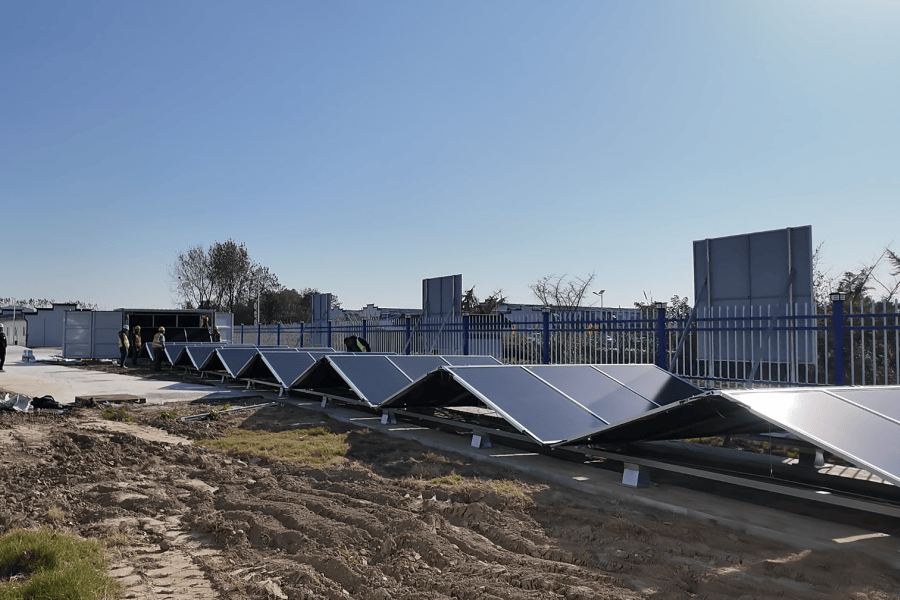
The old plan was a bank of diesel gensets. The new solution was a 250kW/500kWh C5-M rated off-grid solar generator from Highjoule. We deployed a containerized BESS with integrated solar canopy. The system was designed for Levelized Cost of Energy (LCOE) - a key metric we live by - meaning we optimized the battery's charge/discharge cycles (its C-rate) and solar input to minimize cost per kWh over the project's life, not just upfront cost.
The result? The site eliminated an estimated 180,000 liters of diesel consumption, cutting over 480 tons of CO2. There were zero noise complaints. And because the unit was built for the environment, our remote monitoring showed zero performance degradation from corrosion. The project hit its green mandates, and the contractor saved significantly on forecasted fuel and maintenance costs. That's the real environmental and economic impact.
The Engineer's Take: Durability, Efficiency, and Real-World Math
If you're a project manager, you don't need to be a battery chemist. But understanding two concepts will help you see why this specialized approach matters.
First, Thermal Management. A battery's lifespan and safety are tied to its temperature. On a standard site, dust coats the heat exchangers, the system overheats, and throttles power or shuts down. A C5-M system maintains optimal temperature in harsh conditions, ensuring you get the power you paid for, every day.
Second, LCOE (Levelized Cost of Energy). This is the total cost of owning and operating the system divided by the total energy it produces. A cheap, non-hardened unit might have a low upfront cost but a high LCOE because it fails early or underperforms. A C5-M unit has a higher initial price but a dramatically lower LCOE over a 2-3 year project because it works at full capacity, slashing diesel costs reliably. According to analysis by the National Renewable Energy Laboratory (NREL), optimizing for LCOE is critical for commercial viability.

My two decades in this field have taught me that sustainability in construction isn't about idealism. It's about practical, hardened engineering that delivers unwavering performance. The true Environmental Impact of a C5-M Anti-corrosion Off-grid Solar Generator for Construction Site Power is measured in silent, fume-free worksites, reduced carbon liabilities, and a surprising line-item savings on your power budget.
What's the one corrosive element on your next project plan that a standard system just won't survive? Maybe it's time we chat about building a defense against it.
Tags: UL Standard BESS LCOE Off-grid Power US Market Europe Market Anti-corrosion Environmental Impact Construction
Author
James Zhang
20+ years agricultural energy storage engineer / Highjoule CTO