
Environmental Impact of Grid-forming Pre-integrated PV Containers for Construction Sites
Contents
- The Diesel Habit We Can't Seem to Kick
- The Hidden Costs: More Than Just Fuel
- A Smarter Way to Power Up: The Integrated Container
- Breaking Down the Real Environmental Impact
- Making It Work On-Site: The Tech That Matters
- What's Next for Your Project?
The Diesel Habit We Can't Seem to Kick
Let's be honest. If you've been to a mid-to-large construction site in the last decade, whether it's in Texas or Bavaria, you've seen them - and definitely heard and smelled them. Rows of diesel generators, humming away 24/7, powering everything from site offices and lighting to heavy equipment chargers. It's the industry standard, and for a long time, it was the only reliable option for off-grid or weak-grid power. The IEA points out that the construction sector is responsible for nearly 40% of global energy-related CO2 emissions, and a significant chunk of that on the "site" side comes from this very practice.
We all know it's not ideal. But the thinking has always been: "It's just for the project duration. It's a necessary evil to get the job done." I've had countless coffees with project managers who shrug and say, "The fuel bill is just a line item." But lately, that shrug is turning into a wince. Between tightening local emissions regulations, community pushback on noise and air quality, and the sheer volatility of diesel prices, that "line item" is becoming a major pain point. It's not just about being green anymore; it's about economics and social license to operate.
The Hidden Costs: More Than Just Fuel
Let's agitate that pain point a bit, based on what I see on the ground. The cost goes far beyond the fuel delivery truck. First, there's the noise. In residential or mixed-use areas, strict noise ordinances can limit your productive hours. I was on a site in California where generators had to be shut down by 6 PM, pushing critical path work into expensive overtime slots.
Then there's the particulate matter and NOx emissions. These aren't just abstract concepts. They create a visibly hazy work environment, and honestly, they're a health concern for your crews breathing that air for 10-hour shifts. More and more municipalities are enforcing "clean air zone" rules on construction sites, with hefty fines. The operational complexity is huge too: security for fuel storage, refueling logistics, maintenance schedules, and the constant risk of theft or spillage. You're essentially running a mini power plant with a team that's focused on building, not energy management.

A Smarter Way to Power Up: The Integrated Container
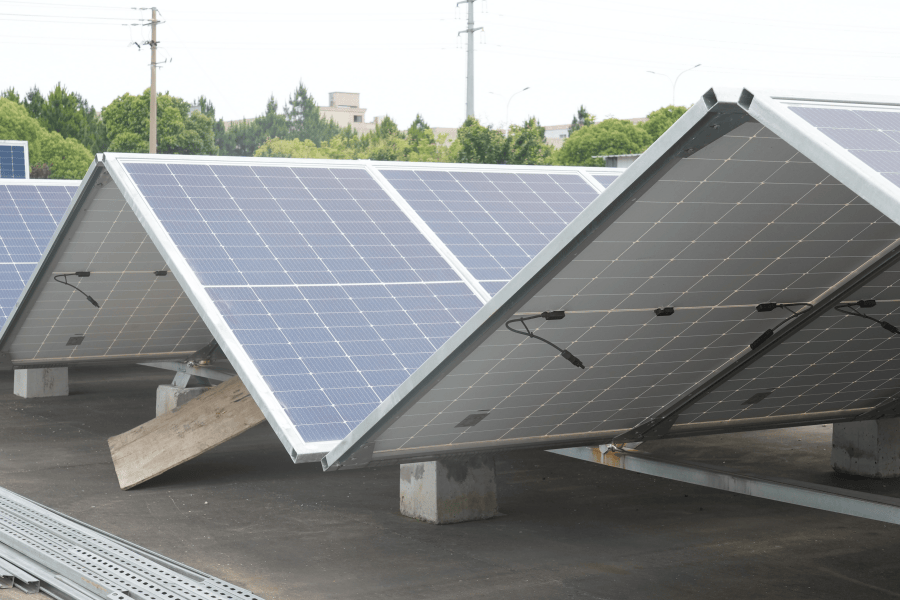
So, what's the solution? This is where the concept of the grid-forming pre-integrated PV container comes in, and it's a game-changer. Forget the image of a few random solar panels hooked to a shaky battery. We're talking about a fully engineered, plug-and-play system in a standard shipping container. It combines high-efficiency solar arrays, a large-capacity battery storage system (BESS) with advanced thermal management, and the critical piece - a grid-forming inverter - all pre-wired, tested, and certified before it even hits your site.
Think of it like this: instead of shipping a pile of engine parts and hoping your team can build a reliable generator, you're shipping a complete, self-contained power station that just needs a flat spot and a few connections. This is the core solution to the environmental and operational headaches of traditional site power.
Breaking Down the Real Environmental Impact
The environmental benefit isn't just a "feel-good" marketing claim. It's quantifiable and immediate.
- Carbon & Emissions Slash: The most direct impact. A single 500kW system can offset over 100,000 liters of diesel annually, cutting CO2 emissions by roughly 265 tons. That's like taking 60 cars off the road for the entire year of your project. According to data from NREL, hybrid renewable systems for construction can reduce fuel use by 50-90%.
- Zero Local Emissions & Noise: This is huge for community relations. The system operates silently, with zero tailpipe emissions. Suddenly, your site isn't a nuisance. It becomes a quieter, cleaner, and safer workplace, which is a powerful message for local stakeholders and ESG reporting.
- Reduced Site Footprint & Risk: You eliminate the need for large, hazardous fuel storage tanks. No more spill containment berms or fuel truck access routes. One container replaces multiple generators and fuel tanks, freeing up valuable real estate on a cramped site.
- Material & Lifecycle Efficiency: A pre-integrated container is built for multiple project lifecycles. Once your 18-month build is done, it's not waste. It's redeployed to the next site. This circular use model drastically improves the overall lifecycle impact compared to single-use, degraded diesel gensets.
Making It Work On-Site: The Tech That Matters
Okay, you might be thinking, "Solar is intermittent. What happens when it's cloudy or at night?" This is where the engineering inside the box makes all the difference. Let me give you the insider view, without the jargon overload.
The grid-forming inverter is the brain. Unlike traditional "grid-following" inverters that need an existing grid signal to sync to, a grid-forming unit creates its own stable grid. It provides the voltage and frequency foundation, just like a utility grid or a generator. This means it can start up "black" sites (cold start) and seamlessly handle the surge demands of starting big motors - something solar-alone or basic battery systems can't do.
Then there's the battery system. Not all BESS are equal. For construction, you need robust thermal management (liquid cooling is becoming the standard for durability) and a sensible C-rate (that's basically how fast you can charge or discharge the battery). Too high, and you stress the battery; too low, and it can't handle the load. We design for the sweet spot that maximizes lifespan (a key driver of your Levelized Cost of Energy (LCOE)) while delivering the power you need.
And none of this is worth anything without the stamps of approval. In the US, that means full UL 9540 certification for the energy storage system. In Europe, it's IEC 62933. These aren't just checkboxes; they are rigorous safety standards for fire, electrical, and system safety that we build into every Highjoule container from day one. It gives you, the site manager, and the local authority having jurisdiction (AHJ) the confidence that this new technology is as safe, or safer, than the diesel alternative.
A Quick Case in Point: German Logistics Hub
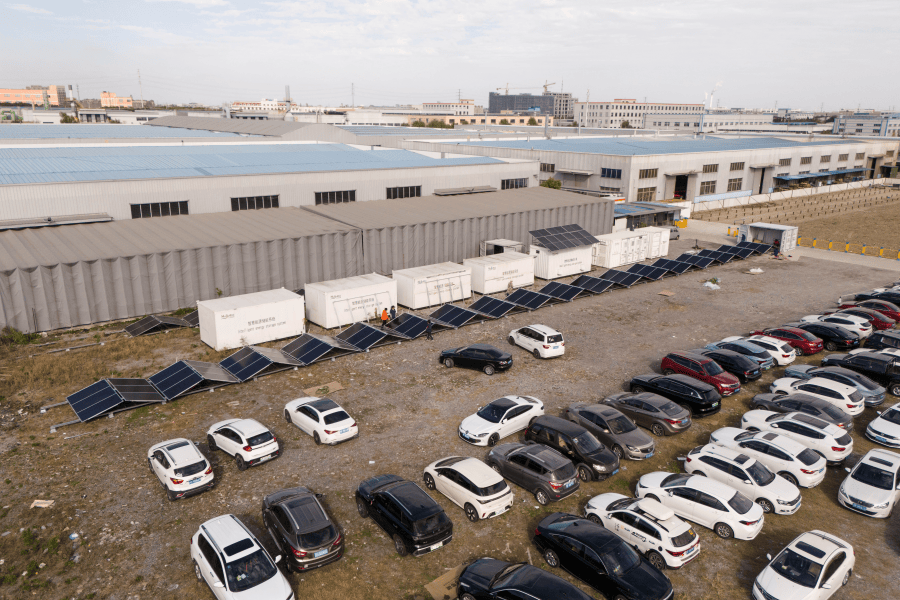
We deployed a system for a large logistics warehouse construction in North Rhine-Westphalia. The challenge was strict city noise limits and a mandate to minimize particulate pollution. The traditional diesel plan was rejected in permitting. Our 400kW PV container solution became the primary power source for the site office, cranes, and electric tools. A small backup generator only kicked in a handful of times during a very dark winter week. The project manager told me they cut their expected fuel costs by over 80%, met all compliance checks effortlessly, and actually received positive feedback from the neighboring community about the low-noise site. The container is now powering its third project.
What's Next for Your Project?
Look, the transition from diesel gensets isn't an overnight flip of a switch. But with today's technology and the mounting pressure - regulatory, financial, and social - it's a transition that's starting to make undeniable sense. The environmental impact story is compelling, but it's the total operational picture that seals the deal: lower and predictable energy costs, simplified site logistics, and a future-proofed approach to power.
The next time you're budgeting for site power, ask yourself: Is the diesel "line item" really just a cost of doing business, or is it the biggest, easiest-to-target inefficiency in your project? Maybe it's time we chat over a (virtual) coffee about what your site's power mix could look like.
Tags: UL Standard BESS LCOE Europe US Market PV Container Renewable Energy Grid-Forming Inverter Construction
Author
James Zhang
20+ years agricultural energy storage engineer / Highjoule CTO