
Environmental Impact of High-voltage DC Hybrid Solar-Diesel Systems for Industrial Parks
Contents
- The Real Pain Point: It's Not Just About Being Green
- The Ugly Truth: Why Your Current Setup is Costing You More
- A Cleaner, Smarter Way: The High-voltage DC Hybrid Architecture
- Case in Point: A German Mittelstand Story
- Beyond the Basics: Expert Insights on Making It Work
- The Right Partner for the Journey
The Real Pain Point: It's Not Just About Being Green
Let's be honest. When we sit down with operations managers at industrial parks across Europe and the US, the conversation about energy isn't just about sustainability reports. It's about survival. You're squeezed between volatile energy prices, ambitious corporate decarbonization goals, and the relentless pressure to keep production lines running 24/7. The old playbook - running diesel gensets as a primary or backup power source - is becoming a massive liability, both financially and environmentally. I've seen this firsthand on site: the fuel bills are staggering, the noise and emissions are a constant headache with local communities, and let's not forget the maintenance. It's a carbon-intensive, expensive band-aid.
The Ugly Truth: Why Your Current Setup is Costing You More
Here's the agitation. Adding solar PV to the mix seems like the obvious fix, right? But the traditional AC-coupled solar-plus-generator setup often creates more problems than it solves. You have two separate systems fighting for control. The solar inverters and the genset have to be meticulously synchronized. When a cloud passes over, the genset has to ramp up violently to fill the gap - wasting fuel, increasing wear and tear, and spiking emissions. It's inefficient and rough on your equipment.
The data backs this up. According to the National Renewable Energy Laboratory (NREL), system-level losses in complex AC-coupled microgrids can erode 5-10% of your potential energy savings. That's a direct hit to your return on investment. Furthermore, the International Energy Agency (IEA) notes that while industrial solar capacity is growing, its full potential is often limited by grid integration and self-consumption challenges. You're leaving money and clean kilowatt-hours on the table.
A Cleaner, Smarter Way: The High-voltage DC Hybrid Architecture
This is where the solution comes into sharp focus: the High-voltage DC Hybrid Solar-Diesel System. Forget the clunky AC-coupling. Think of it as a unified, direct-current backbone for your park's energy. Solar PV arrays, a battery energy storage system (BESS), and the diesel genset all connect to a common DC bus through specialized converters.
The Environmental Impact of High-voltage DC Hybrid Solar-Diesel System for Industrial Parks is transformative. Here's why:
- Slash Fuel Use & Emissions: The battery acts as a shock absorber. Solar fluctuates? The BESS instantly discharges. The diesel genset can now operate at its optimal, steady-state efficiency or not run at all during peak sun hours. I've seen sites cut generator runtime by over 70%, which translates directly to lower fuel costs and a dramatic reduction in CO2, NOx, and particulate matter.
- Maximize Solar Self-Consumption: Any excess solar energy that isn't used immediately charges the batteries, not wasted or exported at poor rates. This pushes your renewable energy fraction way up.
- Silent, Instant Backup: During an outage, the transition from grid to battery is seamless and silent - no roaring genset startup unless absolutely necessary. This is a huge win for noise pollution and community relations.
Case in Point: A German Mittelstand Story
Let me tell you about a manufacturing cluster in North Rhine-Westphalia. They had three 1 MW diesel gensets and wanted to add 2.5 MW of solar. The challenge was grid stability and maximizing their own solar use to meet strict internal carbon targets.
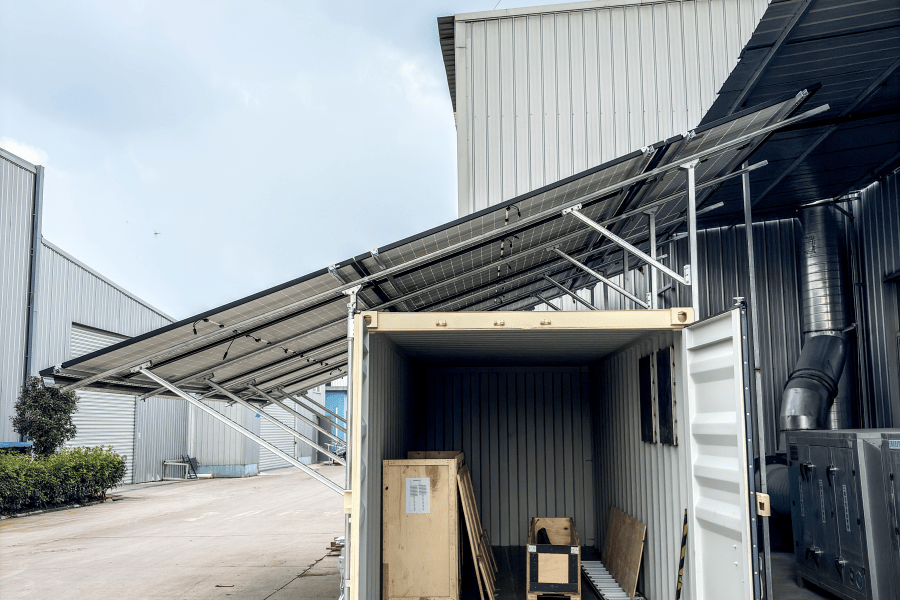
We deployed a containerized, UL and IEC-compliant Highjoule BESS as the core of a DC-coupled system. The BESS's advanced energy management system treats the gensets as a last-resort asset. Now, the solar covers baseload, the BESS handles peaks and smoothing, and the gensets only kick in for prolonged, multi-day low-solar periods. In the first year, they reduced diesel consumption by 1.2 million liters and cut their operational carbon footprint from energy by 64%. The system paid for itself in under 4 years thanks to fuel savings and avoided grid peak charges.

Beyond the Basics: Expert Insights on Making It Work
As an engineer who's commissioned these systems, the devil is in the details. Here's my take on the key technical points, in plain English:
- C-rate is Your Friend, Not Just a Spec: A battery's C-rate tells you how fast it can charge or discharge. For this application, you need a battery with a moderate to high C-rate. Why? Because when a cloud bank rolls in, you need the batteries to discharge rapidly to prevent a genset surge. A slow, low C-rate battery just can't keep up with the real-time demands of an industrial load.
- Thermal Management is Non-Negotiable: Batteries in a container in Texas or Spain get hot. Inefficient cooling kills battery life and is a safety risk. You need a system with liquid cooling and precise thermal monitoring. It's not an area to cut corners. A well-managed battery will last years longer, directly improving your Levelized Cost of Energy (LCOE) - that's the total lifetime cost per kWh.
- LCOE is the North Star: Forget just looking at upfront cost. You need to model the LCOE of the entire hybrid system. A slightly more expensive BESS with better efficiency and longer lifespan will often have a far lower LCOE, saving you millions over 15 years. This is where Highjoule's design philosophy, focusing on lifecycle performance over sticker price, truly pays off.
Compliance Isn't a Checkbox, It's a Safety Culture
In the US and EU, standards like UL 9540 for BESS and IEEE 1547 for grid interconnection aren't just red tape. They are a blueprint for safety and reliability. A system built to these standards from the ground up, with proper fire suppression, gas detection, and electrical safety margins, is one you can trust to run unattended next to your multi-million dollar production facility. It protects your people and your assets.
The Right Partner for the Journey
Implementing this isn't a plug-and-play weekend project. It requires deep system integration knowledge and local support. You need a partner who understands the electrical codes in California or the grid requirements in Germany, and who can provide 24/7 remote monitoring and local service technicians.
At Highjoule, we've built our systems around this DC-coupled philosophy from the start. Our containers are pre-integrated and tested, designed to meet the highest UL and IEC standards, which dramatically reduces on-site commissioning time and risk. More importantly, we stick around for the long haul with performance guarantees and local operational support, because we know your energy system is critical infrastructure.
The bottom line? The environmental and economic case for modernizing your industrial park's energy system is clear. The question is no longer "if," but "how." Are you ready to move beyond the limitations of your current setup and build a resilient, cost-effective, and truly cleaner energy foundation?
Tags: UL Standard BESS LCOE Europe US Market Renewable Energy Industrial Energy DC Coupling
Author
James Zhang
20+ years agricultural energy storage engineer / Highjoule CTO