
Hybrid Solar-Diesel Systems for Telecom Sites: A 215kWh Cabinet Solution Analysis
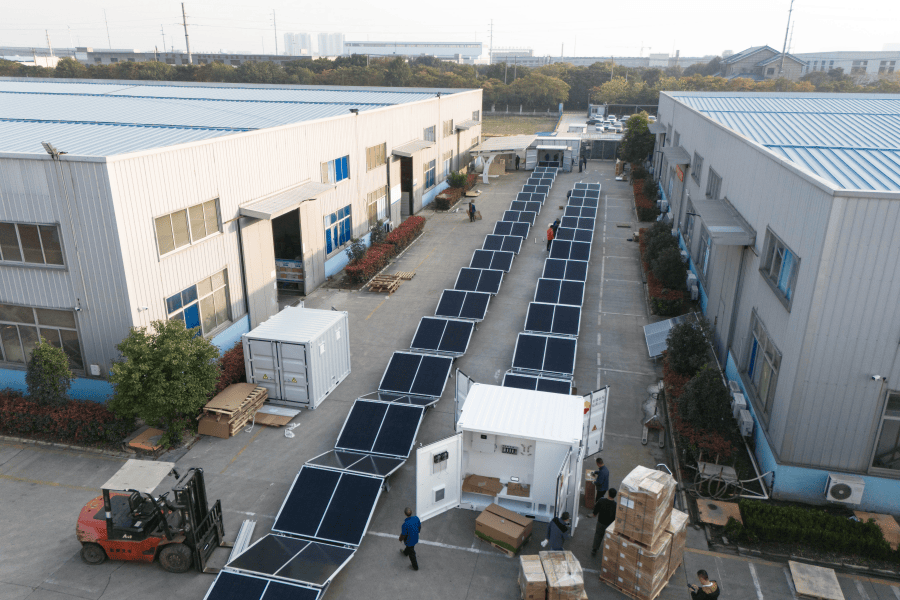
Table of Contents
- The Silent Cost of "Always-On"
- Beyond the Fuel Bill: The Real Pain Points
- The 215kWh Cabinet Approach: More Than Just a Box
- Case in Point: A German Network Operator's Shift
- Key Considerations for Your Hybrid Cabinet System
- Making the Decision: Is a Cabinet System Right for Your Sites?
The Silent Cost of "Always-On"
Let's be honest. If you're managing telecom infrastructure in North America or Europe, you're caught between a rock and a hard place. The mandate is non-negotiable: 99.999% uptime. But the traditional way of guaranteeing that - the diesel generator humming in the background - is becoming a massive liability. It's not just about diesel prices anymore, though those sting. I've been on site for generator maintenance in the middle of winter, and honestly, it's a brutal, costly dance. The real story is about operational complexity, tightening emissions regulations, and a sustainability mandate that comes from your customers, your board, and frankly, your own community.
The industry is pivoting, hard. According to the International Energy Agency (IEA), global renewable capacity additions jumped by almost 50% in 2023, with solar PV accounting for three-quarters of that growth. A huge chunk is going towards decentralised power, like telecom sites. The question isn't if you should integrate solar and storage, but how to do it smartly, reliably, and without creating a new set of operational nightmares.
Beyond the Fuel Bill: The Real Pain Points
So, we agree a pure diesel-dependent site is a problem. But just bolting on some solar panels and a random battery bank? That's a recipe for stranded assets and safety headaches. From two decades in the field, here's what actually keeps network operators awake at night:
- Space & Scalability: Many cell sites, especially in dense urban or historic European areas, have a footprint the size of a postage stamp. You can't just plop down a sprawling system.
- Deployment Speed & Cost: Civil works, custom engineering, prolonged grid interconnection studies - they blow out timelines and budgets. Every day a site isn't upgraded is a day of lost OPEX savings.
- Safety & Compliance: This is non-negotiable. Your system must meet UL 9540 (Energy Storage Systems) and UL 1973 (Batteries) in North America, and IEC 62933 series standards in Europe. I've seen projects delayed by months waiting for certification. The thermal management of the battery isn't just about performance; it's the cornerstone of safety.
- Total Cost of Ownership (TCO): The upfront capex is just the entry ticket. You need to model the Levelized Cost of Energy (LCOE) for the hybrid system. This factors in fuel displacement, generator wear-and-tear reduction, maintenance intervals, and the battery's cycle life. A poorly integrated system might save fuel but kill batteries in 3 years.
The 215kWh Cabinet Approach: More Than Just a Box
This is where the pre-engineered, containerized 215kWh hybrid cabinet system enters the chat. It's not a magic bullet, but it directly attacks the pain points I just listed. Think of it as a "power plant in a box."
At Highjoule, when we design a system like this, we're not just stacking batteries and inverters. We're engineering a unified ecosystem. The 215kWh capacity is a sweet spot - it's substantial enough to carry a significant load overnight for a typical macro site, but packaged in a cabinet form-factor that fits where a 20-foot container can't.
The core advantage? Predictability. It's a known, tested quantity. All the integration - the power conversion (PCS), battery management (BMS), thermal management (cooling is massive, we use a redundant, independent system), and safety controls - are pre-configured and tested at the factory. This slashes on-site commissioning time from weeks to days. Honestly, on a project in Texas last year, we had a 215kWh cabinet system from delivery to commissioning in under 72 hours for a critical microgrid-tied site.

Case in Point: A German Network Operator's Shift
Let me give you a real example. A major network operator in North Rhine-Westphalia, Germany, had a cluster of 15 sites in a region with high solar potential but strict visual and noise ordinances. Their challenges were classic: space constraints, a desire to cut diesel use by over 70%, and a requirement for silent, emissions-free overnight power.
They piloted a 215kWh cabinet solution. Each cabinet housed LiFePO4 batteries (for safety and cycle life), a bidirectional inverter, and a sophisticated controller that did more than just switch between sources. It used predictive logic based on weather forecasts and load patterns to decide when to charge from solar, when to discharge, and when to briefly cycle the generator at its most efficient point - just to top up the batteries if needed, not to carry the direct load.
The outcome? Diesel runtime dropped by 76% in the first year. The cabinet's footprint was 40% smaller than a traditional setup would have been. And because the entire system was UL and IEC compliant from the get-go (we certified once, deployed everywhere), the local approval process was streamlined. The operator is now rolling it out to another 50 sites.
Key Considerations for Your Hybrid Cabinet System
If you're comparing systems, don't just look at the price per kWh. Dig into these specifics with your vendor:
| Consideration | Why It Matters | Ask Your Supplier |
|---|---|---|
| C-rate & Depth of Discharge (DoD) | This defines the battery's power personality. A 1C rate means the 215kWh cabinet can deliver 215kW of power. Is that enough for your peak load + generator start? A higher C-rate offers more "oomph." Similarly, a system designed for 90% DoD will use more of its capacity daily than one limited to 70%, impacting your fuel savings. | "What is the continuous and peak C-rate? What is the recommended daily DoD for my duty cycle?" |
| Thermal Management | This is the unsung hero. Batteries degrade fast if they're hot or cold. A sealed, liquid-cooled cabinet maintains optimal temperature year-round, whether it's in the Arizona desert or a Norwegian winter. It also suppresses fire risk. I've seen air-cooled systems struggle and derate power on hot days - exactly when you need them most. | "Is the cooling system redundant? What is the operating ambient temperature range without derating?" |
| Grid Interaction & Black Start | Can the system island from the grid and form a stable microgrid to power the site? Can it black start - meaning, if everything is dead, can the batteries wake up and start the generator or accept solar to reboot the site? This is critical for resilience. | "Demonstrate the black start capability and the transition time to/from island mode." |
| Local Service & Monitoring | You need 24/7 visibility. A good platform lets you see the state of charge, fuel savings, and system health for all your sites on one dashboard. And when you need service, are there local technicians? At Highjoule, we build partnerships with regional service providers so you're never waiting for an engineer to fly in. | "What is your remote monitoring platform? What is the mean time to repair (MTTR) with your local service network?" |
Making the Decision: Is a Cabinet System Right for Your Sites?
The comparison between a traditional bespoke hybrid system and a pre-fabricated 215kWh cabinet ultimately boils down to your portfolio's profile. For sites with standardised power needs (most macro and many micro sites), where deployment speed, compliance certainty, and lower installation complexity are priorities, the cabinet is a compelling winner. It turns a complex engineering project into a more manageable, repeatable deployment.
For highly unique, ultra-high-power sites, a custom solution might still be the answer. But for the bulk of your network, the cabinet approach offers a path to rapid decarbonisation and cost reduction without the classic headaches.
The transition is happening. The data is clear. The technology, like these cabinet systems, has matured. The real question is, what's your plan to pilot it? Sometimes, the best way to understand the value is to see one in operation. What's the site in your network that keeps you up at night? Maybe that's where the conversation starts.
Tags: UL Standard BESS IEC Standard Telecom Energy Hybrid Power Systems Solar-Diesel Energy Storage Cabinet
Author
James Zhang
20+ years agricultural energy storage engineer / Highjoule CTO