
High-Altitude LFP Battery Maintenance: A Checklist for Reliable Off-Grid Power
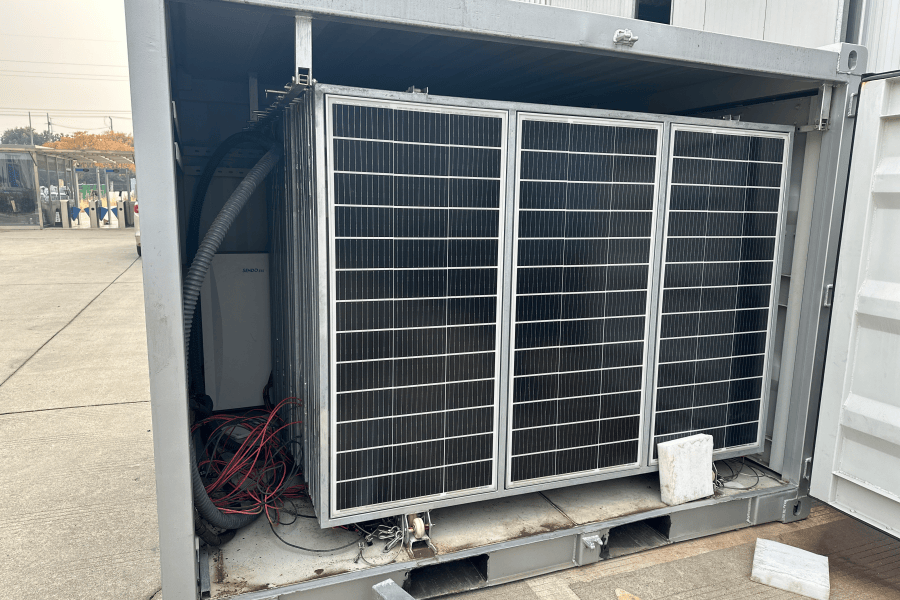
Table of Contents
- The Silent Challenge: Why Your Mountain-Top BESS is Crying for Help
- The Data Doesn't Lie: The High Cost of Neglect at High Elevation
- A Real-World Story: The Colorado Microgrid That Almost Failed
- Your High-Altitude LFP Battery Maintenance Checklist (Decoded)
- Beyond the Checklist: The Highjoule Philosophy for Rugged Reliability
The Silent Challenge: Why Your Mountain-Top BESS is Crying for Help
Let's be honest. When you're planning an off-grid solar + storage project for a remote site C be it a ski resort, a telecom tower in the Rockies, or a research station in the Alps C the focus is understandably on upfront costs, component specs, and getting the power on. The conversation often goes: "Lithium Iron Phosphate (LFP)? Great, safe chemistry. Let's get it installed." But what I've seen firsthand, across dozens of sites from Colorado to the Dolomites, is that the operational plan, especially the maintenance rhythm, is an afterthought. And at high altitude, that's a recipe for premature failure, safety risks, and a terrible Levelized Cost of Energy (LCOE).
The problem isn't the LFP chemistry itself, which is inherently robust. It's the environment. Thin air. Wild, rapid temperature swings C think 25C (77F) during the day to -15C (5F) at night. Reduced cooling efficiency. Increased UV exposure. These factors don't just stress the battery cells; they challenge the entire Balance of System (BOS) C the thermal management, the battery management system (BMS) logic, the enclosure seals. A maintenance checklist designed for a mild, sea-level climate simply won't cut it. You're not just maintaining a battery; you're maintaining a system operating in a physiological stress test.
The Data Doesn't Lie: The High Cost of Neglect at High Elevation
Why does this specialized care matter so much? Let's talk numbers. The National Renewable Energy Laboratory (NREL) has published work showing that improper thermal management can accelerate battery degradation by up to 30% in extreme climates. Think about that. A system designed for a 15-year lifespan might be looking at major replacements in year 10 or 11. That's a massive, unplanned capital hit.
Furthermore, the International Energy Agency (IEA) notes that system availability is the single biggest factor in the economic viability of off-grid and microgrid projects. Every hour of downtime isn't just an inconvenience; it can mean frozen pipes, lost data, or a complete halt to operations. At 3,000 meters, a service truck isn't just an hour away. A proactive, condition-based maintenance schedule is your first and best insurance policy against catastrophic downtime. It directly protects your LCOE by maximizing usable cycle life and system availability.
The Colorado Microgrid That Almost Failed
I remember a project we were called into consult on, a backup power system for a critical communications hub in the Colorado Rockies, sitting at about 2,800 meters. The LFP container was installed, performed great for the first 18 months, and then... started tripping offline on cold mornings. The on-site crew kept resetting it. The problem seemed intermittent.
When we got there, we found the issue wasn't the cells. It was a combination of factors the original maintenance plan missed: 1) Condensation had built up inside the enclosure due to the massive diurnal temperature swing, leading to minor corrosion on a main relay. 2) The BMS's low-temperature charge cutoff was set to a generic 0C, but at that altitude and with the specific cell configuration, voltage sag during a high C-rate discharge in the cold was triggering false low-voltage alarms. 3) The air filters for the cooling system were completely clogged with fine, dry alpine dust, reducing airflow and causing the thermal management system to work overtime.
The fix? It wasn't a battery swap. It involved sealing protocol adjustments, a BMS firmware update with altitude-compensated algorithms, and a new quarterly filter inspection mandate. This is what a Maintenance Checklist for LFP (LiFePO4) Off-grid Solar Generator for High-altitude Regions is built to prevent.

Your High-Altitude LFP Battery Maintenance Checklist (Decoded)
So, what should be on your radar? Here's a breakdown of key checklist items, translated from engineering speak into operational must-dos.
Thermal & Environmental Management (The Heart of It)
- Cooling System Inspection: Monthly visual check of filters (clean/replace bi-monthly or more often in dusty seasons). Quarterly verification of fan/pump operation and coolant levels (if liquid-cooled). Listen for unusual noises C bearings fail faster in cold, dry air.
- Enclosure Integrity: Bi-annual detailed seal and gasket inspection. Look for cracking from UV exposure or hardening from cold. Check for any signs of moisture ingress or condensation trails.
- Heater Function Verification: Before the cold season, manually test any internal space heaters or pad heaters. Ensure their thermostats are calibrated to kick in well before the BMS's low-temp charge cutoff.
Electrical & BMS Health
- BMS Log Analysis: Don't just check for alarms. Weekly review of logs for trends: increasing cell voltage delta, slowly rising internal resistance, or frequent brushing against high/low temperature limits. This is predictive maintenance.
- Torque Check on High-Current Connections: Annual thermal imaging scan and physical torque check. Thermal cycling can cause metals to "creep," loosening connections over time, leading to hot spots and fire risk.
- Grounding Resistance Verification: Annual check. Dry, rocky soil at high elevations can compromise grounding integrity.
Safety & Performance Verification
- Smoke/ Gas Detection System Test: Quarterly functional test. These sensors can drift.
- Manual System Functional Test: Semi-annually, simulate a grid-failure event (if applicable) to ensure the entire system C from battery discharge to inverter output C performs as designed under load. This tests software and hardware integration.
Beyond the Checklist: The Highjoule Philosophy for Rugged Reliability
A checklist is a tool, but the mindset is everything. At Highjoule, our approach for high-altitude deployments is "design for maintenance." For instance, our UL 9540A certified containers for these environments come with:
- Altitude-Adaptive BMS Firmware: It doesn't just see temperature and voltage; it models performance based on ambient pressure, adjusting charge/discharge C-rate limits dynamically to protect the cells and prevent nuisance shutdowns.
- Dual-Path Cooling with Easy-Access Filters: Filters are front-panel, tool-less access. Our thermal design accounts for the ~20% less dense air at 3,000m, so we oversize fan capacity at the design stage, not as a field fix.
- Localized Service & Training: We don't just ship a container and a PDF. Our commissioning includes hands-on training with your local crew on why each checklist item matters. We also have service partnerships across major mountain regions in the US and Europe, because a 48-hour response time is part of the system's value.
The goal isn't to create more work for your team. It's to give them a clear, actionable, and context-aware plan that turns your LFP battery from a potential liability into the resilient, long-lasting asset you paid for. Honestly, the best maintenance is the outage that never happens. So, what's the one checklist item you're currently missing that keeps you up at night?
Tags: UL Standard BESS LCOE Off-grid Solar High-Altitude Energy LFP Battery Maintenance
Author
James Zhang
20+ years agricultural energy storage engineer / Highjoule CTO