
Manufacturing Standards for Novec 1230 Fire Suppression in Off-grid Solar Generators for Data Center Backup
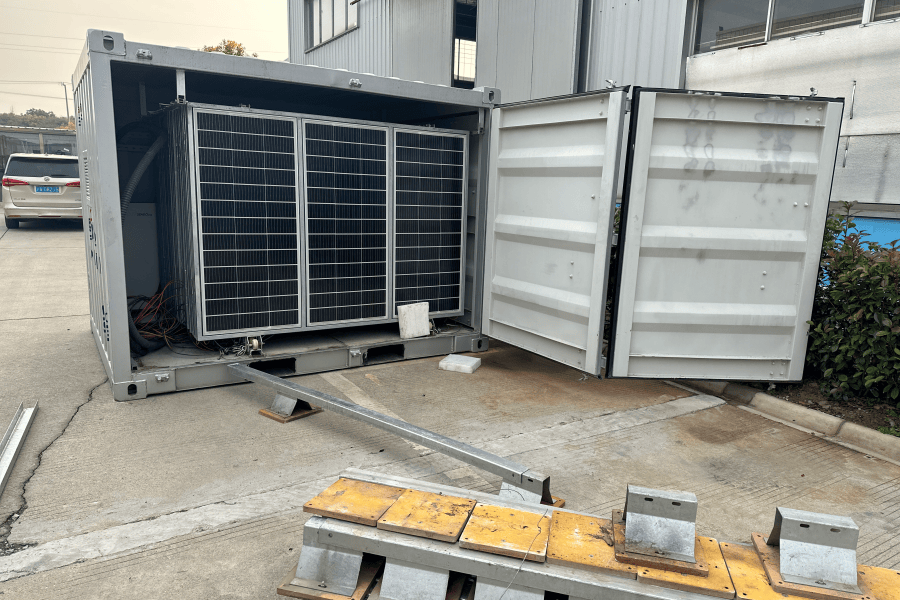
Beyond the Battery: Why How Your Off-Grid Generator is Built Matters More Than You Think
Honestly, after two decades on site - from dusty Texas industrial parks to humming Scandinavian data halls - I've learned one thing: the most critical component in a backup power system isn't the battery cell. It's the confidence that the entire system won't fail you, or worse, create a new problem, when the grid goes dark. For data center managers, that confidence starts long before installation. It starts on the factory floor, embedded in the manufacturing standards for every single component, especially the ones designed for safety.
Let's talk about a specific, often overlooked, but absolutely vital piece: the fire suppression system using Novec? 1230 fluid in off-grid solar generators. Everyone knows they need it. But not everyone asks how it's built to work. That's the gap that keeps me up at night.
Jump to Section
- The Real Problem: Compliance is a Floor, Not a Ceiling
- The Staggering Cost of Getting It Wrong
- The Solution is in The Build: Manufacturing as a Safety Philosophy
- A Tale of Two Containers: A Project Story
- Decoding the Standards for Non-Engineers
- What This Means for Your Next Project
The Real Problem: Compliance is a Floor, Not a Ceiling
The phenomenon I see across the US and Europe is a checkbox mentality. "Does it have UL 9540A? Check. Is the suppressant EPA-approved? Check." That's good, but it's just the starting line. The real-world headache - the one I've seen firsthand - is the delta between a system that meets a standard and one that is manufactured to exceed it consistently, under stress, for 15+ years.
Think about it. An off-grid solar generator for data center backup isn't a simple box. It's a complex marriage of high-voltage DC from solar, high-power battery racks, sensitive power conversion systems, and a fire suppression system that must sit dormant for years but activate flawlessly in milliseconds. The manufacturing standards for integrating the Novec 1230 system - the tubing routing, the nozzle placement, the seal integrity, the control logic wiring - determine whether that activation is a precise surgical strike or a chaotic failure.
A report by the National Renewable Energy Laboratory (NREL) on BESS safety noted that "installation and integration quality" are leading factors in incident severity. The manufacturing stage sets the foundation for that quality.
The Staggering Cost of Getting It Wrong
Let's agitate that pain point for a second. What happens if those manufacturing specs are vague or treated as an afterthought?
- Catastrophic Downtime: It's not just a fire. A poorly deployed suppression agent can cause cascading electrical faults, taking your backup system offline during the primary outage. Your data center's "insurance policy" just voided itself.
- Regulatory and Insurance Nightmares: After an incident, investigators don't just look at the suppressant; they dissect the application. If manufacturing workmanship is found substandard, your compliance certificates become irrelevant. I've seen insurance premiums skyrocket or coverage denied over findings related to improper component integration.
- Total Cost of Ownership (TCO) Bloat: Hidden costs emerge. More frequent system integrity checks. Potential for agent leakage requiring recharge. These all stem from manufacturing tolerances and material choices not optimized for decades of field service.

The Solution is in The Build: Manufacturing as a Safety Philosophy
This is where a rigorous, documented, and auditable set of Manufacturing Standards for Novec 1230 Fire Suppression Off-grid Solar Generator for Data Center Backup Power becomes your greatest asset. It's the blueprint for turning a compliance requirement into a reliability engine.
At Highjoule, we don't view this as a sub-supplier's problem. It's a core part of our integrated design. Our standards dictate things that generic specs might miss: the exact torque specs on every fitting in the suppression pipe network to prevent leakage over thermal cycles; the use of marine-grade, corrosion-resistant bracketing for all external tubing; the 100% pressure and flow testing of the entire suppression zone after the battery racks are installed, simulating final deployment.
It's about designing for the LCOE (Levelized Cost of Energy) of safety. A higher initial investment in manufacturing precision drastically reduces the risk and operational cost over the system's life. That's a calculation every savvy data center CFO understands.
A Tale of Two Containers: A Project Story
Let me give you a real example from a project in Northern Germany. A client was deploying two identical off-grid solar generators for a hyperscale data center's backup. One unit was built to minimal spec; the other, ours, to our enhanced manufacturing standards for the Novec system.
During the final integrated commissioning test, both systems were triggered. The minimal-spec unit activated, but pressure sensors showed a 15% drop in agent delivery at the farthest nozzle - likely due to a slight internal constriction in a factory-bent tube. It probably would have worked, but "probably" isn't a word in our vocabulary. Our unit, with its machined fittings and post-assembly flow validation, delivered spec-perfect dispersion.
The challenge wasn't the technology; it was the manufacturing discipline. The outcome? The client mandated all future units to match our build protocol. The downtime risk was too great.
Decoding the Standards for Non-Engineers
So, what should you look for? Here's my expert insight, boiled down:
- Beyond UL/CE Mark: Ask for the Factory Production Control certificates under IEC 61439-1/2. This shows ongoing manufacturing quality control, not just a one-off prototype test.
- Thermal Management Synergy: The fire suppression system and battery thermal management must be designed together. A hot spot that triggers suppression is already a failure. Good manufacturing ensures sensor placement and coolant paths don't interfere with suppression nozzle coverage.
- C-Rate Consideration: High C-rate discharge (needed for fast data center backup pickup) generates heat fast. Manufacturing standards must ensure suppression system sensors are calibrated and located to respond to the unique thermal profile of a high-power discharge, not just a slow smolder.
It's these intersections - where electrical, mechanical, and chemical systems meet - that world-class manufacturing standards address.

What This Means for Your Next Project
Your RFP needs to go deeper. Instead of just "Novec 1230 system compliant with NFPA 2001," specify: "Provide detailed manufacturing standards for the fire suppression system integration, including evidence of full-system flow testing post-final assembly, material specifications for all wetted parts, and integration methodology with the battery management system for early warning."
This shifts the conversation from buying a product to vetting a process. It invites partners like Highjoule, where this discipline is baked in, to show their worth. It filters out those who simply bolt together subassemblies.
So, next time you're evaluating an off-grid solar generator for that critical backup load, ask to see not just the safety data sheets, but the factory assembly instructions for the safety system itself. The difference in those documents will tell you everything you need to know about the next 20 years of risk. What's the one question you'll add to your vendor checklist tomorrow?
Tags: UL Standard BESS Data Center Backup Novec 1230 Fire Suppression Off-grid Solar Generator Manufacturing Standards
Author
James Zhang
20+ years agricultural energy storage engineer / Highjoule CTO