
Environmental Impact of High-Voltage DC Off-Grid Solar for Military Bases
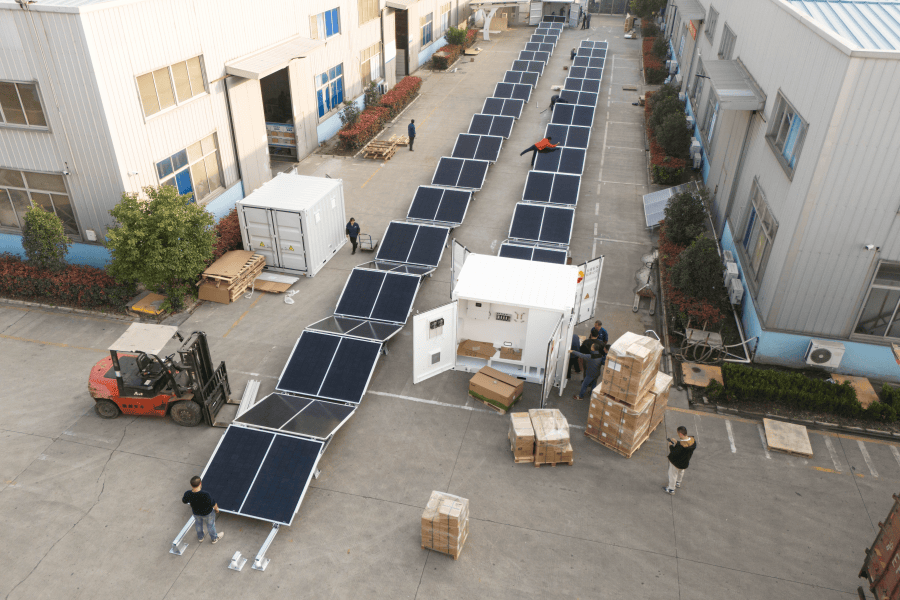
Beyond the Grid: A Real Talk on Military Energy and Environmental Stewardship
Let's be honest. When we talk about military bases, "environmental impact" isn't always the first thing that comes to mind for most folks. The mission is paramount, and energy reliability is non-negotiable. But having spent over two decades on sites from the deserts of the Middle East to remote outposts in Alaska, I've seen firsthand the immense logistical and environmental footprint of traditional power. We're talking endless convoys of diesel fuel, noisy generators running 24/7, and a carbon signature that's, well, hard to miss. Today, the conversation is changing. Commanders aren't just asking for power; they're asking for resilient, silent, and sustainable power. That's where the real innovation in high-voltage DC off-grid solar generation comes into play, and it's doing more than just keeping the lights on.
Quick Navigation
- The Hidden Cost of "Business as Usual"
- Why High-Voltage DC is a Game-Changer
- Impact Beyond Carbon: The Full Picture
- Real-World Proof: It's Not Just Theory
- Making It Happen: What to Look For
The Hidden Cost of "Business as Usual"
The problem with traditional military base power isn't a secret. It's a triple-threat of cost, vulnerability, and environmental strain. I've stood on those gravel pads, the hum of diesel gensets a constant background noise. The math is stark: according to a NREL analysis, fuel logistics can account for up to 70% of the total cost of forward operating energy, not to mention the lives put at risk during transport. Every gallon flown or trucked in is a potential point of failure.
And from an environmental perspective? It's a cascade. Local air pollution from particulate matter, groundwater contamination risks from fuel spills (I've seen the containment berms, and they aren't foolproof), and a massive greenhouse gas output. The military has ambitious sustainability goals - like the U.S. Department of Defense's aim for a 50% reduction in emissions by 2030 - but running on diesel 24/7 makes that nearly impossible. The status quo is literally burning through budgets and goodwill.
Why High-Voltage DC is a Game-Changer
So, how do we flip the script? The solution lies in integrated, off-grid solar-storage systems built around high-voltage DC (HVDC) architecture. This isn't just an incremental upgrade; it's a fundamental rethinking of the power chain.
In a typical setup, solar panels produce DC power, which gets converted to AC for the base, then often back to DC to charge batteries, and then back to AC for most loads. Every conversion loses energy - typically 2-3% per step. In an HVDC off-grid system, we minimize this. Solar feeds directly into a high-voltage DC bus, which connects seamlessly to a high-voltage battery energy storage system (BESS). This means higher overall system efficiency, often by 5% or more. That might not sound huge, but on a 2MW system running constantly, that's a mountain of saved fuel and reduced emissions over a year.
Honestly, the thermal management benefits are just as crucial. Higher voltage means lower current for the same power, which reduces resistive losses and heat generation in the cables. This makes the system inherently safer and more reliable, especially in the extreme temperatures many bases operate in. At Highjoule, when we design these systems, we build them around UL 9540 and IEC 62933 standards from the ground up, because safety and interoperability can't be an afterthought in a mission-critical environment.
Impact Beyond Carbon: The Full Picture
When we discuss the Environmental Impact of High-voltage DC Off-grid Solar Generator for Military Bases, reducing diesel consumption is the headline, but the story goes much deeper.
- Silent Watch: Switching to solar-battery power during the day (and often at night, depending on storage) drastically cuts generator runtime. This means near-zero acoustic signature. I've been on bases where the sudden quiet after switching to battery is almost unsettling - then you realize it's the sound of enhanced operational security and reduced noise pollution for surrounding areas.
- Land and Habitat: A well-designed system has a smaller physical footprint than fuel farms and repeated logistics trails. We can often use existing cleared areas or even design solar canopies over parking lots. It's about treading lighter.
- Lifecycle Thinking: The true measure is Levelized Cost of Energy (LCOE) - the total lifetime cost divided by energy produced. While the upfront capital is higher, the fuel and O&M savings are staggering. Over a 20-year lifecycle, a robust HVDC off-grid system can have an LCOE 40-60% lower than pure diesel, according to our own project models. That's a powerful financial and environmental argument.

Real-World Proof: It's Not Just Theory
Let me give you a non-classified example from a project we supported in a semi-arid region of the Southwestern U.S. The challenge was a forward training base with unreliable grid connection, requiring 1.5MW of critical load. Diesel was costing a fortune and complicating training exercises with noise and fumes.
The solution was a 2.5MW solar array coupled with a 4MWh Highjoule HVDC BESS. The system was designed to UL 9540 and IEEE 1547 standards, with a focus on rapid deployment and simple interconnection. The BESS's high C-rate capability (we're talking discharge at over 1C for short durations) meant it could handle the massive inrush currents from simulators and equipment startups without breaking a sweat - something traditional generators struggled with.
The result? Diesel use dropped by over 90% during daylight hours. The annual CO2e reduction was equivalent to taking several hundred passenger cars off the road. But just as importantly, the base commander reported improved training quality due to the silent, reliable power. That's a win-win you can't argue with.
Making It Happen: What to Look For
If you're evaluating such a system, my advice from the field is this: look beyond the spec sheet. The technology is proven, but execution is everything.
Prioritize Safety & Standards: Insist on systems certified to UL 9540 (for the BESS) and UL 1741 (for inverters/controllers) in the U.S., or IEC equivalents in Europe. This isn't red tape; it's your guarantee of rigorous safety testing.
Demand True Off-Grid Intelligence: The brain of the system - the power management system - must be built for islanded operation. It's not just about switching sources; it's about predictive load management, state-of-charge optimization, and black-start capability. Ask potential vendors, "Show me your logic for managing a week of cloudy weather."
Plan for the Full Lifecycle: Who will maintain it? How are software updates handled? At Highjoule, we've learned that a system is only as good as its local support network. We design for remote diagnostics and partner with local technicians for hands-on service, ensuring the environmental and economic benefits last for the full 20+ year lifespan.
The bottom line? Moving to high-voltage DC off-grid solar isn't just about being "green." It's about building a more resilient, cost-effective, and operationally superior base. It turns an environmental liability into a strategic asset. The technology is here, the economics make sense, and the impact is real. The question is no longer "Why?", but "What's the best path to get there?"
Tags: LCOE BESS Environmental Impact UL9540 High-voltage DC Off-grid Solar Military Base Energy Renewable Energy for Defense
Author
James Zhang
20+ years agricultural energy storage engineer / Highjoule CTO