
Environmental Impact of High-voltage DC Off-grid Solar Generator for Telecom Base Stations
The Real Environmental Math of Powering Remote Telecom: Beyond the Solar Panel
Hey there. If you're reading this, you're probably looking at powering a remote cell tower or a critical microgrid, and you've already got "solar + batteries" on the whiteboard. Smart move. But honestly, in my 20+ years hauling gear to sites from the Arizona desert to the Scottish Highlands, I've seen the same costly mistake repeated. We focus so much on the clean generation from the solar panels that we overlook the environmental footprint of the storage system itself C how it's built, how long it lasts, and frankly, how much energy it wastes just sitting there. That's the real story of the Environmental Impact of High-voltage DC Off-grid Solar Generator for Telecom Base Stations.
Quick Navigation
- The Hidden Problem: It's Not Just About Diesel
- Agitating the Issue: The Cost of Compromise
- The Solution Shift: High-voltage DC Architecture
- Case in Point: A Site in Nevada
- Expert Insight: Beyond the Spec Sheet
- Making It Real for Your Site
The Hidden Problem: It's Not Just About Diesel
The old model was simple: a diesel genset. The environmental impact was obvious C fumes, noise, constant fuel trucks. So, the industry rightly shifted to hybrid solar-battery systems. But here's the on-site reality I've witnessed: to keep costs low, many of these early off-grid systems were built by stacking together low-voltage (typically 48V) battery racks, the kind common in residential setups. This creates a cascade of inefficiency.
Powering a base station requires significant AC power. To get there from a low-voltage DC battery bank, you need massive DC-to-AC inversion and, crucially, step-up transformation. Every one of these conversions throws away energy as heat. I've placed my hand on those transformers on a cool morning and felt them burning hot. That's literally your solar energy C and your money C turning into waste heat before it ever powers a single radio. According to the National Renewable Energy Laboratory (NREL), system-level losses in poorly integrated off-grid systems can erode 15-20% of your total renewable energy yield. That's a huge environmental and financial penalty.
Agitating the Issue: The Cost of Compromise
Let's agitate that point. What does that 20% loss mean in the real world?
- More Panels, More Land: To compensate for losses, you oversize your solar array. That means more raw materials (aluminum, silicon, glass), more land disturbance, and a higher embodied carbon footprint for your "green" system.
- Shorter Battery Life, More Waste: Low-voltage systems often require higher current (Amps) to deliver the same power (Watts). High current stresses battery cells, increases heat generation, and accelerates degradation. Instead of a battery that lasts 12-15 years, you might be looking at replacement in 7-8. The environmental cost of manufacturing, shipping, and recycling batteries is enormous. Premature replacement doubles it.
- The OpEx Black Hole: That waste heat I mentioned? It doesn't just disappear. It forces you to install heavier, more power-hungry cooling systems. You're now using energy to cool the system that's wasting energy. It's a vicious cycle that drives up your long-term Levelized Cost of Energy (LCOE).

The Solution Shift: High-voltage DC Architecture
So, what's the fix? This is where modern, purpose-built high-voltage DC battery energy storage systems (BESS) change the game for off-grid telecom. The principle is elegantly simple: instead of a 48V battery bank, we use a system with a native DC output of 800V, 1000V, or even 1500V.
This isn't just an incremental tweak; it's a fundamental redesign of the power train. High-voltage DC drastically reduces the current for the same power output. Lower current means dramatically lower I2R losses (that's current squared times resistance C so cutting current in half reduces resistive losses by a factor of four). It also reduces the need for bulky, lossy transformation. The system integrates directly with high-voltage DC busbars or requires far simpler conversion to AC, preserving more of your precious solar energy.
At Highjoule, when we design for these scenarios, we start with this high-voltage DC architecture as the non-negotiable core. It's baked into our UL 9540 and IEC 62619 certified systems from the cell pack up. This isn't a boutique feature; it's the baseline for responsible, efficient off-grid power.
Case in Point: A Site in Nevada
Let me give you a real example. We partnered with a regional telecom in Nevada to retrofit a mountain-top site. The old system was a patchwork of low-voltage lead-acid batteries, a small solar array, and a diesel generator that ran 40% of the time. The goal was 99% renewable uptime.
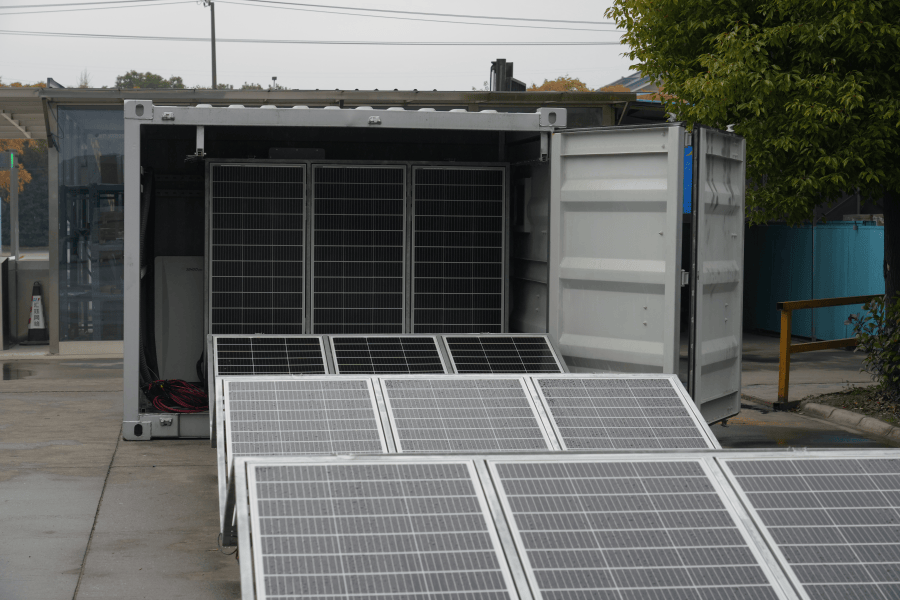
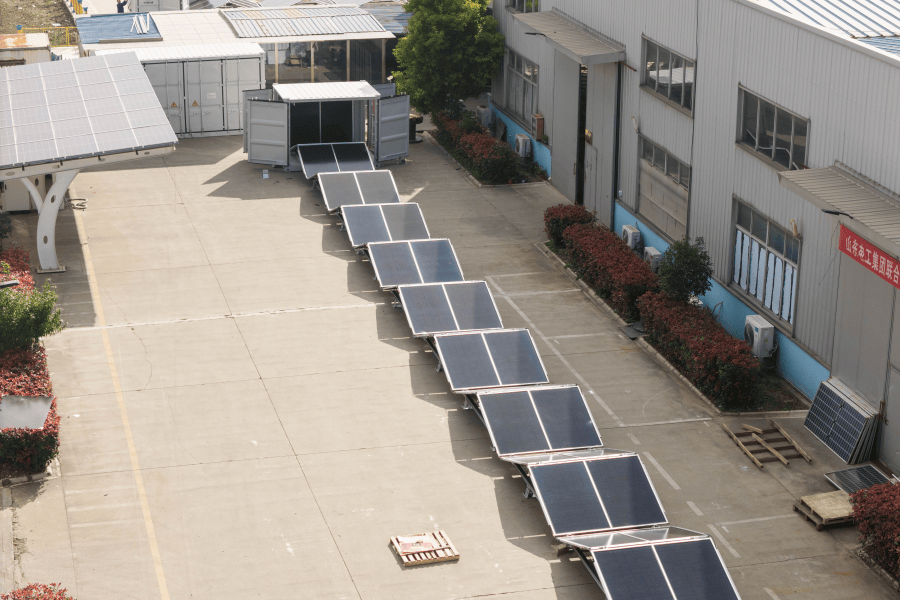
The challenge? Space was extremely limited, and maintenance visits were costly. We deployed one of our containerized, high-voltage DC BESS units paired with a new solar array. Because the BESS operated at 1000V DC, we could use smaller, more efficient conductors and eliminated an entire transformer stage. The thermal management system C a critical piece we'll talk about next C could be smaller and smarter.
The result? The diesel genset now only runs for mandatory monthly testing. Solar self-consumption efficiency increased by over 18% because we weren't burning energy as heat. The compact footprint fit the existing pad. And our integrated monitoring gives them a real-time view of both performance and the avoided carbon emissions, which is a powerful metric for their ESG reporting.
Expert Insight: Beyond the Spec Sheet
When evaluating these systems, don't just look at the nameplate kWh. Dig into these two areas with your vendor:
1. Thermal Management is the Linchpin
Battery life is a function of temperature. Period. A high-voltage system running cooler is already winning. But look for active liquid cooling over passive air cooling for these demanding, 24/7 applications. Liquid cooling maintains a uniform cell temperature, preventing hot spots that cause rapid degradation. It allows the system to operate efficiently in a wider ambient range (-30C to 50C) without derating. I've seen air-cooled systems in hot climates throttle their output just when you need them most, forcing the generator on. Liquid cooling prevents that.
2. Understanding the Real LCOE
Financial officers get this instantly. Levelized Cost of Energy (LCOE) factors in all costs: capital, installation, operating costs (like cooling), maintenance, and replacement over the system's life. A cheaper, low-voltage battery with a 7-year life and high conversion losses has a terrible LCOE. A high-voltage DC BESS with a 15-year design life, lower losses, and minimal cooling needs presents a far better LCOE and a vastly lower lifetime environmental impact. You're building it once, not twice.
Making It Real for Your Site
The conversation about environmental impact has matured. It's no longer just "solar vs. diesel." It's about the holistic efficiency and longevity of the entire power solution. Choosing a system built on a high-voltage DC foundation is the single biggest lever you can pull to minimize your physical footprint, your energy waste, and your total lifecycle carbon emissions.
The technology isn't speculative; it's field-proven and standardized. The question for your next project is this: Will you specify a system that solves the diesel problem but creates a new one of hidden waste and early obsolescence? Or will you demand a modern architecture designed for true sustainability from the inside out?
What's the one site in your network where tackling this hidden inefficiency would make the biggest immediate impact? Let's talk about what that looks like on the ground.
Tags: UL Standard BESS LCOE Off-grid Solar Environmental Impact High-voltage DC Telecom Power
Author
James Zhang
20+ years agricultural energy storage engineer / Highjoule CTO