
Step-by-step Installation of Novec 1230 Fire Suppression for Eco-resort BESS
Contents
- The Quiet Problem Every Eco-Resort Manager Faces
- Why This Keeps Me Up at Night (And Should You, Too)
- The Right Way: It's More Than Just a Box and a Bottle
- The Step-by-Step Breakdown: From Dirt to Dispatch
- The Real-World Payoff: Beyond Compliance
- Your Next Step: A Question to Ask Your Team
The Quiet Problem Every Eco-Resort Manager Faces
Let's be honest, over a coffee. You're building or managing an eco-resort. You've committed to solar, maybe a small wind turbine, and a battery system to make it all work when the sun sets or the grid falters. The sustainability story is perfect. But there's this one spec sheet item that often gets a quick glance and a checkbox: "fire suppression system for the BESS container." I've been on sites from the California coast to Greek islands, and I've seen this moment. The decision is often between a "standard" system and something like a Novec 1230 solution. The price difference makes people pause. The thinking goes, "A fire is so unlikely, and we have fire departments, right?" That, right there, is the quiet problem.
Why This Keeps Me Up at Night (And Should You, Too)
It's not just about putting out a fire. It's about what happens in the first 60 seconds. Lithium-ion battery thermal runaway is a chemical fire. It produces its own oxygen and intense heat. By the time traditional methods or a distant fire truck engage, the entire asset - hundreds of thousands of dollars in batteries and power electronics - can be a total loss. The reputational damage for an "eco"-resort from a toxic smoke plume? Unthinkable.
The National Renewable Energy Lab (NREL) has done fantastic work showing that while failure rates are low, the consequence of a BESS fire without proper, immediate suppression is disproportionately high. This isn't fear-mongering; it's risk management. For an off-grid or micro-grid resort, losing your BESS isn't an inconvenience - it's a full-scale operational shutdown. No lights, no water pumps, no kitchen, no happy guests.

The Agitation: Cost vs. Value of Protection
I was consulting on a project in the Caribbean. The team had value-engineered out the "premium" fire suppression to save on capex. A year later, a faulty cell connector led to a thermal event. The generic system didn't act fast enough. The fire didn't spread to the forest, thank goodness, but the container was a write-off. The cost of emergency replacement, air freight, lost revenue during peak season, and the engineering re-do was 4x the initial "savings." That's the real math. We focus on Levelized Cost of Energy (LCOE), but we must also calculate the Cost of Catastrophic Failure.
The Right Way: It's More Than Just a Box and a Bottle
So, what's the solution? It's a philosophy, not just a product. It's designing safety in from the start. For sensitive, remote, high-value environments like eco-resorts, a Novec 1230 system inside a properly designed container is the industry gold standard for a reason. It's clean (leaves no residue), safe for people when properly engineered, has a low global warming potential, and crucially, it acts in seconds to snuff out the chemical reaction before it cascades.
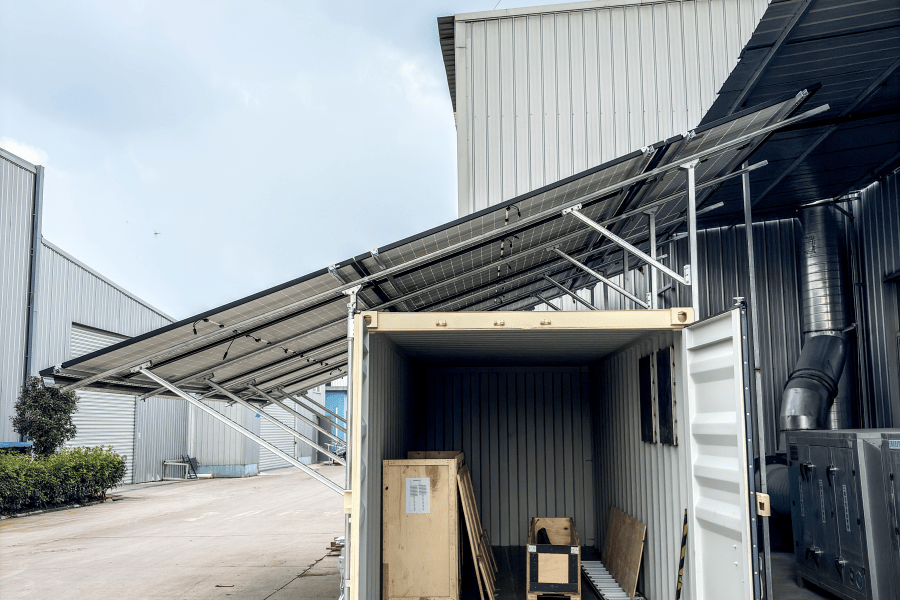
At Highjoule, we've built our containerized BESS solutions around this principle. It's not an add-on; it's integrated. Our thermal management system talks to the suppression control panel. The container is designed with specific leak prevention and ventilation standards (we build to UL 9540 and IEC 62933, but you know that). The goal is to never need the suppression, but if you do, it works flawlessly. Honestly, seeing this integration work seamlessly on site is what gives me and our clients real peace of mind.
The Step-by-Step Breakdown: From Dirt to Dispatch
Okay, let's get practical. How does a proper installation actually go down? Forget the generic manuals. Here's what a seasoned crew does, step-by-step.
1. Site Prep and Foundation: The Unseen Hero
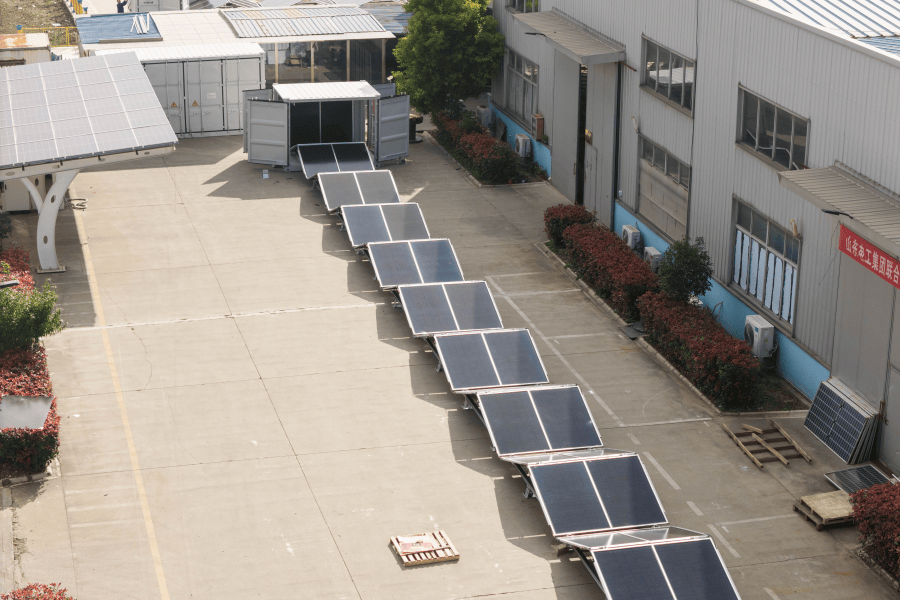
It starts long before the container arrives. The foundation must be perfectly level and able to handle the load. We also plan for secondary containment - a curb or trench system around the pad to handle any potential coolant or suppression agent runoff. This is critical for environmental protection at a resort. The electrical conduit stubs and communication trenches are laid now. A mistake here echoes through the whole project.
2. Container Placement and Anchoring
The container is craned in. Immediately, we bolt it down to seismic-grade anchors. In hurricane or high-wind zones, this is non-negotiable. The container isn't just sitting there; it's part of the site's structure now.
3. The Critical Internal Fit-Out (This is Where the Magic Happens)
First, the battery racks and power conversion systems (PCS) are installed and secured. Then, the fire suppression system gets its own dedicated installation day. This isn't a side task.
- Pipe Network: The Novec 1230 piping is run along the ceiling of the container, with nozzles positioned precisely above each battery rack and the PCS. The layout is calculated based on the volume and the specific flow requirements of Novec.
- Detection: We use a combination of very early smoke detection (VESDA) and heat/rate-of-rise detectors. The VESDA system can sample air and detect pyrolysis gases before a visible smoke or flame event. This early warning is key.
- Control Panel & Cylinders: The brain of the system. It's tied into the BESS's own energy management system (EMS). The Novec cylinders are mounted securely, often in a dedicated compartment.
4. Sealing, Signage, and Commissioning
All penetrations for cables and piping are sealed with fire-rated materials to maintain the container's integrity. Clear, multilingual safety signage is installed. Then comes the big moment: commissioning. We test every detector, every alarm horn and strobe, and the control logic. We simulate a fault signal to ensure the system would discharge correctly (without actually releasing the agent, of course). This is witnessed, documented, and signed off.
5. Integration and Handover
Finally, the system is integrated with the resort's main SCADA or building management system. We train the local facilities team - not just on how to reset an alarm, but on the philosophy of the system. What the different alarms mean, who to call (that's us, 24/7), and what not to do.
The Real-World Payoff: Beyond Compliance
I remember a project in Northern Minnesota, a beautiful lakeside eco-lodge. They had a tight site, close to guest cabins. The local fire marshal was, understandably, very concerned. By walking him through our integrated Novec 1230 design, the secondary containment, and our commissioning reports, we didn't just get a permit - we got an advocate. His confidence became the resort owner's confidence. That system has been running for 5 years now, flawlessly, through bitter winters and busy summers. It protects their investment, their guests, and their brand. That's the real LCOE: cost of ownership plus priceless security.
Your Next Step: A Question to Ask Your Team
So, if you're evaluating a BESS for your resort, move beyond the spec sheet checkbox. Ask your engineer or supplier this one question: "Walk me through, step-by-step, how your fire suppression system is integrated with the BESS controls and thermal management, and what happens from the first millisecond of a fault." Their answer will tell you everything you need to know. If they start with "the bottle is in the corner," well, maybe it's time for a second opinion. Your paradise is worth protecting properly.
Tags: UL Standard BESS Renewable Energy Novec 1230 Eco-Resort Fire Safety Lithium Battery
Author
James Zhang
20+ years agricultural energy storage engineer / Highjoule CTO