
Environmental Impact of LFP Solar Containers for EV Charging Stations
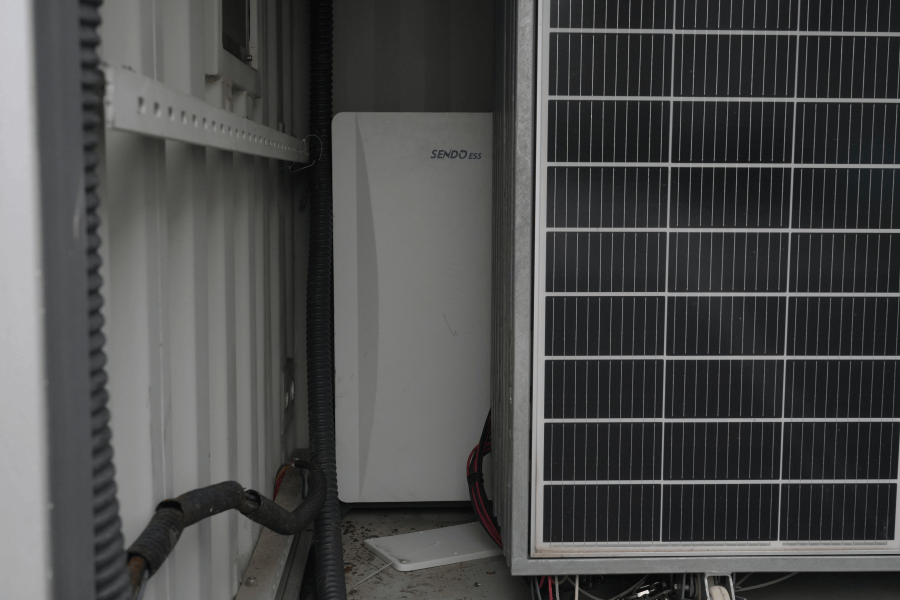
The Green Grid Puzzle: Making EV Charging Truly Sustainable
Honestly, if I had a dollar for every time a client showed me their plans for a new EV charging hub and said, We want it to be 100% green, I'd have a nice early retirement fund. The ambition is fantastic. But here's the thing I've seen firsthand on site: that green label gets fuzzy real fast when you look at the power source. Pairing solar with storage is the obvious answer, but not all batteries are created equal - especially when you consider their full environmental story. Let's talk about what that really means for your project.
Quick Navigation
- The Hidden Cost of "Green" Charging
- Why LFP Stands Out: More Than Just Chemistry
- Real Numbers, Real Impact
- Making It Work On the Ground: Safety & Longevity
- Looking Ahead: Your Next Move
The Hidden Cost of "Green" Charging
Picture this: a shiny new fast-charging station in a California business park. The solar canopy is impressive. But to handle the evening charging rush, it's backed by a large battery system. The immediate thought often goes to upfront cost and power rating. The deeper, often overlooked question is: what's the environmental payback of that battery itself? The International Energy Agency (IEA) points out that while EV sales are soaring, the sustainability of the supporting infrastructure, including its embodied carbon, is critical for net-zero pathways. Deploying a high-impact battery to support clean transport can feel like taking one step forward and half a step back.
The aggravation comes from a few angles. First, sourcing. Some battery chemistries rely heavily on cobalt and nickel, which have well-documented supply chain concerns. Second, longevity. If a battery system needs a full replacement every 5-7 years, the recurring manufacturing footprint is huge. And third, safety. A thermal event doesn't just risk assets; it can lead to significant environmental contamination. I've been called to sites where the fear of this alone has stalled projects. The solution isn't just any battery; it's a battery designed with its entire lifecycle in mind.
Why LFP Stands Out: More Than Just Chemistry
This is where Lithium Iron Phosphate (LFP) chemistry, especially in a pre-integrated solar container format, changes the game. It directly tackles those hidden costs. Let me break it down simply.
LFP's core materials - iron and phosphate - are abundant and geopolitically stable. This immediately simplifies sourcing and reduces the upstream mining impact compared to nickel-cobalt-aluminum (NCA) batteries. But the real win is in its lifespan. LFP batteries typically endure thousands more charge cycles. In our projects at Highjoule, we design our LFP-based containers for a 10+ year service life with minimal degradation, which directly slashes the lifecycle environmental cost. You're not consuming and replacing batteries as often.
Then there's the inherent stability. The phosphate bond is incredibly robust, making LFP cells far more resistant to thermal runaway. On a practical level, this means our engineering teams can design thermal management systems that are less complex and less energy-intensive to run. You save on operational energy (improving the system's net efficiency) and you massively reduce the risk of an incident that could have its own environmental fallout. It's a safer, cleaner package from day one through to decommissioning.

Real Numbers, Real Impact
Let's move from theory to the field. I recall a project for a logistics fleet operator in North Rhine-Westphalia, Germany. Their challenge was classic: they had rooftop solar but needed to charge 30+ electric vans overnight without hammering the grid. They also had a strict corporate sustainability mandate that included the embodied carbon of new infrastructure.
We deployed a 500 kWh LFP solar container. The key metrics that sold it weren't just power. It was the Levelized Cost of Storage (LCOS) - a fancy term for the total cost per kWh over the system's life. By factoring in longer lifespan and lower maintenance, the LCOS was compelling. But more importantly, we could provide a credible assessment of the system's lower carbon footprint from manufacturing through to operation, aligning with their ESG reporting. According to the National Renewable Energy Laboratory (NREL), optimizing for lifecycle impacts is becoming a primary driver in storage procurement, not just upfront cost.
This holistic view is what matters now. It's not just about the kilowatt-hours you store; it's about the environmental cost of each of those kilowatt-hours.
Key Environmental Advantages at a Glance
Making It Work On the Ground: Safety & Longevity
So, you're convinced on the chemistry. How do you ensure that environmental promise translates to a real, reliable asset in your parking lot or depot? This is where containerization and smart engineering come in.
A container isn't just a box. For us, it's a controlled environment. We integrate advanced, passive-cooling thermal management systems that leverage LFP's natural stability. This reduces the parasitic load - the energy the system uses to cool itself - which again improves net efficiency and sustainability. Every bit of solar energy goes further.
Compliance is non-negotiable. In the US, that means strict adherence to UL 9540 for the energy storage system and UL 1973 for the batteries themselves. In Europe, it's the IEC 62619 standard. These aren't just checkboxes; they are rigorous testing protocols for safety and performance that give you, the operator, peace of mind. Our containers are built to these standards from the ground up, because I've seen how cutting corners here leads to headaches, downtime, and yes, potential environmental liabilities down the road.
The final piece is thinking about the end at the beginning. We design for serviceability and eventual decommissioning. Modular components within the container can be serviced or upgraded without scrapping the entire system, and we partner with certified recycling networks to ensure a responsible end-of-life pathway. True sustainability is a closed loop.
Looking Ahead: Your Next Move
The conversation around EV charging infrastructure is maturing. It's no longer just Do you have storage? but What kind of storage, and what is its total impact? Choosing an LFP-based solar container is a definitive step towards answering that second question credibly.
When you evaluate your next project, look beyond the price per kWh of capacity. Ask about the expected lifecycle. Request the safety certifications. Inquire about the thermal management strategy and its energy use. The answers will tell you if you're getting a widget or a truly sustainable asset.
What's the one question about your project's environmental footprint that keeps you up at night? Maybe it's time we found a concrete answer for it.
Tags: UL Standard BESS Europe US Market Solar Container Renewable Energy LFP Battery Environmental Impact EV Charging Lifecycle Cost
Author
James Zhang
20+ years agricultural energy storage engineer / Highjoule CTO