
Environmental Impact of All-in-one Integrated Hybrid Solar-Diesel System for Data Center Backup Power
Beyond the Diesel Genset: A Real Talk on Greening Your Data Center's Lifeline
Honestly, if you're managing a data center in the US or Europe right now, you're in a tough spot. On one hand, the grid's getting less predictable, and uptime is non-negotiable. On the other, your sustainability goals - and maybe local regulations - are staring down your diesel backup generators. I've been on-site, smelled the exhaust after a grid-failure test, and listened to facility managers wrestle with this exact dilemma. The old way of doing things creates a real tension between reliability and environmental responsibility. But what if the backup system itself could become a part of your green strategy? Let's talk about the real Environmental Impact of All-in-one Integrated Hybrid Solar-Diesel System for Data Center Backup Power.
Quick Navigation
- The Problem: Your Backup Power is Working Against Your ESG Report
- The Data: Why "Standby" Isn't Good Enough Anymore
- The Solution: An Integrated Hybrid System That Thinks Ahead
- Case Study: A 10MW Data Center in Northern Germany
- Expert Insight: It's About More Than Just Panels and Batteries
- Making It Real: What Deployment Actually Looks Like
The Problem: Your Backup Power is Working Against Your ESG Report
For decades, the solution for data center backup was simple: install rows of diesel generators, test them monthly, and forget about them - until you need them. The environmental cost was an accepted trade-off for guaranteed uptime. But the game has changed. I've seen firsthand how corporate sustainability targets, often aiming for Net Zero, now directly conflict with the "dirty secret" of running diesel gensets, even just for testing. Local emissions regulations, especially in the EU and parts of the US like California, are tightening. Noise pollution during testing cycles is a growing community relations issue. And let's be blunt: that diesel fuel sitting in tanks is a cost liability and a risk, both financially and environmentally.
The real agitation comes from the inefficiency. You've invested millions in a power asset that sits idle 99.9% of the time, still requires maintenance, and when called upon, it hits your carbon footprint like a freight train. It's a stranded asset in the worst way - stranded in terms of both value and environmental impact.
The Data: Why "Standby" Isn't Good Enough Anymore
The numbers don't lie. According to the International Energy Agency (IEA), data centers are significant and growing consumers of global electricity. While they've gotten more efficient, their backup systems largely haven't. A typical monthly no-load test of a 2MW diesel generator set can burn over 50 gallons of fuel, producing emissions with zero productive output. Scale that across multiple units, and the operational carbon from "readiness" alone becomes substantial.
More importantly, during an actual outage, these generators run at full load. The National Renewable Energy Laboratory (NREL) has shown that integrating solar PV and battery storage can reduce generator runtime by 70-90% in hybrid microgrids. That's not just fuel savings; it's a direct, massive cut in NOx, SOx, and particulate matter emissions during your most critical moments.
The Solution: An Integrated Hybrid System That Thinks Ahead
This is where the all-in-one integrated hybrid system changes everything. It's not just slapping some solar panels on the roof and calling it a day. We're talking about a unified system where solar PV, a large-scale battery energy storage system (BESS), your existing diesel gensets, and advanced control software are designed to work as a single, intelligent organism.
The core environmental impact shift is profound:
- Fuel and Emission Elimination: Solar power directly offsets grid consumption daily, reducing your overall carbon footprint. During an outage, the BESS is the first responder, carrying critical loads for minutes or hours, often long enough for the grid to recover or for a controlled generator start.
- Generator Optimization: When the generator must run, it does so at its optimal, efficient load point. The battery can smooth the demand, preventing inefficient low-load running. The system can even initiate a "generator exercise" cycle by charging the batteries with the genset at peak efficiency, turning a wasteful test into a useful task.
- Waste Heat Recovery (Potential): In advanced designs, generator exhaust heat can be captured for other uses, further improving the overall system's energy efficiency.
Case Study: A 10MW Data Center in Northern Germany
Let me tell you about a project we worked on with Highjoule in North Rhine-Westphalia. The client needed to expand their backup capacity for a 10MW facility but faced strict local limits on generator run-hours and emissions. The challenge was to enhance reliability while reducing the environmental permit burden.
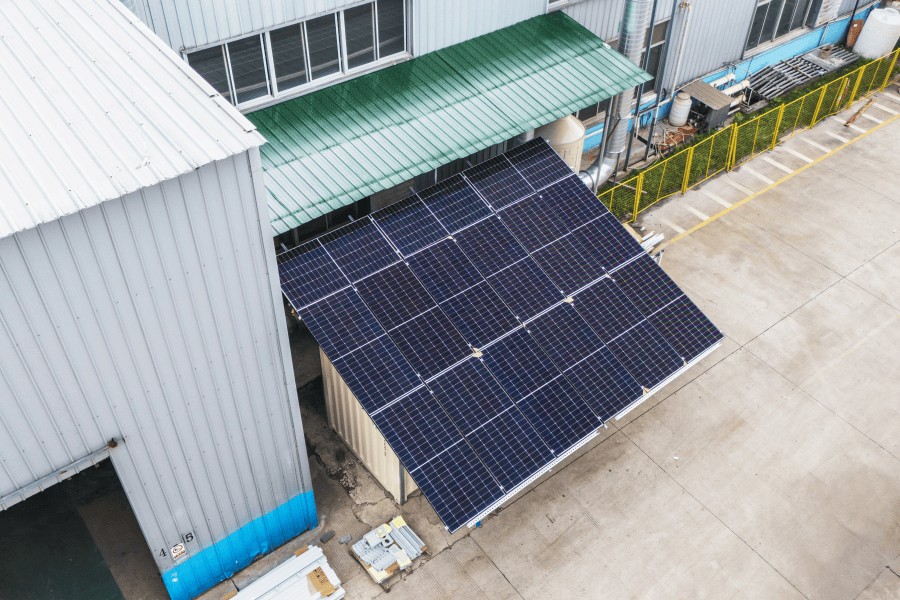
The solution was a 2.5MW/5MWh containerized BESS from Highjoule, integrated with a new 1.5MWp rooftop solar array and their legacy 4MW of diesel generation. The BESS, certified to UL 9540 and IEC 62933, was the brain of the operation. Here's what happened:
- The solar array now provides ~12% of the site's daytime base load, a direct carbon offset.
- In the event of a grid dip, the BESS responds in milliseconds, bridging the gap. In the last 18 months, it has prevented over 50 potential generator starts for minor disturbances.
- For a planned 4-hour grid maintenance, the system orchestrated a "load-following" mode: the BESS carried the load, with one generator running at 80% optimal load to simultaneously power the center and recharge the batteries slowly. Fuel consumption was 40% lower than the old method of running multiple gensets.
The facility manager told me their projected diesel fuel use for testing and outages has dropped by over 60%, which made their environmental compliance reporting "suddenly a lot easier."

Expert Insight: It's About More Than Just Panels and Batteries
Okay, let's get technical for a minute, but I'll keep it coffee-chat simple. The magic - and where the real environmental and economic wins are locked - is in the system design.
- C-rate of the Battery: This is basically how fast you can charge or discharge the battery. For backup, you need a high discharge C-rate to handle the massive, instant load of a data center. But you also need to manage it wisely to maximize lifespan. Our systems are designed to use just the right amount of that power, preserving the battery's health for years, which reduces long-term waste and improves the Levelized Cost of Energy (LCOE) - the total lifetime cost per kWh.
- Thermal Management: This is the unsung hero. Batteries degrade fast if they get too hot or too cold. A superior liquid-cooling system (like in our Highjoule units) keeps the battery at its happy place with 30% less energy than air-cooling. Less auxiliary energy use means a lower overall system footprint and better efficiency during long outages.
- The Controller is King: All the components talk through a master controller that follows IEEE 2030.7 standards for microgrids. It makes millisecond decisions: "Solar is dipping, pull from the battery. Battery at 40%, start generator A at optimal load." This intelligence is what minimizes runtime and fuel burn.
Making It Real: What Deployment Actually Looks Like
So, you're considering this. What's next? From my 20 years in the field, the key is a partner who thinks about the whole lifecycle. It's not just about selling you a battery container. At Highjoule, our approach is to design for your specific utility tariffs, your local climate (affecting solar yield and battery cooling needs), and your existing infrastructure. We ensure the system is pre-certified to your regional standards (UL, IEC, etc.) to avoid costly delays.
The deployment itself is modular. The all-in-one BESS skid arrives pre-tested, significantly reducing on-site construction time and risk. The integration work is with your switchgear and generator controls. And post-installation, our remote monitoring platform gives you a dashboard view of your carbon avoidance, fuel savings, and system health - turning your backup power from a cost center into a visible, reportable sustainability asset.
The question isn't really about the upfront cost anymore. It's about the total cost of ownership and the cost of inaction on your environmental goals. When your backup system can pay for part of itself through daily solar savings and fuel avoidance, while future-proofing you against carbon taxes and regulations, the conversation shifts entirely.
What's the one metric in your next ESG report that you wish you could improve? Could your backup power be the unexpected answer?
Tags: UL Standard BESS LCOE Data Center Backup Power Microgrid Hybrid Solar-Diesel IEC Standard
Author
James Zhang
20+ years agricultural energy storage engineer / Highjoule CTO