
LFP Solar Container Environmental Impact for Remote Island Microgrids
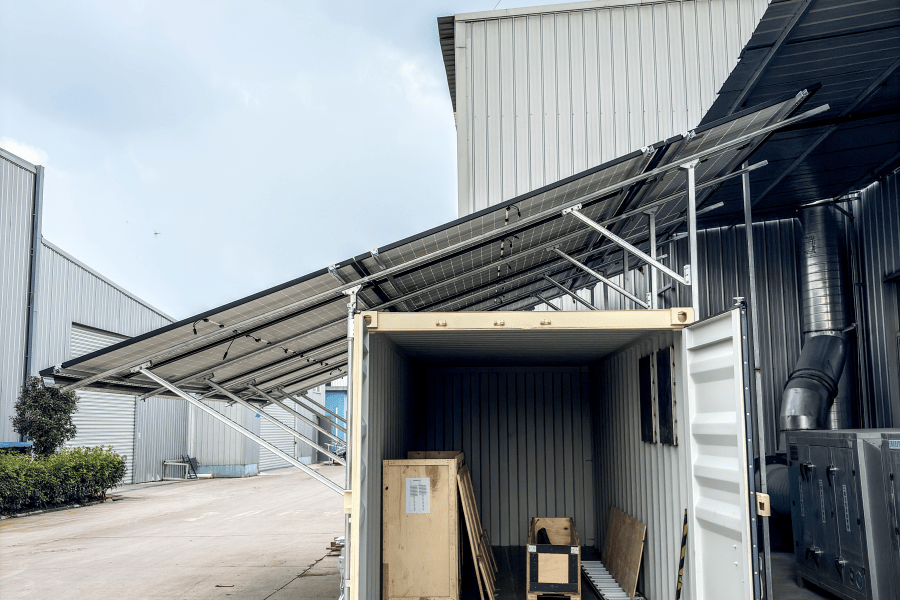
The Real Environmental Story Behind LFP Solar Containers for Remote Islands
Hey there. Let's be honest. When you're planning a microgrid for a remote island, the pressure is immense. You're not just balancing kilowatts and dollars; you're stewarding an entire ecosystem. I've been on those islands, felt that sun, smelled that air, and seen the immense trust the community places in the technology we deploy. And one question always rises to the top, way beyond upfront costs: "What's the real, long-term environmental impact of this battery system we're about to install?" Today, over a virtual coffee, let's cut through the marketing fluff and talk about why the choice of battery chemistry - specifically LFP in solar containers - is the most critical environmental decision you'll make.
Jump to a Section
- The Hidden Cost of "Cheap" Power
- When the Battery Becomes the Liability
- LFP Containers: Engineered for Island Resilience
- Proof in the Pacific: A Real-World Turnaround
- The Tech Behind the Sustainability
The Hidden Cost of "Cheap" Power
For decades, the go-to for large-scale storage was often other lithium-ion chemistries, like NMC. The pitch was high energy density. But on a remote island, density isn't the only metric. I've seen projects where the initial "savings" were quickly erased by complex thermal management needs - meaning bigger cooling systems, more energy draw, and a higher chance of failure in humid, salty air. The environmental impact starts here: a less stable chemistry requires more supporting infrastructure, more embedded carbon, and creates a higher operational carbon footprint. According to the National Renewable Energy Laboratory (NREL), the balance-of-system costs and operational efficiency are primary drivers of the Levelized Cost of Storage (LCOS). Choose the wrong core technology, and your green project starts with a hidden brown deficit.
When the Battery Becomes the Liability
Let's agitate this a bit. Imagine a container on a pristine island. It's running hot. The cooling fans are constantly on, eating into your precious solar yield. There's a lingering worry about off-gassing or thermal runaway - a fire risk that, in a remote location, isn't just a financial disaster; it's an ecological catastrophe. Decommissioning is another nightmare. How do you safely remove and transport a degraded, potentially hazardous battery bank thousands of miles for recycling? The logistical and environmental cost is staggering. You're left with a toxic legacy instead of a clean energy one. This isn't theoretical; I've consulted on sites where the end-of-life plan was literally "we'll figure it out later." That's a ticking time bomb.
LFP Containers: Engineered for Island Resilience
This is where the Environmental Impact of LFP (LiFePO4) Solar Container for Remote Island Microgrids fundamentally shifts the narrative. The solution isn't just a battery; it's a philosophy of resilience baked into the chemistry and the container. LFP's inherent stability is its superpower. It doesn't just meet UL 9540 and IEC 62619 standards; it often exceeds their safety thresholds with a wider thermal tolerance. This means the container system can be simpler. Less aggressive cooling, less auxiliary power consumption, and a design that trusts the chemistry to be benign. At Highjoule, when we engineer our LFP containers, we're not fighting the battery's nature; we're leveraging its safety to create a leaner, meaner, and greener system. The environmental impact is direct: lower lifetime energy consumption, safer on-site presence, and a clear, sustainable end-of-life path due to LFP's non-toxic, cobalt-free chemistry.

Proof in the Pacific: A Real-World Turnaround
Let me tell you about a project off the coast of British Columbia. A small island community was reliant on diesel. They deployed a solar + storage microgrid, but the first-gen battery system (non-LFP) was causing headaches - constant maintenance, capacity fading faster than expected, and real safety concerns during peak summer heat. They brought us in. We replaced it with a single, UL 9540-certified Highjoule LFP solar container. The difference wasn't subtle. The thermal management system went from sounding like a jet engine to a quiet hum. The community's operational solar yield increased because less power was wasted on cooling. Most importantly, the peace of mind was palpable. The local operator told me, "I finally sleep at night. And I'm not worried about what we leave for our kids." That's the real environmental and social impact.
The Tech Behind the Sustainability
You might hear terms like C-rate or LCOE thrown around. Let me demystify them in an island context. A high C-rate means you can charge/discharge fast, which is great for smoothing solar spikes. LFP handles high C-rates with less stress, meaning less degradation over 10+ years. Lower degradation means fewer battery replacements over the life of the microgrid - a massive win for reducing embodied carbon.
Then there's LCOE - Levelized Cost of Energy. The International Energy Agency (IEA) consistently highlights how storage durability and safety lower LCOE. Here's my firsthand take: LFP's long cycle life (often 6000+ cycles) and minimal maintenance directly crush your LCOE. You're not just buying kilowatt-hours today; you're guaranteeing them for decades with minimal added environmental burden. The thermal management system is smaller, so you use less copper, less aluminum, less of everything. That's sustainable engineering.
Our approach at Highjoule is to build this insight into every container. From the corrosion-resistant coatings for salt-air environments to the modular design that allows for easy, low-impact servicing on-site, we design for the full lifecycle. It's not a commodity; it's a long-term partner for your island's energy independence.
So, What's Your Next Step?
When you evaluate your next remote microgrid project, look beyond the price per kWh on the spec sheet. Ask your supplier about the operational carbon footprint of the BESS. Drill into their end-of-life logistics plan. Demand transparency on cycle life data under realistic conditions. The right LFP solar container isn't just a component; it's the cornerstone of a truly sustainable energy ecosystem. What legacy will your project leave on the island it powers?
Tags: UL Standard BESS Solar Container Renewable Energy LFP Battery Remote Island Microgrid IEC Standard Environmental Impact LiFePO4
Author
James Zhang
20+ years agricultural energy storage engineer / Highjoule CTO