
Liquid-Cooled Hybrid Solar-Diesel Systems: Reducing Environmental Impact in Agricultural Irrigation
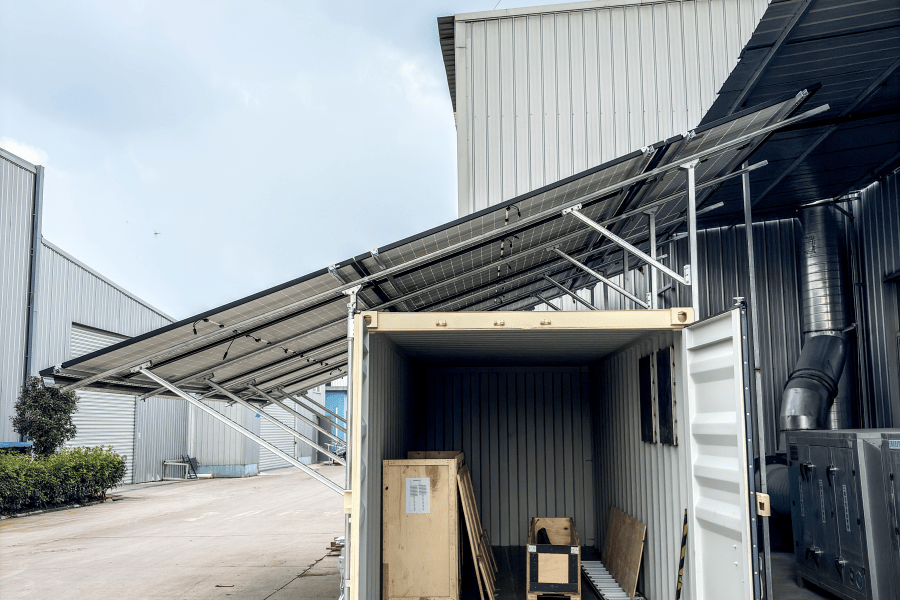
Table of Contents
- The Hidden Cost of "Keeping the Lights On"
- Beyond Carbon: The Ripple Effect of Diesel Dependency
- The Hybrid Solution: It's Not Just About Adding Solar Panels
- Why Liquid Cooling Makes All the Difference
- A Real-World Case: California's Almond Groves
- Making Sense of the Tech: LCOE, C-Rate, and Thermal Management
- What's Your Next Step?
The Hidden Cost of "Keeping the Lights On"
Let's be honest. When you're managing a large-scale agricultural operation, especially for irrigation, your primary focus is on water, crops, and yield. The power system? It's often seen as a necessary utility C a background hum, quite literally if you're relying on diesel generators. For decades, the diesel genset has been the rugged, reliable workhorse for off-grid and unreliable-grid farms across the US and Europe. It gets the job done. But over my 20+ years on site, from the vineyards of Italy to the sprawling farms in Texas, I've seen the real toll this reliability takes. We're talking about more than just fuel bills; we're talking about an environmental and operational footprint that's becoming harder to ignore in today's world.
Beyond Carbon: The Ripple Effect of Diesel Dependency
The problem with a standalone diesel system for irrigation isn't a secret. The carbon emissions are the headline, sure. The International Energy Agency (IEA) consistently highlights agriculture's energy intensity. But on the ground, the impact is more nuanced. You have the constant noise pollution C a droning that defines the workday and impacts local wildlife. There's the logistical headache and spill risk of storing and transporting bulk diesel. And then there's the sheer inefficiency: running a massive generator at partial load just to power a variable-speed pump is like using a sledgehammer to crack a nut. It wastes fuel, increases maintenance cycles, and pumps out unnecessary NOx and particulate matter. Honestly, I've walked past gensets that were so hot you could feel the wasted energy radiating off them. That's not just an environmental issue; that's literally money turning into heat and smoke.
The Core Challenges We Face:
- Sky-High Operational Costs: Volatile diesel prices directly hit your bottom line.
- Regulatory Pressure: Tighter emissions standards in the EU and parts of the US are making pure diesel ops a compliance challenge.
- Noise & Community Relations: Especially in Europe, noise regulations can limit operating hours.
- System Inefficiency: Gensets are inefficient at partial loads, which is where they often run during irrigation cycles.
The Hybrid Solution: It's Not Just About Adding Solar Panels
So, the answer is solar, right? Well, yes, but it's only half the story. A simple solar-diesel setup helps, but it leaves massive value on the table. The true game-changer is integrating a Battery Energy Storage System (BESS) into the mix, creating a smart, liquid-cooled hybrid system. This trio C solar, battery, generator C working in concert is where we see a dramatic shift in the Environmental Impact of Liquid-cooled Hybrid Solar-Diesel System for Agricultural Irrigation. The solar array cuts diesel runtime during the day. The battery acts as a silent, instantaneous power buffer: it handles short, high-power demands (like starting a large pump motor) and soaks up excess solar, allowing the diesel gen-set to either shut off completely or run only at its most efficient, optimal load point when absolutely needed. The result? Fuel use can plummet by 60-80% in well-designed systems I've commissioned.
Why Liquid Cooling Makes All the Difference
Now, not all BESS are created equal for this tough job. An irrigation pump station in Arizona or Spain isn't an air-conditioned data center. This is where the choice between air-cooled and liquid-cooled batteries becomes critical. In the field, thermal management is everything. Air-cooled systems struggle with dust, extreme ambient temperatures, and maintaining even cooling across all battery cells. A hot spot can degrade a cell's life faster than anything.
Liquid cooling, like what we engineer into Highjoule's containerized systems, changes the game. It's like comparing a simple fan to a precision car radiator. The coolant directly contacts the cells or modules, pulling heat away evenly and efficiently. This allows the system to sustain higher C-Rates (that's the speed of charge/discharge C crucial for handling the sudden power surge of a pump start) without overheating. It also dramatically extends the battery's lifespan, which directly improves your Levelized Cost of Energy (LCOE) C the total lifetime cost per kWh. Plus, a sealed liquid-cooled unit is inherently more protected from dusty farm environments. When we design for the UL 9540 and IEC 62619 standards, this thermal stability is a core part of the safety case, giving operators and insurers real peace of mind.

A Real-World Case: California's Almond Groves
Let me give you a concrete example from a project we completed last year in California's Central Valley. A 500-acre almond farm was running two 500kW diesel generators nearly 18 hours a day during peak irrigation season. Their challenges were classic: fuel costs, noise complaints from a nearby residential area, and maintenance nightmares.
We deployed a 1.2 MWh liquid-cooled BESS alongside a 750kW solar canopy over a storage yard. The system was engineered to do two things: first, let the solar+battery run the entire irrigation load during daylight, silencing the gensets. Second, use the battery's instantaneous power to handle the pump starts, allowing a single generator to come online only at night, and run at a steady, efficient 80% load to recharge the battery if needed.
The outcome? Diesel runtime dropped by over 90%. Annual fuel consumption was cut by ~85,000 gallons. The noise issue vanished. From an environmental impact perspective, that's a reduction of roughly 900 metric tons of CO2e annually. The farm manager told me the quiet was the most immediate and shocking benefit C they could actually hear the birds again. The project paid for itself in under 5 years thanks to fuel savings and state incentives.
Making Sense of the Tech: LCOE, C-Rate, and Thermal Management
I know these terms can sound like jargon, but they're just simple ways to measure value and performance. Let me break them down as I would to a client over coffee:
- LCOE (Levelized Cost of Energy): This is your true "cost per mile" for power. It includes the upfront capex of the solar panels, battery, and controls, plus all the opex (fuel, maintenance, etc.) over 20 years. A liquid-cooled hybrid system has a higher upfront cost than a genset alone, but its LCOE is often far lower because the "fuel" (sunlight) is free and maintenance is minimal.
- C-Rate: Think of this as the "athleticism" of the battery. A 1C rate means the battery can fully charge or discharge in one hour. Irrigation needs bursts of power. A high, sustained C-rate capability, enabled by great liquid cooling, means the battery can deliver those bursts without breaking a sweat or degrading quickly.
- Thermal Management: This is the unsung hero. Consistent, even temperature = long life, safety, and reliability. It's the core engineering challenge we solve every day at Highjoule. Getting it right is what lets us offer robust performance warranties and ensure our systems meet the stringent UL and IEC standards required for insurance and permitting in North America and Europe.
What's Your Next Step?
The technology to radically reduce the environmental and economic footprint of your irrigation power isn't futuristic C it's field-proven and available today. The move from a diesel-only to a smart, liquid-cooled hybrid system is one of the most impactful decisions a modern agricultural business can make. It's not just about being greener; it's about being more resilient, predictable, and cost-controlled.
I'm curious, when you look at your own operation's energy profile, what's the one pain point C be it cost, noise, reliability, or regulation C that keeps you up at night? What would shifting 80% of your fuel budget do for your bottom line?
Tags: Renewable Energy Integration Off-grid Power Agricultural Irrigation Liquid-cooled BESS Hybrid Solar-Diesel UL IEC Standards Environmental Impact
Author
James Zhang
20+ years agricultural energy storage engineer / Highjoule CTO