
Environmental Impact of Liquid-cooled BESS for Industrial Parks: A Real-World View
Let's Talk About What Really Happens On Site
Honestly, after two decades of deploying battery systems from Texas warehouses to German manufacturing plants, I've learned one thing: the environmental story of an energy storage system isn't just about the clean energy it stores. It's about the entire lifecycle on that concrete pad in your industrial park. The efficiency losses, the space it eats up, the hidden maintenance burdens, and yes, the cooling system that can make or break your total cost and carbon footprint. Let's cut through the marketing fluff and talk about what you, as a decision-maker, actually care about.
What You'll Find in This Article
- The Real Problem Isn't What You Think
- The Hidden Cost of "Air" in Your ROI
- Why Liquid Cooling Changes the Game
- A Case in Point: Lessons from a Midwest Auto Plant
- Beyond the Hype: Thermal Management & LCOE Explained Simply
- Making It Real: What to Look For in Your Project
The Real Problem Isn't What You Think
The conversation around Environmental Impact of Liquid-cooled Lithium Battery Storage Container for Industrial Parks often starts with recycling (which is crucial, don't get me wrong). But on Monday morning, when you're looking at your facility's energy bill and footprint, the immediate "environmental" impact is about efficiency and density. I've seen this firsthand: a traditional air-cooled BESS container might lose 3-4% of its stored energy just to power its own cooling fans and HVAC systems. That's energy bought or generated that never makes it to your production line. According to a NREL analysis, thermal management can account for up to 30% of a system's parasitic load. That's a direct financial and carbon cost.
The Hidden Cost of "Air" in Your ROI
Let's agitate that point a bit. Air cooling is simple, but it's terribly inefficient for the high-density, high-C-rate batteries needed for industrial applications like peak shaving or frequency regulation. You need massive airflow, which means bigger ducts, more space around containers for air intake, and filters that clog up with dust, pollen, and industrial particulates. I've been to sites where maintenance crews are cleaning filters every month, a cost rarely factored into the initial OpEx. The system footprint grows, meaning more land use - a real environmental and cost factor in tight industrial parks. The noise from those high-power fans? That's an environmental impact for your workers and neighbors, often requiring sound-dampening barriers. Suddenly, that "simple" system isn't so simple.

Why Liquid Cooling Changes the Game
This is where the shift to advanced liquid-cooled containers becomes a no-brainer solution. It's not just about cooling better; it's about system-level efficiency and density. A liquid coolant, like a dielectric fluid, can absorb 3-4 times more heat than air per unit volume. This allows us at Highjoule to pack more battery capacity into the same container footprint - sometimes up to 30% more. Less land use, more energy stored. The pumps use a fraction of the energy those massive fans do, cutting that parasitic load I mentioned. Honestly, the difference in on-site energy consumption logs is stark.
But the environmental win goes deeper. Precise, uniform cooling extends battery life significantly. If you can reduce peak cell temperature by 10-15C, which liquid systems do consistently, you're potentially doubling the cycle life of the battery. That means fewer battery packs manufactured, shipped, and recycled over the lifetime of your installation. That's a massive, yet often overlooked, lifecycle environmental benefit. Our designs are built from the ground up to meet the strictest UL 9540 and IEC 62933 standards, but the liquid cooling loop itself adds a layer of safety and stability that regulators and site managers love.
A Case in Point: Lessons from a Midwest Auto Plant
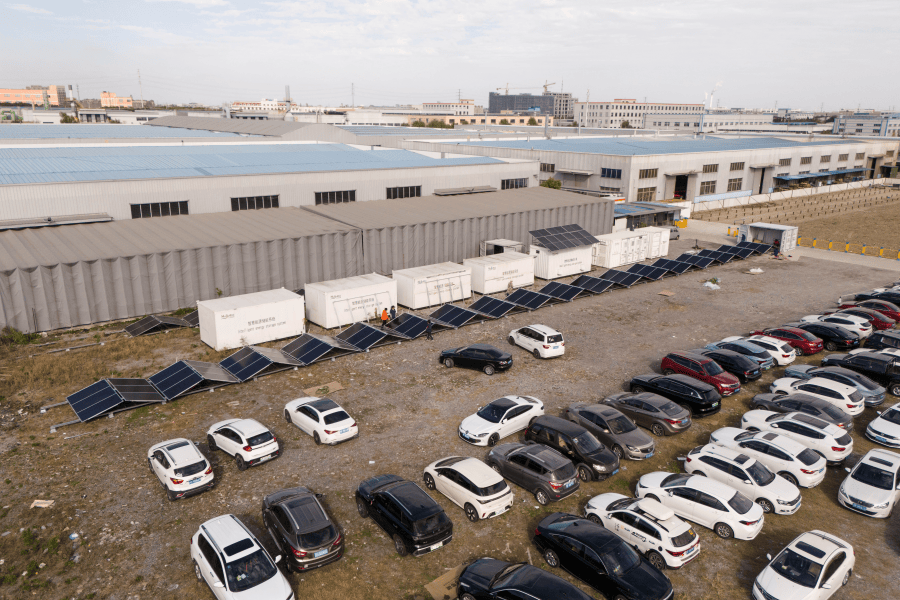
Let me give you a real example. We deployed a 5 MW/10 MWh liquid-cooled BESS at a major auto manufacturing campus in Ohio. The challenge? They needed to shave a sharp peak demand load, but space was at a premium next to the paint shop, and their sustainability team had strict metrics on system efficiency. An air-cooled design would have required two containers for the same capacity, with mandated spacing for airflow.
Our single, high-density liquid-cooled container fit the spot perfectly. The closed-loop system had no issues with the paint shop's airborne particles. Over the first year, the data showed a 96.5% round-trip efficiency (AC-to-AC), beating the projected 92% from an air-cooled alternative. That 4.5% difference is pure energy savings, translating directly to a lower Levelized Cost of Storage (LCOE). The plant manager now talks about the BESS not just as a cost-saving tool, but as a quiet, low-maintenance neighbor on the facility floor.
Beyond the Hype: Thermal Management & LCOE Explained Simply
Let's demystify two key terms. Thermal Management is just a fancy term for keeping the battery at its happy temperature. Think of it like a high-performance engine. An air-cooled VW Beetle works, but a liquid-cooled Formula 1 engine delivers more power reliably under stress. For batteries, stress is a high C-rate (a measure of charge/discharge speed). Industrial applications demand high C-rates, and liquid cooling is the only way to manage that heat uniformly without creating hot spots that degrade cells.
This all flows into LCOE. It's the total cost of owning and operating the storage system per unit of energy it delivers over its life. Liquid cooling lowers LCOE by: 1) Increasing energy density (lower capex per kWh), 2) Boosting efficiency (more saleable/dispatched energy), and 3) Extending lifespan (more years of service). A 2023 report by IRENA highlights efficiency and longevity as primary levers for reducing storage costs. That's the real environmental impact: making clean energy storage more economically sustainable, so more of it gets built.
Making It Real: What to Look For in Your Project
So, what does this mean for your next RFP or site plan? Don't just compare $/kWh on the nameplate. Look at the system's footprint and weight. Ask for the parasitic load specs of the thermal management system. Dig into the warranty and what cycle life/throughput it's based on - that's where the liquid cooling advantage is locked in. Ensure the design is certified to your local standard, be it UL or IEC.
At Highjoule, we've baked this into our HJT-Stack LiquidCool series. The design came from seeing too many site issues with air systems. It's about providing a container that not only meets the spec sheet but actually performs for 15+ years with minimal fuss, maximizing your investment and minimizing its true footprint. The goal is to make the system so reliable and efficient that it becomes a boring, predictable asset on your balance sheet. In this business, boring is beautiful.
What's the one constraint in your next project - space, efficiency targets, or long-term O&M budget? How might a shift in thermal strategy change that equation?
Tags: UL Standard BESS LCOE Thermal Management Industrial Energy Storage
Author
James Zhang
20+ years agricultural energy storage engineer / Highjoule CTO