
NOVEC 1230 Fire Suppression: Environmental Impact for Remote Island BESS
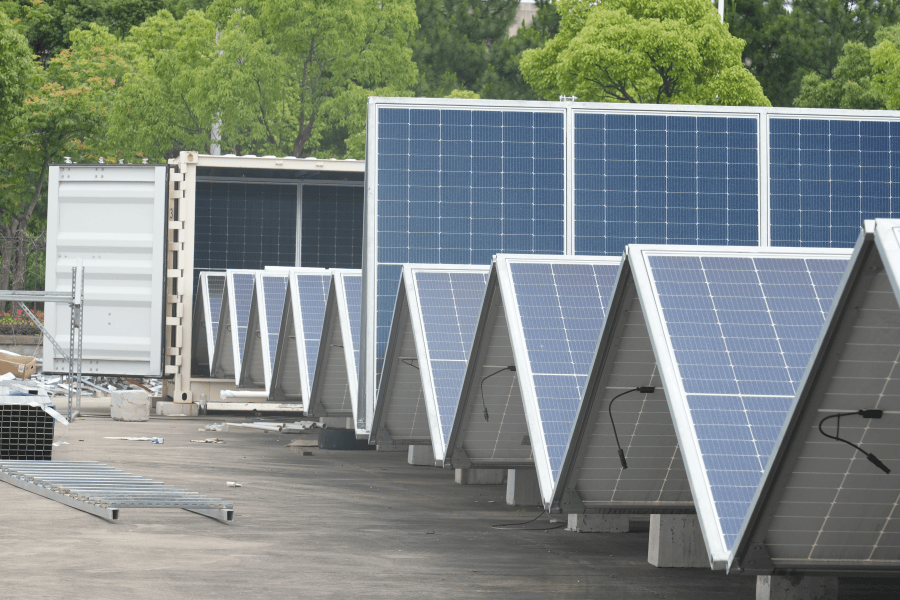
Table of Contents
- The Remote Island Paradox: Clean Energy vs. Environmental Risk
- Why Your Fire Suppression Choice is an Environmental Statement
- NOVEC 1230: A Closer Look at the Environmental Profile
- The Pre-Integrated Container Advantage: More Than Just a Box
- From Blueprint to Reality: A Pacific Island Case Study
- Making the Right Choice for Your Island Project
The Remote Island Paradox: Clean Energy vs. Environmental Risk
Let's be honest, when you're planning a solar-plus-storage microgrid for a remote island community or an off-grid industrial site, the environmental calculus is front and center. You're there to displace diesel, cut carbon, and provide clean, reliable power. I've been on-site for these deployments from the Caribbean to the Pacific, and the commitment to sustainability is palpable. But here's the paradox we often face, one that doesn't get enough coffee-shop chat: in our zeal to solve the big-picture climate problem, we can sometimes overlook critical local environmental decisions. One of the most significant? The fire suppression system inside that all-important battery energy storage system (BESS) container.
Think about it. You've got a sensitive, often pristine ecosystem. The BESS is the heart of the new energy system. A thermal event is a low-probability, high-impact scenario. The default, decades-old answer for suppression has often been water or certain chemical agents that, while effective on fire, can create a secondary environmental incident - contaminated runoff into soil or aquifers, or atmospheric concerns. Suddenly, the solution to a safety problem creates an ecological one. That's a tough position to be in.
Why Your Fire Suppression Choice is an Environmental Statement
This isn't just theoretical. Data from the National Renewable Energy Laboratory (NREL) underscores the rapid growth of BESS in microgrid applications, where remote and sensitive locations are common. The industry standard, UL 9540, rigorously tests for fire safety, but the environmental footprint of the suppression agent itself is a separate, crucial layer of due diligence for project developers and community stakeholders.
On a project in a coastal community, I sat through a community board meeting where questions weren't about the C-rate or the DC/AC ratio - they were pointed: "If this thing has a problem, what gets released into our bay?" "How does this affect our drinking water?" These are absolutely the right questions. Your fire suppression choice is a direct environmental statement about your project's holistic safety and its respect for the local habitat. It speaks to your understanding of LCOE (Levelized Cost of Energy) in the broadest sense - factoring in not just capital and operational costs, but potential environmental liability and social license to operate.
NOVEC 1230: A Closer Look at the Environmental Profile
This is where a solution like NOVEC 1230 fire suppression fluid enters the conversation. It's become a preferred option in pre-engineered BESS containers for sites where environmental sensitivity is a top-tier concern. Why? Let's break it down in plain terms.
First, it's a clean agent. It extinguishes fire primarily by removing heat, not by displacing oxygen (which is crucial for occupied spaces, but still a benefit). For our remote island container, the key points are its environmental characteristics. It has a global warming potential (GWP) of 1 - that's essentially the same as CO2, and orders of magnitude lower than legacy halocarbon agents. Its atmospheric lifetime is short, about five days. Most importantly for those community board questions, it is not an ozone-depleting substance.
Now, from a pure performance and thermal management perspective, it's effective and leaves no residue. That means if you ever have a discharge - and the system is designed to prevent that through early detection and cooling - there's no messy cleanup of powder or foam that could harm sensitive electronics or require special disposal. The container can be ventilated and returned to service, minimizing downtime. Honestly, that's a huge operational advantage when your BESS is on an island 500 miles from the nearest major service depot.

The Pre-Integrated Container Advantage: More Than Just a Box
Focusing on "Environmental Impact of Novec 1230 Fire Suppression Pre-integrated PV Container" is key because the "pre-integrated" part is what makes this solution so robust and predictable. At Highjoule, we don't view fire safety as an add-on. It's integral to the system's design from day one.
In a factory-integrated container, the NOVEC 1230 system is precisely engineered for the specific thermal load, airflow (thermal management is a continuous process, not just an emergency one), and layout of the battery racks. The piping network, detector placement, and cylinder storage are all calculated and installed in a controlled environment, tested to relevant UL and IEC standards (like UL 2127 for clean agent systems) before it ever leaves the dock. This is versus a field-assembled system, where tolerances can be wider and consistency harder to guarantee.
This pre-integration translates to a known, certified environmental and safety profile. It reduces on-site installation risk and ensures that the system's response in the unlikely event of a thermal runaway is as designed. For our clients, this means one less variable to manage in a complex, remote deployment.
From Blueprint to Reality: A Pacific Island Case Study
Let me give you a real example. We recently deployed a 2 MWh pre-integrated BESS container with PV inverters and a NOVEC 1230 system for a microgrid on a small Pacific island. The challenge was classic: replace aging, expensive diesel generation. The twist: the site was adjacent to a protected marine area.
The local environmental authority mandated that any fire suppression system must have zero potential for runoff contamination and a minimal atmospheric impact. Water mist was considered but raised concerns about humidity and corrosion in the salt-air environment. A traditional chemical system was a non-starter.
Our solution was a UL 9540A-tested container system with integrated NOVEC 1230. The permitting process was smoother because we could present the full environmental data sheet of the agent and the third-party certification of the integrated system. The commissioning was faster because the entire unit arrived pre-tested. Eighteen months in, the system is performing flawlessly, slashing diesel use by over 80%. The community's confidence in the technology's safety is as high as their satisfaction with the lower, stable power costs.
Making the Right Choice for Your Island Project
So, what should you take from this? If you're evaluating BESS solutions for remote, environmentally sensitive areas, the fire suppression system needs to be on your shortlist of critical decision factors, right up there with battery chemistry and inverter efficiency.
Ask your provider pointed questions:
- Is the suppression system pre-integrated and tested as a whole system?
- What is the environmental profile (GWP, ODP, atmospheric life) of the agent?
- Can you provide the relevant UL or IEC certification documents for the integrated container system?
- What is the cleanup and remediation protocol post-discharge?
For us at Highjoule, designing with solutions like NOVEC 1230 in pre-integrated containers isn't just about checking a safety box. It's about aligning the entire project lifecycle - from fabrication to decommissioning - with the core environmental principle that brought you to a renewable microgrid in the first place. It's about building systems that are not only safe and reliable but also truly sustainable neighbors.
What's the primary environmental concern you're navigating in your next remote deployment?
Tags: UL Standard BESS LCOE Europe US Market Renewable Energy Microgrid Environmental Impact Novec 1230 Fire Safety
Author
James Zhang
20+ years agricultural energy storage engineer / Highjoule CTO