
ROI Analysis of All-in-one Integrated Industrial ESS Container for Military Bases
Beyond the Spec Sheet: A Field Engineer's Take on ESS ROI for Critical Infrastructure
Honestly, when we sit down with facility managers and procurement officers from military installations, the conversation rarely starts with "tell us about your C-rate." It starts with a problem. A very expensive, very critical problem. Something like, "Our backup generators are costing a fortune to run and maintain," or "We need to integrate solar, but the grid connection is weak and expensive." Over two decades of deploying systems from California to Germany, I've learned that the real value of an Energy Storage System (ESS) isn't in the brochure - it's in solving these gritty, on-the-ground challenges. Today, let's talk about the ROI Analysis of All-in-one Integrated Industrial ESS Container for Military Bases. We'll move past theory and into the practical math of resilience, cost, and long-term value.
Table of Contents
- The Hidden Cost of "Business as Usual"
- Why the All-in-One Container Changes the ROI Equation
- Breaking Down the ROI: More Than Just Kilowatt-Hours
- A Case in Point: From Blueprint to Reality
- The Highjoule Difference: Engineering for Real-World ROI
The Hidden Cost of "Business as Usual"
Let's name the elephant in the room. For decades, the default for backup and peak power at remote or critical bases has been diesel generators. They work, sure. But the total cost of ownership? It's staggering. I've seen the logs firsthand: constant fuel deliveries (a major logistical and security headache), preventive maintenance every few hundred hours, and the inevitable major overhauls. The National Renewable Energy Lab (NREL) has shown that fuel and O&M can make up over 70% of a generator's lifetime cost. And that's before you factor in carbon penalties or the sheer noise and thermal signature, which isn't exactly conducive to discreet operations.
The other pain point is modernizing the energy mix. Command wants to add solar PV for sustainability and fuel security. But the local grid might be fragile, or the utility demands expensive interconnection upgrades to handle the variable output. So, a great renewable project gets stalled or its value diminished because there's no buffer, no way to manage that power intelligently.
Why the All-in-One Container Changes the ROI Equation
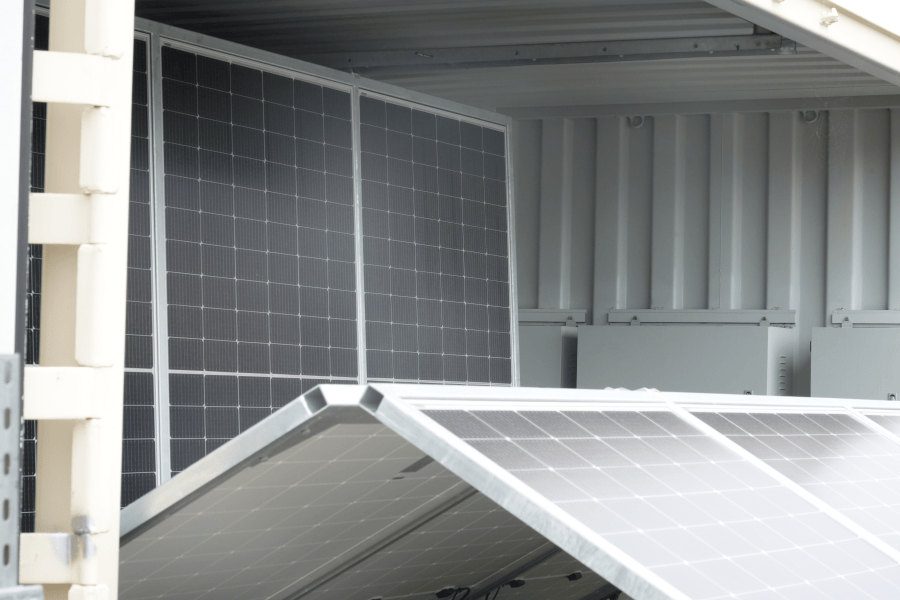
This is where the integrated, containerized ESS shifts from a "nice-to-have" to a central asset. Think of it not as a big battery, but as a programmable power plant. The "all-in-one" aspect is crucial for ROI. We're talking about a system where the battery racks, thermal management, power conversion systems (PCS), fire suppression, and controls are pre-integrated and tested in a single, UL-certified enclosure before it ever leaves the factory.
On-site, this translates to weeks, not months, of deployment. I've been on projects where a pre-fabricated container was craned into place, connected to pre-laid cabling, and was doing automated commissioning checks within days. The cost savings on civil works, extended engineering hours, and on-site integration risks are massive. You're buying a predictable outcome, not a construction project.

Breaking Down the ROI: More Than Just Kilowatt-Hours
A proper ROI analysis for a military base has multiple revenue streams and cost avoidances. Let's look at the key components:
- Fuel & O&M Displacement: This is the most direct saving. By using stored solar energy or off-peak grid power to cover peak loads or backup needs, you slash generator runtime. A well-sized ESS can reduce generator fuel use by 60-80%. The maintenance savings on those gensets follow directly.
- Demand Charge Management: For bases tied to the commercial grid, this is huge. Utilities charge not just for total energy (kWh) but for the highest 15-minute power draw (kW) in a month - the "demand charge." An ESS can seamlessly discharge during those short peak periods, flattening the load profile. I've seen this shave 20-30% off total electricity bills for industrial facilities.
- Grid Independence & Resilience: How do you value mission continuity? An ESS with black-start capability can keep critical loads online indefinitely when paired with renewables, far quieter and more efficient than generators. It's not just about avoiding downtime; it's about ensuring operational capability.
- LCOE - The Levelized Cost of Energy: This is the big-picture metric. According to IRENA, the global LCOE for solar PV and wind paired with storage continues to fall dramatically. When you calculate the cost per kWh over the system's 20-year life, including all capital and operating expenses, a solar+storage microgrid often beats diesel-generated power, especially when fuel transport is factored in.
Let's put some of this in a simple table, comparing traditional and integrated ESS approaches for a notional base load:
| Cost Factor | Traditional Approach (Genset-Heavy) | With All-in-One ESS + Solar |
|---|---|---|
| Peak Power Cost | High (Grid Demand Charges + Genset Fuel) | Minimized (ESS peak shaving) |
| Backup Fuel Cost | Very High (Dependent on deliveries) | Low to Zero (Stored renewable energy) |
| System Deployment Time | Months (Complex integration) | Weeks (Pre-fabricated container) |
| Long-term O&M Predictability | Low (Fuel price volatility, engine wear) | High (Fixed service contracts, stable tech) |
A Case in Point: From Blueprint to Reality
Let me share a scenario inspired by a recent project in a semi-arid region of the Southwestern U.S. A forward operating base relied on diesel convoys for 95% of its power. Their goals were to cut fuel use by 40%, integrate a 2MW solar field, and ensure 72 hours of critical load backup without refueling.
The challenge? Harsh, dusty conditions with 110F+ summer days. Battery thermal management wasn't an engineering footnote; it was the make-or-break factor. A poor system would derate power or fail prematurely. We deployed a 4MWh all-in-one container with a liquid-cooled battery system and independent, N+1 cooling loops. This wasn't just about keeping the batteries at 25C; it was about doing it with 30% less energy for cooling than air-conditioning would need - saving power for the mission.
The C-rate - essentially how fast you can charge or discharge the battery safely - was spec'd not for a lab test, but for the real demand. We needed a C-rate high enough to start large loads but optimized for longevity. The system now seamlessly switches between solar smoothing, daily peak shaving, and backup, extending generator life and meeting that 40% fuel reduction target in its first year. The ROI payback, when factoring in avoided fuel convoy risks, was calculated at under 7 years.
The Highjoule Difference: Engineering for Real-World ROI
At Highjoule, our approach to the ROI Analysis of All-in-one Integrated Industrial ESS Container for Military Bases is rooted in these field realities. It's why we obsess over things like:
- Safety as a Non-Negotiable: Every cell, module, and container is designed to exceed UL 9540 and IEC 62933 standards. This isn't just for compliance; it's for insurer confidence and base safety officers' peace of mind, which smooths approval and reduces risk premiums.
- Designing for Total LCOE: We might select a slightly more expensive cell chemistry because it has a longer cycle life, knowing it drives down the 20-year cost per kWh. Our thermal management is designed for the local climate from day one.
- Localized Support: ROI doesn't end at commissioning. We structure our service agreements to provide predictable, fixed-cost maintenance with local technicians trained on the specific system. You get performance, not just a product.
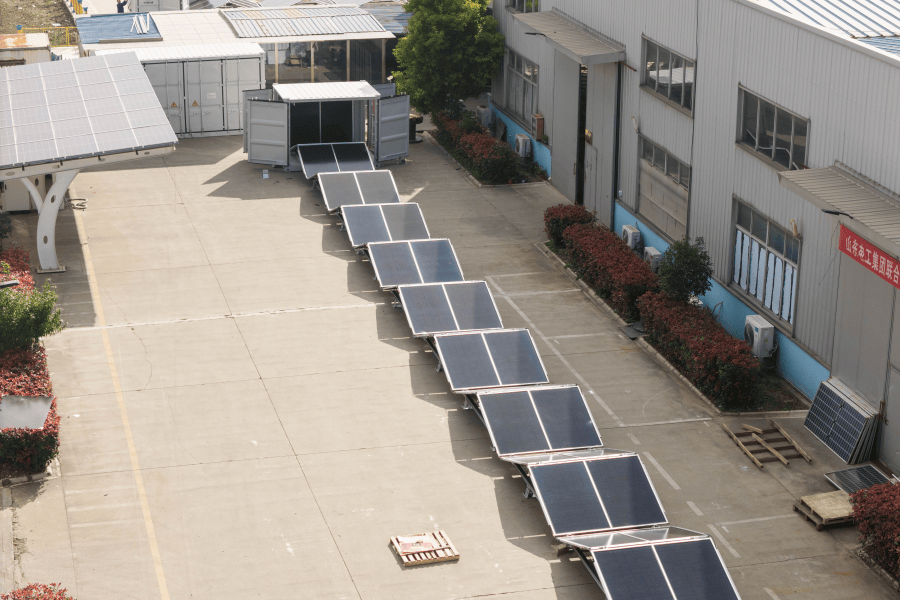
The bottom line? The most compelling ROI story isn't told on a spreadsheet first; it's told on the site plan, the fuel log, and the operational continuity checklist. The right all-in-one container isn't an expense; it's a force multiplier for energy security and fiscal responsibility.
What's the single biggest cost driver you're facing in your base's energy plan? Is it the volatility of fuel, the rising grid demand charges, or the capital needed to harden your infrastructure? Let's have that coffee chat.
Tags: UL Standard BESS LCOE Military Energy Security ESS ROI
Author
James Zhang
20+ years agricultural energy storage engineer / Highjoule CTO