
Minimizing Environmental Impact of Modular BESS in Coastal Salt-Spray Zones
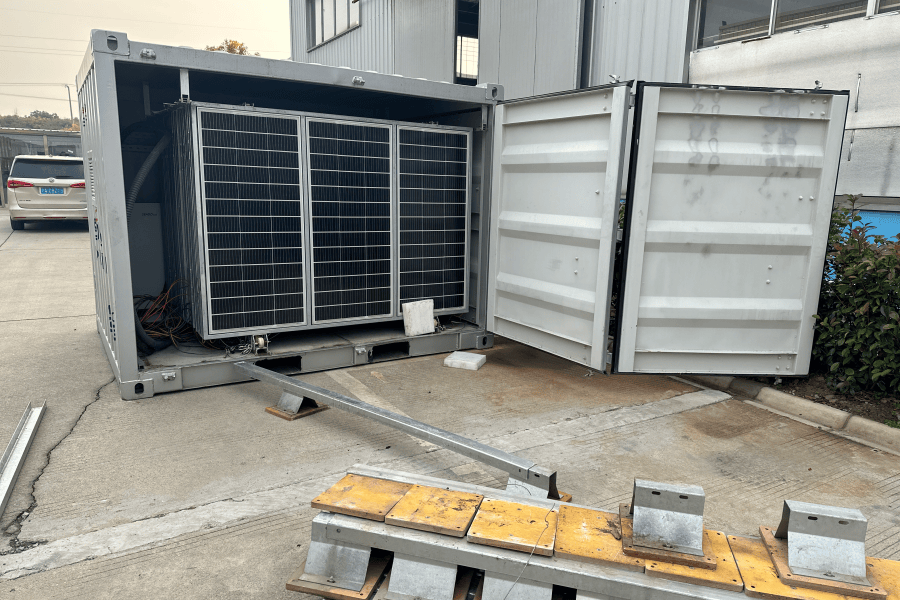
When the Sea Breeze Meets Your Battery: A Real-World Look at Coastal BESS Challenges
Honestly, after two decades on sites from the North Sea to the California coast, I've learned one thing the hard way: salt air doesn't care about your project timeline or your balance sheet. It's a silent, persistent challenge for any energy asset, especially Battery Energy Storage Systems (BESS). Today, let's talk about a topic that's often an afterthought until it's too late C the real environmental impact of deploying scalable, modular BESS in those beautiful but brutal coastal salt-spray environments.
Quick Navigation
- The Hidden Cost of Coastal "Green" Energy
- Beyond Rust: The Ripple Effect of Corrosion
- Why Modular Design is a Game-Changer for Durability
- Case in Point: A North Sea Microgrid's Lesson
- Engineering the Difference: It's in the Details
The Hidden Cost of Coastal "Green" Energy
We all push for more renewables near demand centers, and guess what? A huge chunk of population and industry sits near coasts. The IEA highlights that offshore wind and coastal solar are pivotal for the energy transition. But here's the problem nobody likes to discuss at the project kick-off meeting: the standard BESS unit, even in a container, isn't born for a salty, humid life. The prevailing mindset has been "deploy now, worry later." I've seen first-rate projects where the BESS, after just 18 months, showed premature corrosion on cabinet hinges, cooling fan housings, and electrical enclosures. That's not just a cosmetic issue; it's a direct hit on system integrity, safety, and ultimately, your Levelized Cost of Storage (LCOS).
Beyond Rust: The Ripple Effect of Corrosion
Let's agitate that pain point a bit. It's not just about replacing a rusty panel. Salt-induced corrosion is a systemic threat. First, it compromises the thermal management system. When salt clogs air filters or coats heat exchanger fins, cooling efficiency drops. Batteries get stressed, degradation accelerates, and the risk of thermal runaway creeps up. Second, it attacks electrical connections. Increased resistance leads to hotspots, energy losses, and potential arc-fault incidents. According to a NREL report on durability, corrosion is a leading factor in unexpected O&M cost inflation for coastal assets, sometimes adding up to 40% more over a 10-year lifecycle compared to inland sites. You're saving carbon emissions but potentially creating a future waste and financial liability.

Why Modular Design is a Game-Changer for Durability
So, what's the solution? This is where a purpose-built, scalable modular BESS philosophy changes the game. It's not just about adding more battery blocks; it's about designing for the environment from the cell up. A truly resilient system for salt-spray zones tackles the environmental impact on two fronts: minimizing its own physical degradation and maximizing its positive grid and renewable integration role to offset more carbon.
At Highjoule, when we design for coastal sites - like we did for an industrial park in Texas Gulf Coast or a community microgrid in Denmark - we start with a checklist that goes beyond basic IP ratings. Think military-grade or marine-grade corrosion resistance for enclosures, stainless-steel fasteners, and conformal coating on critical PCBs. Our modular architecture allows us to isolate and service a single power conversion or battery module without taking the whole system offline, which is crucial when you're battling aggressive elements. This directly protects your investment and reduces long-term waste.
Case in Point: A North Sea Microgrid's Lesson
Let me share a quick story. We were brought into a project on a German North Sea island - a classic salt-spray, high-wind environment. The existing BESS supporting the local microgrid was constantly tripping on fault alerts due to sensor corrosion. The client faced a dilemma: frequent expensive technician visits by boat or a complete system replacement.
Our approach was a phased, modular upgrade. We deployed our pre-integrated, UL 9540 and IEC 62933 compliant pods, which are factory-sealed with positive pressure filtration systems to keep salt-laden air out. The thermal management is liquid-cooled, with all external radiators using coated aluminum fins specifically chosen for corrosion resistance. The beauty of the modular design meant we could integrate with the existing infrastructure without a full stop. Two years on, the system's availability is above 99%, and the local operator is finally seeing the promised LCOE benefits. The environmental impact? A reliable storage system that lets them integrate more local wind, displacing diesel gensets, and the system itself is built to last, minimizing resource churn.
Engineering the Difference: It's in the Details
For a non-technical decision-maker, the key is to ask the right questions. Don't just ask about capacity (MWh) and power (MW). Ask about the "C-Rate" in context. A moderate C-Rate (like 0.5C or 1C) often means less internal heat stress, which is easier on the seals and materials battling humidity. Ask about the thermal management strategy. Is it passive, air-cooled, or liquid-cooled? For high-salinity areas, a closed-loop liquid system is often superior as it minimizes exposure.
Most importantly, ask for third-party certifications. UL and IEC standards are the baseline. Look for specific tests like IEC 60068-2-52 (Salt Mist) or UL 50E for corrosion resistance. If a supplier can't immediately point to how their design passes these, it's a red flag. Our engineering team spends countless hours on salt spray chamber testing, not because it's glamorous, but because we know what a failed busbar looks like after 5 years by the ocean. It's about designing for the total cost of ownership, not just the lowest upfront capital cost.
The conversation around BESS is shifting from pure economics to holistic sustainability. That includes its own durability and minimal environmental footprint. Choosing a system engineered for its specific environment isn't an extra cost; it's the foundation for the reliability and return you're banking on. What's the one corrosion-related failure you can't afford on your next coastal project? Maybe it's time we chat over a virtual coffee.
Tags: BESS LCOE Renewable Energy Salt-Spray Corrosion Battery Energy Storage System UL IEC Standards Environmental Impact Coastal Microgrid
Author
James Zhang
20+ years agricultural energy storage engineer / Highjoule CTO