
Environmental Impact of C5-M Anti-corrosion Hybrid Solar-Diesel System for Telecom Base Stations
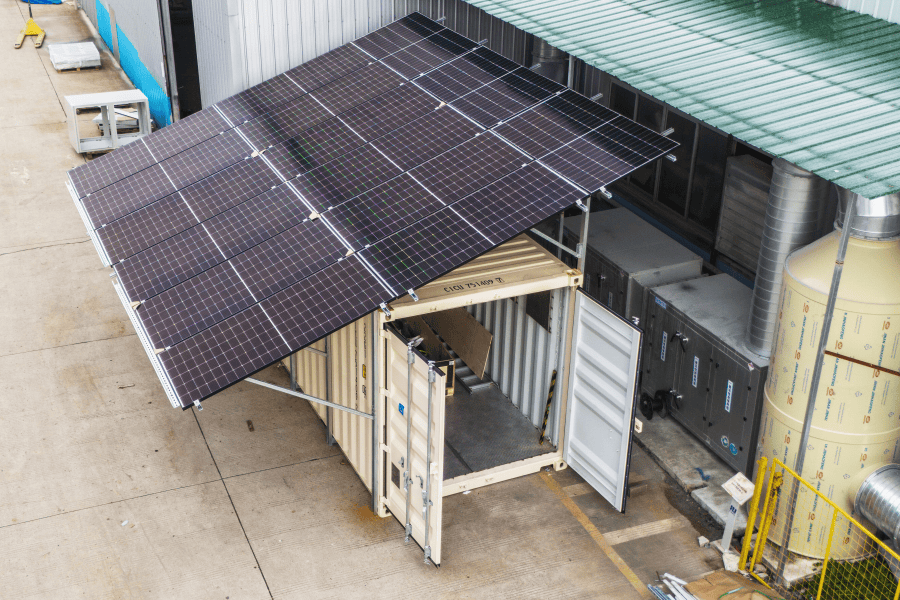
Table of Contents
- The Silent Cost: Corrosion in Remote Telecom Power
- Data Doesn't Lie: The Financial and Environmental Drain
- The C5-M Difference: More Than Just a Coating
- Case in Point: A Coastal Site in Northern Germany
- Beyond the Box: System-Level Thinking for Real Impact
- Making the Switch: What to Look For
The Silent Cost: Corrosion in Remote Telecom Power
Let's be honest. When you're planning a telecom base station, especially in those off-grid or weak-grid locations, the immediate concerns are power reliability and capex. The diesel genset is the old reliable, solar brings down the fuel bill, and the battery is there to smooth things over. But there's a silent killer on site that most spec sheets don't adequately address: corrosion.
I've seen this firsthand from sites in the Florida coast to the Scottish Highlands. You deploy a seemingly robust hybrid system, and within 18 months, you're getting alarms. Connection failures, sensor drift, cooling fan seizures. Often, it's not the core battery chemistry that failed. It's the relentless attack of salty air, industrial pollutants, or just constant humidity on the balance of system (BOS) - the cabinets, busbars, connectors, and cooling systems. A standard IP55 enclosure might keep water out, but it can't stop corrosive gases from slowly eating away at your investment. This isn't just an "oops" moment; it's a direct hit to your project's Levelized Cost of Energy (LCOE) and a massive environmental oversight.
Data Doesn't Lie: The Financial and Environmental Drain
Here's where it gets real. The International Energy Agency (IEA) has highlighted that telecoms account for a significant portion of off-grid diesel consumption globally. Every premature system failure due to corrosion leads to:
- More Site Visits: Sending crews to remote locations burns diesel in service trucks.
- More Replacements: Early replacement of components means more manufacturing carbon footprint.
- More Waste: Failed electronics and metals that could have lasted decades become hazardous e-waste.
- Reduced Solar Uptake: When the power conversion or battery system fails, the genset runs more, burning more fuel.
Honestly, I've reviewed projects where the operational carbon footprint from constant maintenance and diesel over-reliance completely negated the projected green benefits of the solar hybrid setup. The business case unravels.
The C5-M Difference: More Than Just a Coating
This is where specifying a system built to C5-M anti-corrosion standards isn't a premium - it's essential due diligence. For our friends in the US, think of it as the rigorous cousin of UL 9540 for safety, but for long-term environmental resilience. The IEC 60068-2 standards define C5-M as a severe environment with high corrosivity due to salinity or chemical pollution.
A true C5-M hybrid system isn't just about slapping some paint on a container. It's a holistic design philosophy we've embedded in our Highjoule platforms:
- Material Science: Using aluminum alloys and stainless-steel grades specifically chosen for chloride resistance.
- Sealed Thermal Management: This is a big one. A standard air-cooled system sucks in the corrosive outside air, coating your battery cells and internal electronics with salt. Our solution uses a closed-loop, liquid-assisted cooling system. It keeps the internal atmosphere clean and dry, which is absolutely critical for stable C-rate performance and longevity. Honestly, thermal management is 80% of the battle for both safety and life.
- Conformal Coating on PCBs: Every circuit board gets a protective layer, guarding against humidity and condensation you can't avoid.

Case in Point: A Coastal Site in Northern Germany
Let me give you a real example. We worked with a tower company on a site near the North Sea. The challenge was brutal: constant salt mist, high winds, and a need for 99.99% uptime. Their previous non-hardened systems needed major component swaps every 2-3 years.
We deployed a containerized Solar-Diesel-BESS solution, with every component from the HVAC unit to the last bolt specified for C5-M. The UL 9540 certified battery racks sat inside a pristine, controlled environment. The solar input maximized fuel displacement, and the BESS handled peak shaving and silent hours seamlessly.
The outcome? We're now in year 5 of operation. The scheduled maintenance reports show corrosion-related issues are near zero. The client's calculated LCOE for the site dropped by over 40% compared to the old paradigm, simply because they're not constantly repairing and replacing. The environmental impact is clear: diesel consumption down by 85%, and no truck rolls for corrosion failures. That's a tangible ESG win.
Beyond the Box: System-Level Thinking for Real Impact
Focusing only on the battery cell's chemistry for environmental impact is like worrying about the engine but ignoring the rusted-out chassis. The true environmental impact of a C5-M anti-corrosion hybrid solar-diesel system is measured over 15-20 years.
It's about:
- Resource Efficiency: Building it once, building it right. No wasted materials from early replacements.
- Carbon Avoidance: Maximizing solar harvest through reliable power electronics and minimizing diesel runtime through a resilient BESS.
- Reduced Lifetime Footprint: Fewer service visits, less transport fuel, less waste.
At Highjoule, our service teams in both Europe and North America see this long-term play. Our local deployment and maintenance protocols are built around keeping that sealed, corrosive-free environment intact for the system's entire life. It's not just a product we sell; it's a 20-year performance guarantee we stand behind.
Making the Switch: What to Look For
So, if you're evaluating systems for harsh environments, move beyond the basic kWh and kW specs. Ask your vendor:
- Can you show me the corrosion protection certificates (ISO 12944 C5-M or equivalent) for the entire enclosure and key internal components?
- How is the thermal management system isolated from the external corrosive atmosphere?
- What is the expected maintenance interval for corrosion-related checks, and what does that protocol involve?
The right system pays for itself not just in saved diesel, but in saved headaches and a genuinely greener footprint. It turns your telecom infrastructure from a maintenance liability into a resilient, sustainable asset. What's the true cost of the system you're looking at, when you factor in its fight against the elements?
Tags: UL Standard BESS LCOE Europe US Market Renewable Energy Solar-Diesel Hybrid Telecom Power Systems C5-M Corrosion Protection
Author
James Zhang
20+ years agricultural energy storage engineer / Highjoule CTO