
Optimizing Industrial Energy Costs: The LFP Hybrid Solar-Diesel System Guide
Table of Contents
- The Real Problem Isn't Just High Bills
- Why Old Solutions Fall Short (And Cost More)
- The Hybrid Advantage: More Than Just Backup
- Why LFP is the Game-Changer for Industry
- A Real-World Case: From Theory to Texas
- Key Technical Considerations for Deployment
- Making the Move: What to Look For
The Real Problem Isn't Just High Bills
Let's be honest. If you're managing an industrial park in the US or Europe, you're not just looking at your energy bill and wincing. You're staring at a tangled web of challenges: volatile utility rates that can spike 300% during peak hours, pressure to meet sustainability targets from both your board and your customers, and the constant, low-grade anxiety about grid reliability. I've sat across the table from plant managers in the Midwest and in Germany who tell me the same thing: "Our diesel gensets are a necessary evil for backup, but running them is like burning cash for fumes." The problem isn't a single pain point; it's a systemic inefficiency in how industrial energy is sourced, managed, and paid for.
Why Old Solutions Fall Short (And Cost More)
For years, the playbook was simple: install solar to offset some daytime load, and keep the diesel generators polished and ready for outages. But this approach leaves massive value on the table. Solar alone often has a low "capacity factor" for an industrial site - it produces most when you might not need it most, and nothing at all after sunset, precisely when expensive peak demand charges might apply. Meanwhile, those diesel generators? They're incredibly expensive to run, terrible for your carbon footprint, and frankly, they're not designed for daily cycling. Using them for anything more than rare emergencies skyrockets your maintenance costs and defeats any green initiative.
The data backs this up. The International Renewable Energy Agency (IRENA) points out that hybridizing variable renewables with storage and existing thermal generation is key to decarbonizing industrial power while maintaining reliability. Without the "glue" of a smart battery system, you're just adding more siloed equipment, not creating a cohesive, cost-optimizing solution.
The Hybrid Advantage: More Than Just Backup
This is where the modern hybrid system enters the chat. We're not talking about just slapping some batteries next to a solar inverter and a generator. A true LFP-based hybrid solar-diesel system is an intelligent energy manager. Its core function is to optimize every kilowatt-hour and every dollar. It seamlessly integrates three sources:
- Solar PV: Your primary, lowest-cost energy source.
- LFP Battery Storage (BESS): The brain and the buffer. It stores excess solar, shaves peak demand, and provides instantaneous backup.
- Existing Diesel Gensets: Now relegated to a last-resort, strategic asset, only triggered when absolutely necessary.
The system's controller makes real-time decisions: use solar, charge/discharge the battery, or (very rarely) call on the diesel - all to minimize your total energy cost (what we call Levelized Cost of Energy, or LCOE) and maximize uptime.

Why LFP is the Game-Changer for Industry
Not all batteries are created equal, especially for demanding industrial settings. While other chemistries had their moment, Lithium Iron Phosphate (LFP) is now the undisputed choice for safety, longevity, and total cost of ownership. Here's the on-the-ground truth I've seen from our deployments:
- Inherent Safety: This is non-negotiable. LFP chemistry is thermally stable and far less prone to thermal runaway. For any site manager, getting a system that meets UL 9540 and IEC 62619 standards is the baseline. LFP inherently supports these rigorous safety goals, which is why at Highjoule, it's the only chemistry we specify for industrial parks.
- Long Life, Low Degradation: Industrial operations think in decades. A quality LFP battery can deliver 6000+ cycles while retaining 80% of its capacity. This longevity directly crushes your long-term LCOE.
- Flexible Power (C-rate): You might need a big burst of power to start a heavy motor or cover a rapid demand spike. The "C-rate" essentially tells you how fast a battery can charge or discharge. Modern LFP systems offer high C-rates, meaning they can deliver a lot of power quickly without being oversized - a key for effective peak shaving.
A Real-World Case: From Theory to Texas
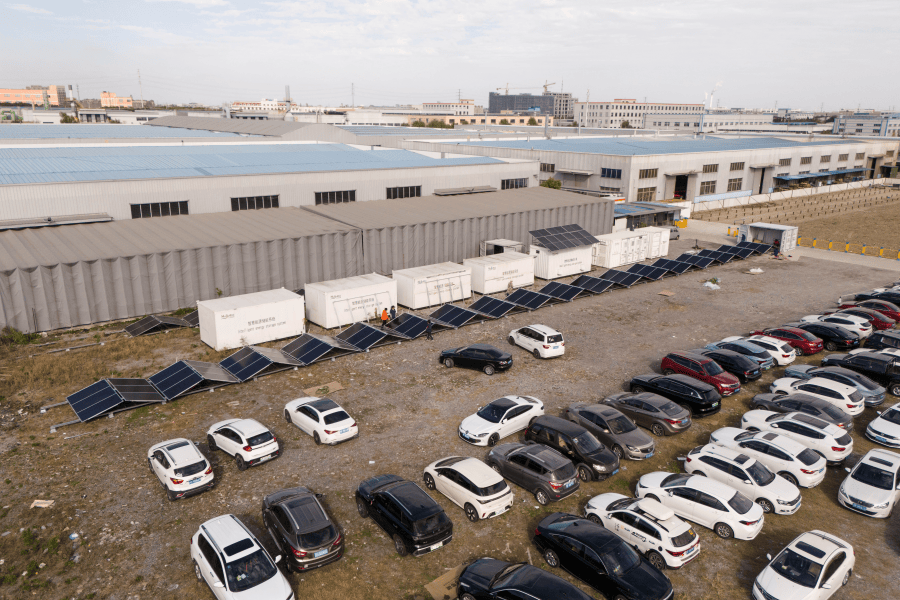
Let me give you an example from a project we completed last year for a manufacturing park outside Houston. Their pain points were textbook: $45,000+ monthly demand charges, unreliable grid during storm season, and corporate mandates to reduce emissions.
The challenge was to design a system that could reliably shave their 2 MW peak, provide at least 4 hours of critical backup, and integrate with their existing 1.5 MW solar carport and two 1 MW diesel generators. The solution was a 2 MWh LFP battery storage system with our advanced energy management platform.
The outcome? They've cut their demand charges by over 40% in the first year. The diesel generators have run less than 20 hours total, only during a prolonged grid outage. The system autonomously schedules battery charging from excess solar and dispatches it during the utility's peak windows. The thermal management system - a critical, often overlooked component - keeps the batteries at optimal temperature in the Texas heat, ensuring performance and lifespan. Honestly, seeing the relief on the facility manager's face when the first month's bill came in was what makes this job worthwhile.
Key Technical Considerations for Deployment
If you're evaluating a system, don't just look at the price per kWh of battery storage. Dig into these details with your provider:
- Thermal Management: Is it a passive, air-cooled system or an active liquid-cooling loop? For industrial, 24/7 cycling, especially in hot climates, liquid cooling is superior. It maintains even cell temperatures, which is crucial for safety, performance, and hitting that 10+ year lifespan.
- Grid Compliance & Interconnection: The inverter and system controls must meet local grid codes (like IEEE 1547 in the US). This isn't optional. A good provider will handle the entire interconnection study and approval process with the utility.
- Service & Support: Who is going to be there in 5 years? Look for a provider with local service technicians and remote monitoring capabilities. At Highjoule, our platform provides real-time alerts and performance dashboards, and we have service partnerships across North America and Europe. It's about peace of mind.
Making the Move: What to Look For
The journey to a smarter, more resilient, and more profitable energy setup starts with a partner who speaks your language - both technically and commercially. You need someone who can model your specific load profile, simulate the financial returns, and navigate the complex web of local incentives, like the ITC in the US or various EU green funding mechanisms.
The ultimate guide isn't just a document; it's a roadmap built on proven technology (like LFP), deep industry standards (UL, IEC, IEEE), and, most importantly, real-world operational experience. What's the one energy pain point keeping you up at night that a truly intelligent hybrid system could solve?
Tags: UL Standard Industrial Energy Storage LFP Battery Hybrid Solar-Diesel System BESS Deployment
Author
James Zhang
20+ years agricultural energy storage engineer / Highjoule CTO