
Environmental Impact of Scalable Modular Mobile Power Containers for Industrial Parks
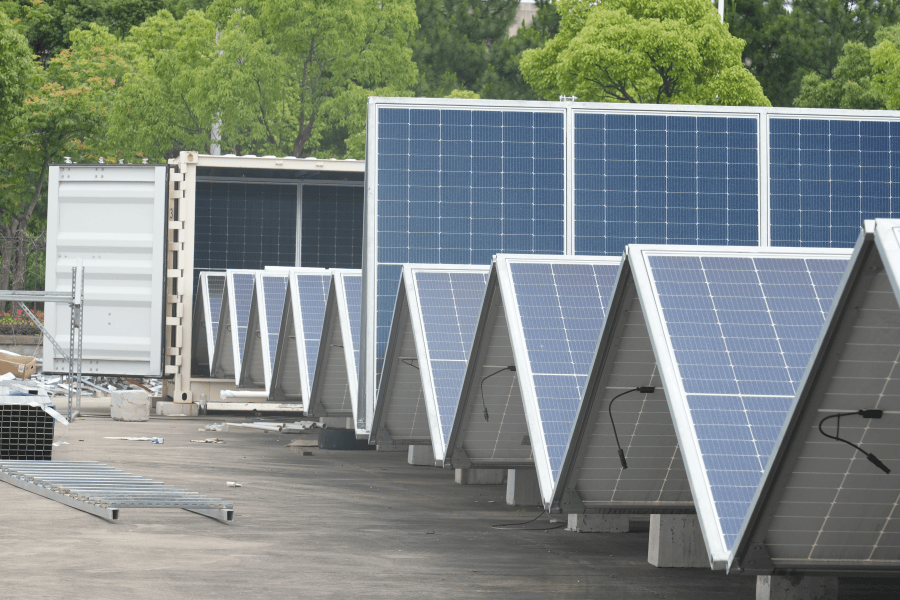
Table of Contents
- The Greening of Industry: A Promise and a Problem
- The Hidden Environmental Costs of a "Fixed" Solution
- Modular Mobility: A Different Kind of Environmental Impact
- Case in Point: A German Automotive Supplier's Journey
- Beyond the Container: Expertise That Makes the Difference
The Greening of Industry: A Promise and a Problem
Let's be honest. If you're managing an industrial park in Europe or North America right now, you're facing a pressure cooker of demands. You need to cut operational costs, ensure rock-solid power reliability for those sensitive manufacturing lines, and, increasingly, you have to show tangible progress on sustainability goals. Boardrooms and regulators are watching. The promise of pairing solar panels or wind turbines with a Battery Energy Storage System (BESS) is incredibly compelling. It's the logical path to green your power, maybe even achieve some energy independence.
But here's the thing I've seen firsthand on site after site: the traditional approach to BESS deployment can sometimes create its own set of environmental and logistical headaches. We get so focused on the operational carbon savings that we overlook the project footprint. You know the drill - pouring massive concrete foundations, running extensive cabling and conduit, committing to a 20-year footprint on a piece of land that might be needed for expansion next year. It feels... permanent. And in today's dynamic industrial landscape, permanence can be a liability.
The Hidden Environmental Costs of a "Fixed" Solution
Let's agitate that pain point a bit. A traditional, fixed-location BESS isn't just a financial commitment; it's an environmental one from day one. The site preparation alone - earthmoving, concrete (a major CO2 contributor), permanent utility interconnections - carries a significant embedded carbon cost. According to the International Energy Agency (IEA), the construction and materials sector is responsible for nearly 40% of global energy-related CO2 emissions. We must consider this in our decarbonization math.
Then there's the issue of scalability and waste. What if your production ramps up and your 2 MWh system is now undersized? Or, conversely, what if a line moves? You're left with an oversized, underutilized asset sucking up capital and space. The "sunk cost" mentality sets in, and the system's efficiency - its true environmental benefit per kWh - starts to drop. The Levelized Cost of Energy Storage (LCOES) climbs, and honestly, that beautiful ESG report starts to have a footnote you'd rather not explain.

The Flexibility Imperative
Industrial parks are living ecosystems. New tenants arrive, old processes are upgraded, energy needs shift. A truly sustainable solution must be as adaptable as your business. This is where the core idea of scalable, modular, and mobile power containers shifts the paradigm entirely. We're no longer talking about building a power plant. We're talking about deploying a power asset that can evolve with you.
Modular Mobility: A Different Kind of Environmental Impact
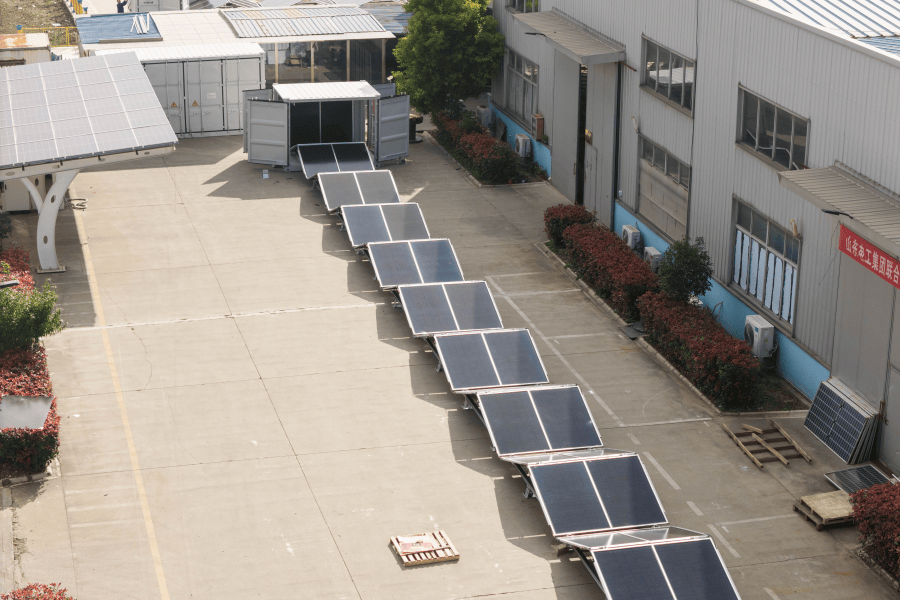
So, what's the solution? It starts with rethinking the physical and financial model of energy storage. A scalable, modular mobile power container is essentially a pre-fabricated, plug-and-play battery system housed in a robust, shipping-container-style enclosure. Its positive environmental impact is multi-layered:
- Drastic Reduction in Embedded Carbon: Factory-based manufacturing in controlled environments is far more material and energy-efficient than field construction. It minimizes on-site disturbance, eliminates the need for massive concrete foundations (we use specially designed, non-invasive anchoring), and slashes the local construction vehicle traffic and emissions. The carbon payback period starts much sooner.
- Scalability Without Waste: Need more capacity? Instead of a costly, disruptive expansion project, you simply add another standardized container module. It's like adding building blocks. This "right-sizing" approach ensures the system operates at peak efficiency for its entire life, keeping your LCOE low and your environmental ROI high. You only deploy the capital and the resources you need, when you need them.
- Mobility as a Circular Economy Feature: This is a big one. If a production hall is being repurposed or you're reconfiguring your park, you can literally disconnect, lift, and relocate the container to a new optimal location within days. The asset's life is extended, and the risk of it becoming stranded or obsolete is nearly zero. The container itself becomes a reusable, re-deployable asset across your portfolio.
- Inherently Safe and Compliant Design: From an environmental safety perspective, these units are engineered to the highest standards. At Highjoule, for instance, our modular containers are built to comply with UL 9540 and IEC 62933 standards, with integrated, closed-loop thermal management systems. This isn't just about preventing thermal runaway; it's about maintaining optimal battery temperature for efficiency and longevity, whether it's deployed in the heat of Texas or the cold of Norway, minimizing degradation and future waste.
Case in Point: A German Automotive Supplier's Journey
Let me give you a real example from the field. We worked with a mid-sized automotive parts supplier in North Rhine-Westphalia, Germany. They had a large rooftop PV array, but grid connection constraints and volatile time-of-use tariffs were limiting their savings and their ability to use more self-generated green power.
The Challenge: They needed to shift solar output to cover evening shifts and reduce peak demand charges, but they also had a 3-year plan to consolidate two warehouses into a new building on the other side of their property. A fixed BESS would be in the wrong place by Year 4.
The Solution: We deployed a 1.5 MWh modular mobile power container. It was commissioned on a prepared pad near the main facility in under a week. The system integrated seamlessly, storing midday solar and discharging during peak periods. The C-rate - the speed at which the battery charges and discharges - was carefully calibrated to balance performance with long-term cell health, a key detail our engineers optimized on-site.
The Pivot: In Year 3, as planned, they simply powered down the unit, disconnected it, and a crane moved it 500 meters to the new logistics center. It was re-commissioned and online in 72 hours, supporting the new facility's load. The environmental and financial savings from avoiding a completely new system were substantial. The project's overall lifecycle carbon footprint was dramatically lower than the alternative.
Beyond the Container: Expertise That Makes the Difference
The technology itself is powerful, but its positive environmental impact is fully realized through deployment expertise. This isn't an off-the-shelf product; it's a solution tailored to your site's specific energy profile, regulatory environment (like local fire codes or IEEE 1547 for grid interconnection in the US), and growth trajectory.
Honestly, the magic happens in the planning. Our job as engineers is to model your load, your generation, and your tariffs to determine the optimal size and operational strategy. We think about the thermal management not just for safety, but for maximizing calendar life. We ensure every container we deploy, whether in California or Cologne, is not just a battery box, but a certified, high-performance asset that will deliver low LCOE and high reliability for years.
The goal is to make your energy storage as agile and efficient as the rest of your operations. So, when you're evaluating how to reduce your park's carbon footprint, look beyond the kWh rating. Ask the question: "Is this system designed for the long-term health of my balance sheet and my planet?" How much flexibility is built into your decarbonization roadmap?
Tags: UL Standard BESS LCOE Europe US Market Renewable Energy Modular Power Industrial Decarbonization
Author
James Zhang
20+ years agricultural energy storage engineer / Highjoule CTO