
LFP Solar Container Case Study: Powering Construction Sites Off-Grid
Contents
- The Diesel Dependency Problem
- Why This Hurts Your Bottom Line & Timeline
- The LFP Solar Container: A Mobile Power Solution
- A Case in Point: Remote Site Power in the Southwest US
- Key Tech Insights: Safety, Cost, and Heat Management
- Making It Work for Your Project
The Diesel Dependency Problem
Let's be honest. If you're managing a construction site, especially a remote one or an early-phase project, your first thought for power isn't a sleek battery system. It's diesel generators. They're the familiar, "get-it-done-now" option. I've been on dozens of sites across North America and Europe where the constant hum and smell of diesel gensets are just part of the background noise. The problem is, this familiar solution is becoming a massive liability.
The industry is at a crossroads. According to the International Energy Agency (IEA), the construction sector accounts for a significant portion of global final energy consumption, with a heavy reliance on fossil fuels for off-grid power. This isn't just about carbon footprints anymore - though that's increasingly important for bids and ESG reporting. It's about pure, operational pragmatism.
Why This Hurts Your Bottom Line & Timeline
Let's agitate that pain point a bit. I've seen this firsthand on site. You rent the generators, you truck in the fuel. Then the real costs start piling up.
- Fuel Volatility: Remember the price spikes? Every fluctuation hits your project's fixed budget.
- Operational Noise & Emissions: They limit work hours near residential areas. I've seen projects delayed because of noise violation complaints.
- Logistical Headache: Constant refueling runs. Theft of fuel. Maintenance downtime. It's not just a cost; it's a management time-sink.
- Safety & Compliance: Storing large amounts of diesel on-site is a fire hazard and an environmental risk. Regulations are tightening, especially here in the US and EU.
You're not just paying for kilowatt-hours. You're paying for uncertainty, risk, and manual labor. The total cost of ownership for temporary diesel power is often wildly underestimated.
The LFP Solar Container: A Mobile Power Solution
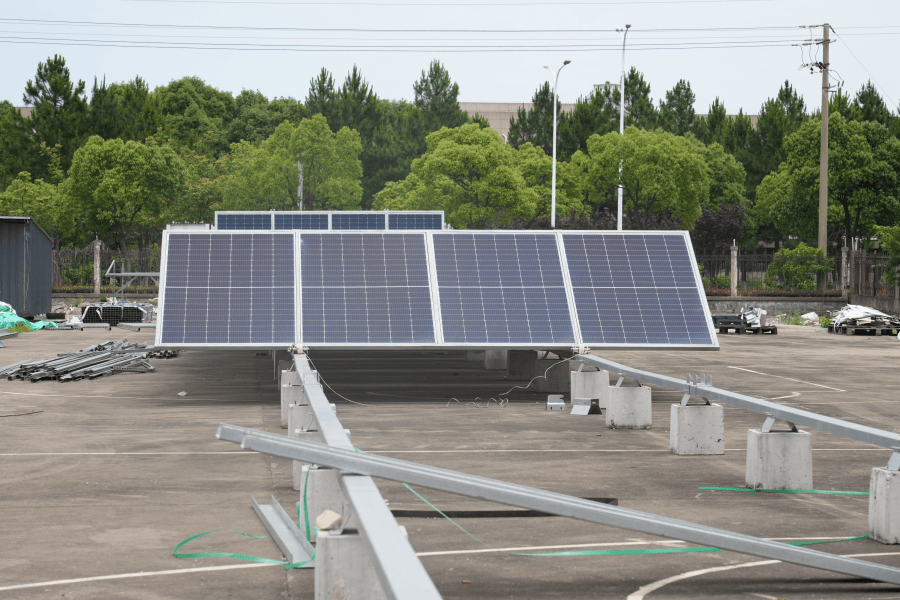
So, what's the alternative? This is where our real-world case study comes in: the Lithium Iron Phosphate (LFP) solar-powered containerized battery storage system. Think of it as a silent, self-contained power plant on a skid. It combines solar PV panels (often mounted on the container or a nearby canopy) with a high-density LFP battery bank and smart inverters, all pre-integrated and tested in a weatherproof, shipping-container-sized package.
The beauty is in its simplicity. It's delivered to your site, connected to your main distribution panel, and turned on. No continuous fuel supply, drastically reduced noise, and zero on-site emissions. For many of our clients at Highjoule, the shift isn't just ideological; it's a financial and operational calculation that's starting to clearly favor LFP technology.

A Case in Point: Remote Site Power in the Southwest US
Let me give you a concrete example from last year. We worked with a civil engineering firm on a new highway extension project in a remote part of Nevada. The challenge: power a site office, material testing trailers, and overnight security lighting for 4 months before the main grid connection was scheduled. The traditional bid was for three large diesel generators running 24/7.
Our team proposed a 500 kWh LFP solar container, paired with a 150 kW solar canopy. The system was designed for a C-rate (that's the charge/discharge speed) that matched the site's load profile - enough oomph to start equipment but optimized for longevity. Honestly, the initial capex was higher than the generator quote. But look at the operational outcome:
- Fuel Savings: Eliminated over 40,000 gallons of diesel consumption.
- Zero Unplanned Downtime: The system ran autonomously. No refueling stops, no generator failures.
- Regulatory Smooth Sailing: Being UL 9540 and UL 1973 certified, permitting was straightforward. The local authority having jurisdiction (AHJ) appreciated the eliminated fire load.
- End-of-Project Flexibility: After the grid tie-in, the system was simply disconnected, serviced, and redeployed to their next project in Arizona. Try doing that with a depreciated diesel genset.
The project manager later told me the silent site was an unexpected morale booster. Workers could actually hear each other, and the site office didn't vibrate anymore.
Key Tech Insights: Safety, Cost, and Heat Management
Now, why LFP? And what should you, as a decision-maker, really focus on? Let's break down two critical points.
1. The Inherent Safety of LFP Chemistry: This is non-negotiable, especially for temporary sites. Unlike some other lithium-ion chemistries, LFP batteries are thermally and chemically more stable. They have a much higher tolerance for heat before any risk of thermal runaway. In the field, this translates to a safer system, simpler thermal management (often just air-cooling is sufficient for these C-rates), and ultimately, easier insurance approval. It's the core reason Highjoule standardizes on LFP for all our mobile and construction-site units.
2. Understanding the Real LCOE (Levelized Cost of Energy): This is the key financial metric. With diesel, your "fuel cost" is just one line item. With a solar-charged BESS, your "fuel" is free sun and smart software. When you calculate the LCOE - which includes capex, opex, fuel, maintenance, and lifespan - over a 3C5 year period across multiple projects, these containerized systems often win. The battery's cycle life (LFP excels here too) means you're amortizing the cost over thousands of cycles, not burning money liter by liter.

Making It Work for Your Project
The technology is proven. The business case is solidifying. The question is how to implement it. Based on our experience deploying these across Europe and North America, success comes down to three things:
- Right-Sizing: It's not about max power; it's about matching the load profile. A good partner will analyze your equipment list and schedule.
- Standards First: Insist on systems built to UL/IEC/IEEE standards. It's your ticket to smooth permitting and safe operation.
- Service Model: Look for a provider that offers a clear service and warranty package. At Highjoule, we treat these mobile units like assets, not products, with remote monitoring and fast local support response.
So, on your next site plan, when you get to the "temporary power" line item, ask the question: Are we budgeting for the old way, or are we investing in the new? The math, and the on-site reality, might surprise you. What's the single biggest power cost you're looking to tackle on your upcoming project?
Tags: UL Standard BESS LCOE Europe US Market Construction Power Renewable Energy LFP Battery
Author
James Zhang
20+ years agricultural energy storage engineer / Highjoule CTO