
Environmental Impact of Smart BMS Monitored Hybrid Solar-Diesel System for Public Utility Grids
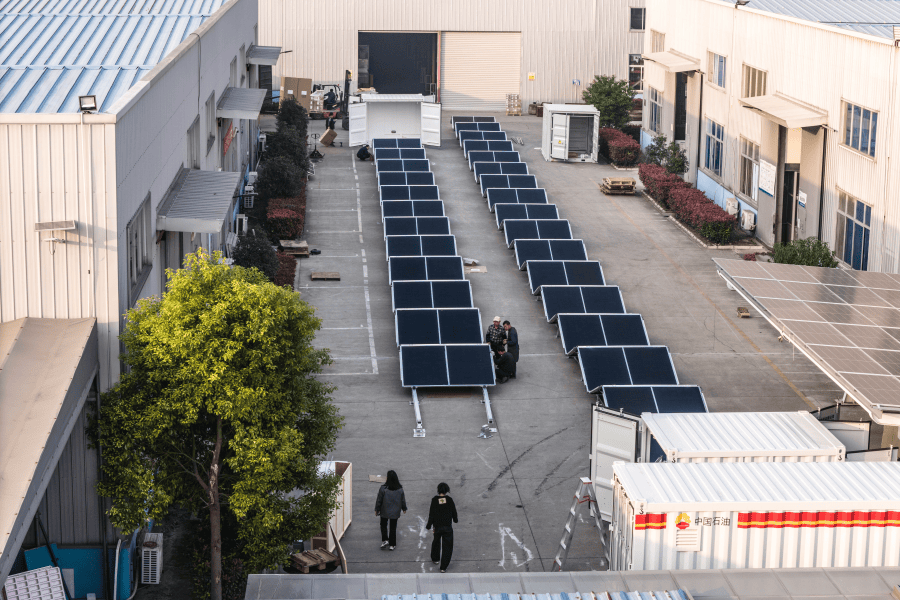
Table of Contents
- The Quiet Problem: The Environmental Cost of "Backup" Power
- The Hidden Agitation: More Than Just Fuel Bills
- The Smart BMS Solution: From Dumb Backup to Intelligent Orchestrator
- The Real-World Impact: A Case Study from the American Southwest
- The Expert Take: Why Thermal Management and C-Rate Are Your Secret Weapons
- The Path Forward: Making Your Grid More Resilient and Responsible
The Quiet Problem: The Environmental Cost of "Backup" Power
Let's be honest. For decades, the conversation around public utility grids, especially in remote communities or areas with high renewable penetration, has had a dirty little secret. We talk a big game about solar farms and wind turbines, but when the sun sets or the wind dies, or when peak demand hits, the default answer has often been the same: fire up the diesel gensets. I've seen this firsthand on site C rows of containers humming away, burning fuel, because the grid needs stability and the existing solar setup can't provide it on its own. It's a necessary evil, or so we thought.
The core problem isn't just using diesel; it's how we use it. Running these generators inefficiently, at low loads, or as the primary response to intermittency, creates a massive environmental footprint. We're talking about significant CO2, NOx, and particulate emissions, right at the moment we're trying to clean up our energy mix. The International Energy Agency (IEA) has consistently highlighted that decarbonizing the power sector is impossible without addressing this flexibility gap, where fossil fuels still dominate during critical hours. This is the real Environmental Impact of Smart BMS Monitored Hybrid Solar-Diesel System for Public Utility Grids we need to confront: transitioning from a diesel-dependent backup model to a truly optimized, intelligent hybrid system.
The Hidden Agitation: More Than Just Fuel Bills
The agitation here goes beyond environmental guilt. It hits the balance sheet and operational resilience. First, fuel is expensive and volatile. A utility manager in California or Germany isn't just buying kilowatt-hours; they're buying a commodity subject to global price shocks. Second, running diesel gensets outside their optimal load range increases maintenance costs and shortens their lifespan C a double whammy on your capital expenditure.
But here's the kicker, from my engineering perspective: most of these systems aren't "smart." The battery storage, if present, and the diesel generators often operate in silos. Without a central brain to orchestrate them, you're leaving efficiency and emissions reduction on the table. You might be cycling your batteries too aggressively (hurting their longevity) or ramping your diesels up and down inefficiently. It's like having a symphony orchestra without a conductor C you'll get noise, not harmony. This operational inefficiency directly translates to a higher Levelized Cost of Energy (LCOE) for the hybrid system and a larger-than-necessary carbon footprint.
The Smart BMS Solution: From Dumb Backup to Intelligent Orchestrator
So, what's the fix? It's not just adding more solar panels or bigger batteries. The transformative piece is the Smart Battery Management System (BMS). Think of it as the master conductor for your entire hybrid energy orchestra. A Smart BMS does far more than prevent a battery from overcharging. In a utility-scale hybrid system, its role expands to holistic system optimization.
At Highjoule, when we design a system for a public utility, the Smart BMS is the core. It continuously monitors a vast array of data: state of charge (SoC) and health of every battery cell, real-time solar output, grid demand forecasts, and the operational status of the diesel generators. Using complex algorithms, it makes millisecond-by-millisecond decisions. Should we draw from the batteries to shave this peak demand, or save that capacity for later? Can we increase the solar inverter's output because the BMS knows the battery temperature is perfectly managed and can absorb the extra charge? Crucially, it decides when to signal the diesel generator to start, ensuring it only runs at its most efficient, high-load set point, minimizing runtime and emissions.
This intelligence is what flips the script on environmental impact. Instead of diesel being the first responder, it becomes the last, perfectly optimized resort. The National Renewable Energy Laboratory (NREL) has shown in multiple studies that such intelligent control can reduce diesel fuel consumption in hybrid microgrids by 40-80%, depending on the configuration. That's not incremental change; that's a revolution.

The Real-World Impact: A Case Study from the American Southwest
Let me give you a real example, though I've changed some specifics for confidentiality. We worked with a municipal utility in the U.S. Southwest. They had a large solar PV array, but during summer evenings, air conditioning load would skyrocket just as solar production dropped. Their old system would kick in two diesel generators to cover the shortfall.
The challenge was to reduce fuel costs, cut emissions, and defer a costly grid upgrade. We deployed a 4 MWh containerized BESS, integrated with their existing solar and diesel gensets. The heart of the project was our UL 9540 and IEC 62619 certified Smart BMS platform. The system was programmed with a simple rule: maximize solar self-consumption, use batteries for peak shaving and frequency regulation, and only start the diesels if the battery was below 20% and the load was above 85% of the generator's optimal rating.
The results after the first year? A 67% reduction in diesel runtime. Fuel costs dropped by over $200,000 annually. The utility now reports their carbon emissions from that substation are down by roughly 450 metric tons per year. The Smart BMS didn't just manage the battery; it managed the entire site's environmental and economic performance. That's the power of integrated thinking.
The Expert Take: Why Thermal Management and C-Rate Are Your Secret Weapons
Okay, let's get a bit technical, but I'll keep it in plain English. When we talk about a Smart BMS in these heavy-duty applications, two specs are non-negotiable: Thermal Management and C-Rate.
Thermal Management: Batteries generate heat, especially when you're charging or discharging them fast to meet a grid demand. Poor heat dissipation kills battery life and, in worst cases, creates safety risks. Our systems use liquid cooling that's actively managed by the BMS. If the BMS sees a cell getting warm, it adjusts the cooling and may even slightly reduce the power draw (C-Rate) to keep everything in a perfect, efficient temperature window. This extends the system's life to well over 15 years, directly improving the LCOE.
C-Rate: This is simply how fast you can charge or discharge the battery. A 1C rate means you can use the battery's full capacity in one hour. For grid services, you often need a high C-Rate (like 0.5C or 1C) to respond quickly to load changes. A Smart BMS knows the exact C-Rate capability of the battery in real-time, based on temperature and health. It won't let the system controller request a 2C burst if it knows the battery can only safely deliver 1C at that moment. This protects your asset. It's this granular, physics-based control that separates a "smart" system from a basic one.
Honestly, any vendor can slap a battery next to a diesel gen. The magic C and the compliance with strict IEEE 1547 and UL standards for grid interconnection C is in the software and the deep integration overseen by an advanced BMS. That's where our two decades of field deployment really pay off, baking those lessons into the system's logic.
The Path Forward: Making Your Grid More Resilient and Responsible
The conversation is shifting. Utility boards and regulators in Europe and North America aren't just asking for renewable capacity anymore; they're demanding verifiable reductions in emissions and system-wide efficiency. A hybrid system with a dumb controller is a missed opportunity. A Smart BMS Monitored Hybrid Solar-Diesel System is the clear path to meeting those demands.
It turns a cost center (diesel fuel) into a managed asset and unlocks the full value of your solar and storage investment. The environmental impact is profound: slashed emissions, reduced fossil fuel dependency, and a grid that's cleaner and more resilient. The question for utility decision-makers isn't really "Can we afford to do this?" Based on the numbers I've seen from the field, it's becoming "Can we afford not to?" What's the one operational pain point in your grid where smarter control could start delivering savings next quarter?
Tags: UL Standard BESS LCOE Renewable Energy Smart BMS Hybrid Solar-Diesel System IEEE Standard Public Utility Grids
Author
James Zhang
20+ years agricultural energy storage engineer / Highjoule CTO