
Environmental Impact of Tier 1 Battery Cell Photovoltaic Storage System for High-altitude Regions
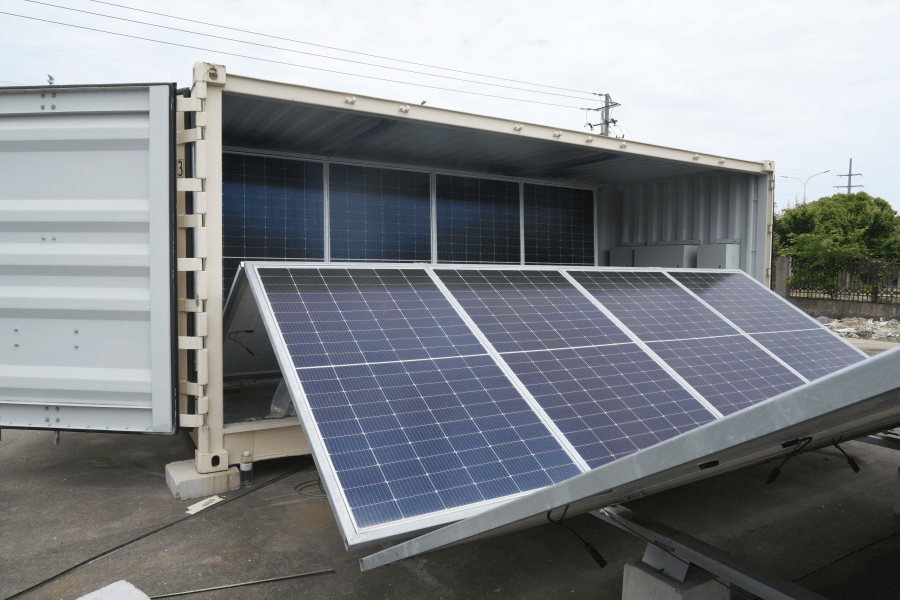
The Thin Air Advantage: Why Your High-Altitude BESS Project Demands Tier 1 Cells
Honestly, if you're planning a solar-plus-storage project in the mountains of Colorado, the Alps, or any high-altitude region, you're facing a unique set of challenges that a standard battery system just isn't built for. I've been on-site at 3,000 meters, watching a team struggle with derated performance and premature aging in a system that worked perfectly at sea level. It's not just about the view. The environmental impact of your battery choice - especially when we talk about the Environmental Impact of Tier 1 Battery Cell Photovoltaic Storage System for High-altitude Regions - shifts from a secondary concern to the primary driver of your project's financial and operational success. Let's talk about what really matters up there.
Quick Navigation
- The High-Altitude Reality Check
- Why Efficiency Losses Hit Your Wallet Harder
- Tier 1 Cells: The Engine for Thin Air
- A Colorado Case Study: From Theory to Frozen Ground
- Thermal Management & LCOE: The Expert's View
The High-Altitude Reality Check: It's Not Just the Air That's Thin
You might think the main challenge is the cold. And you're partly right. But it's the combination of factors that creates the perfect storm. Lower atmospheric pressure affects cooling systems. Wider daily temperature swings - scorching sun followed by sub-zero nights - put immense stress on battery materials. UV radiation is more intense. All of this accelerates the degradation of a battery that isn't meticulously engineered for these conditions. I've seen firsthand on site how a standard, cost-optimized cell can see its cycle life drop by 20-30% in these environments. That's not just a performance hit; it's a direct blow to your return on investment and increases the long-term environmental footprint through more frequent replacements.
Why Efficiency Losses Hit Your Wallet Harder
Let's put some numbers to it. The National Renewable Energy Laboratory (NREL) has highlighted that battery efficiency losses in extreme climates can disproportionately impact the Levelized Cost of Storage (LCOS). In a high-altitude setup, every percentage point of lost round-trip efficiency means you need to oversize your PV array and your battery to meet the same energy demand. More materials, more land use, a larger physical footprint - the cascading environmental impact is significant. It's a ripple effect that starts with the cell chemistry and ends with your project's overall sustainability claim.
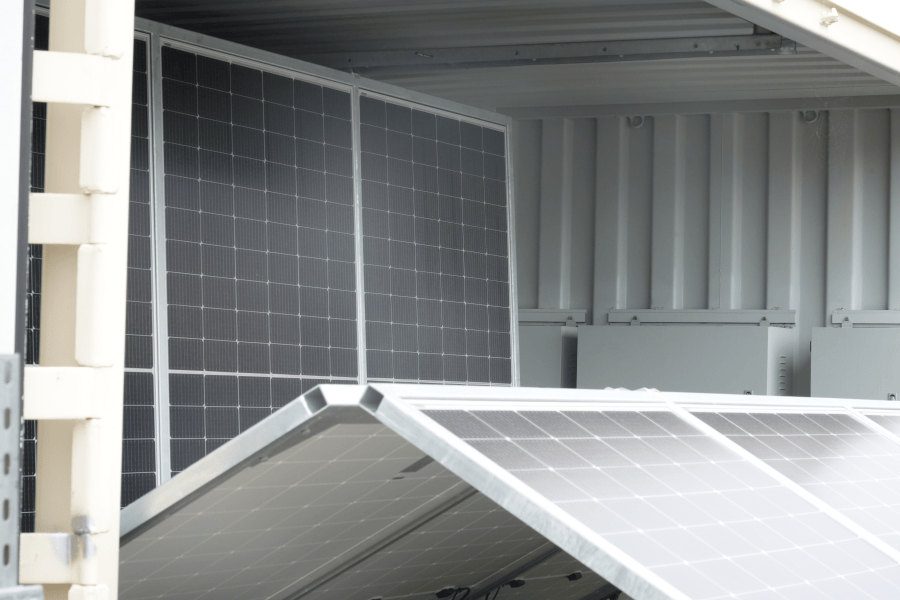
Tier 1 Cells: The Engine Built for Thin Air
So, what's the solution? It starts with insisting on Tier 1 battery cells for these demanding applications. "Tier 1" isn't just a marketing term; in our world, it signifies manufacturers with proven, bankable technology, massive R&D spend on material science, and a multi-year track record of performance data. For high altitudes, this translates to cells with:
- Superior Electrolyte and Separator Chemistry: Formulated to remain stable and conductive across a wider temperature range (-30C to 50C+).
- Enhanced Electrode Stability: Minimizes parasitic reactions that are accelerated by pressure changes and thermal cycling.
- Precision Manufacturing: Ultra-consistent quality that ensures every cell in the pack behaves the same way, which is critical for safety and longevity when the system is stressed.
At Highjoule, this is why our H-Series BESS platform is built exclusively with Tier 1 NMC cells. We don't just buy cells off a shelf; we co-engineer the cell's operational parameters with our proprietary thermal management system. This integrated approach is designed from the ground up to meet not just UL 9540 and IEC 62933 standards, but the unwritten standard of surviving a 20-year life in a place that wants to break it down in 10.
A Colorado Case Study: From Theory to Frozen Ground
Let me tell you about a 2 MWh commercial storage project we deployed near Leadville, Colorado, at about 3,100 meters elevation. The developer's initial proposal used a lower-tier battery pack. Our team ran a detailed simulation based on historical weather data and showed a projected capacity fade that would void the performance guarantee within 8 years.
The challenge was clear: ensure 95%+ of nameplate capacity after 10 years, operate through winter temperatures down to -25C, and do it all within a tight space constraint. The solution was our containerized H-Series with:
- A liquid-cooling system that actively heated the cells during cold starts and precisely cooled them during high-C-rate solar charging.
- A climate-controlled enclosure that maintained a micro-environment for the batteries, independent of the outside air pressure and dust.
- Advanced software that tailored charging profiles (C-rates) based on real-time cell temperature and state-of-health data.
Two years in, the system is outperforming the simulation. The key was treating the cells, the thermal system, and the software as one inseparable unit - a philosophy that's central to minimizing long-term environmental impact.
Thermal Management & LCOE: The Expert's View
If you remember one technical thing from this, make it this: in high-altitude BESS, thermal management is not a subsystem; it's the core of the system. The C-rate - the speed at which you charge or discharge the battery - is directly dictated by how well you can keep the cells at their ideal temperature. Push too fast when it's cold, and you risk lithium plating. Push too fast when it's hot, and you accelerate degradation.
This is where the real environmental and cost equation (LCOE) is won or lost. A superior thermal management system, wrapped around Tier 1 cells, allows for more aggressive, yet safe, cycling. It extends calendar life. It means you need fewer battery units over the life of the solar farm. When we do a lifecycle analysis for a client, the math becomes obvious: the higher upfront cost of a Tier 1, engineered-for-altitude system is dwarfed by the savings in replacement cycles and lost energy revenue.
The bottom line? Specifying for high-altitude isn't about paying a premium. It's about investing in precision. It's choosing a system whose environmental impact is measured in decades of reliable, efficient service, not in early replacement and wasted energy.
What's the biggest operational hurdle you're anticipating for your next high-altitude project?
Tags: UL Standard BESS LCOE Europe US Market Renewable Energy Tier 1 Battery Cells Environmental Impact High-altitude Energy Storage
Author
James Zhang
20+ years agricultural energy storage engineer / Highjoule CTO