
How to Optimize Smart BMS Monitored Energy Storage Container for Construction Site Power
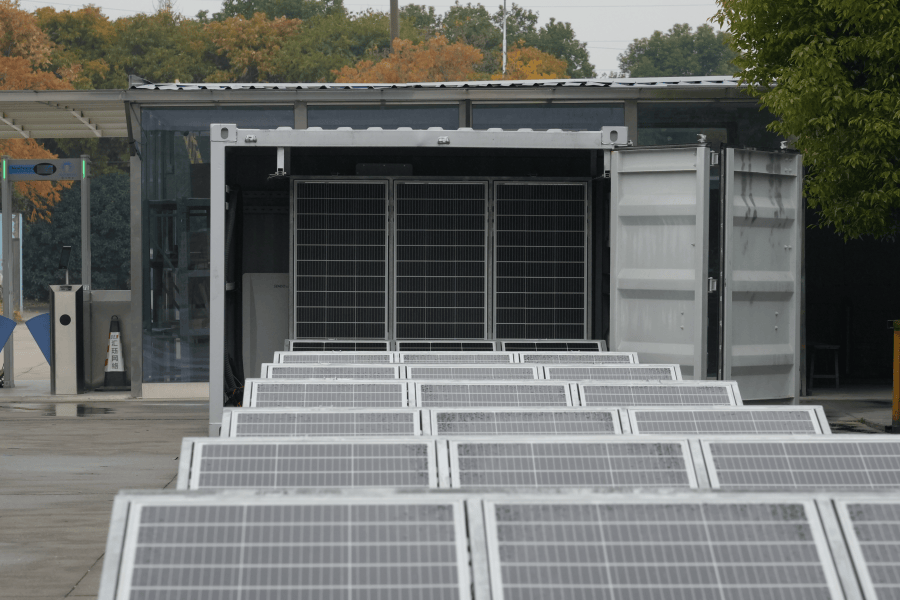
From Diesel Chaos to Silent Power: Optimizing Your Construction Site with a Smart BESS
Hey there. Let's grab a virtual coffee. If you're managing construction projects in the US or Europe, you know the drill. The constant hum (and smell) of diesel generators, the fuel trucks rolling in, the noise complaints from the neighbors, and that nagging worry about emissions targets. Honestly, I've been on hundreds of sites from Texas to Bavaria, and the power problem is the same. It's messy, expensive, and frankly, a bit old-fashioned.
But what if your temporary power was as smart, clean, and efficient as the building you're constructing? That's where optimizing a Smart BMS Monitored Energy Storage Container comes in. It's not just a battery in a box; it's a complete rethink of site power. Let's talk about how to do it right.
Quick Navigation
- The Real Cost of "Business as Usual"
- Why "Smart" BMS is the Game-Changer
- Your On-Site BESS Optimization Checklist
- Case in Point: A German Industrial Build
- Thinking Beyond the Battery Container
The Real Cost of "Business as Usual"
The problem isn't just diesel. It's the whole inefficient ecosystem. I've seen sites where generators are running at 30% load just to power a few tools and trailers - a huge waste. Fuel volatility can blow a hole in your budget overnight. And then there's the logistics: storage, safety protocols for flammable fuels, and the carbon footprint that more and more clients and regulations are demanding you track.
But here's what really agitates me from a technical standpoint: construction sites are dynamic. Load profiles swing wildly from delicate sensor calibration to heavy machinery operation. A dumb generator can't adapt. It just guzzles fuel. This volatility leads to what we call "stranded power capacity" - you've paid for it, but you can't use it efficiently. According to the National Renewable Energy Laboratory (NREL), integrating storage can reduce fuel use in hybrid systems by 50-80% in optimal scenarios. That's a number that gets any project manager's attention.
Why "Smart" BMS is the Game-Changer
So, we put a battery container on site. Big deal. The magic - and the optimization - isn't in the lithium cells themselves. It's in the Brain: the Smart Battery Management System (BMS).
Think of a basic BMS like a simple heartbeat monitor. A smart BMS? It's the full ICU with predictive analytics. It doesn't just monitor voltage and temperature; it understands and anticipates.
- Thermal Management is Everything: On a dusty, hot Texas site, a battery can overheat. A smart BMS doesn't just kick on cooling fans when it's already hot. It uses load forecasting and ambient data to pre-condition the container, managing cell-level temperatures to extend lifespan. This directly lowers your long-term Levelized Cost of Energy (LCOE) for the asset.
- C-rate in Real-Time: "C-rate" is basically how fast you charge or discharge the battery. A 1C rate means full power in one hour. For a crane operation needing a sudden surge, you might safely pull a high C-rate. A smart BMS calculates this in real-time, balancing the demand with the battery's health, something a generator could never do. It prevents the damaging high-stress discharges that kill batteries prematurely.
This is where standards like UL 9540 (energy storage system safety) and IEC 62619 (safety for industrial batteries) come alive. It's not just about having a certificate on the wall. A smart BMS is your active 24/7 enforcer of these safety protocols, something we at Highjoule design into every container's core logic.

Your On-Site BESS Optimization Checklist
Based on my two decades of deployments, here's how you optimize that container for your specific site:
- Right-Sizing with Intelligence: Don't just match peak load. Analyze your phased power needs. A smart system can be "right-sized" smaller because it manages peak shaving and load smoothing so effectively. Pair it with a smaller, efficient generator as a hybrid backup, not the main workhorse.
- Software That Talks to Your Tools: The BMS data should be accessible via a cloud dashboard. Your site manager should see, from their phone, if the solar canopy is charging the batteries enough to get through the afternoon concrete pour. This remote visibility is a game-changer for operational efficiency.
- Plan for the Environment (and the Neighbors): Place the container on stable, level ground with clear access for service. Optimize for natural ventilation paths to aid the thermal management system. The silent operation is a benefit - use it! Place it closer to where the power is needed, not hidden away for noise reasons.
- Service is Part of the Design: Ask your provider about serviceability. Can cells be easily monitored? Is there local technical support? Our philosophy at Highjoule is that a container should have clear service corridors and modular components. Because things happen on site, and you need a partner, not just a vendor.
Case in Point: A German Industrial Build
Let me give you a real example. We deployed a 500kWh Highjoule container for a large automotive supplier's factory expansion in North Rhine-Westphalia. The challenges were classic: strict local noise ordinances, a tight carbon budget, and a need for ultra-reliable power for precision welding robots.
The optimization was in the system design. We integrated the container with the site's temporary solar array and a single, small natural gas genset. The smart BMS was the conductor. During sunny days, it prioritized solar charging and silently powered the site. For the high-power weld cycles, it seamlessly blended battery power with the genset, keeping the genset in its most efficient rpm band. The result? A 76% reduction in fuel use compared to the original genset-only plan, zero noise complaints, and the project met its sustainability KPIs. The BMS data logs became part of the project's environmental reporting.
Thinking Beyond the Battery Container
Here's my final insight from the field: the most optimized container is part of an optimized process. Talk to your energy storage provider early in the site planning phase. The best outcomes I've seen are when we're brought in during the civil engineering stage, not as an afterthought when the generators are already ordered.
So, what's the biggest power variability challenge on your next site plan? Is it the crane, the batch plant, or the overnight security load? Designing your Smart BMS Monitored Energy Storage Container strategy around that answer is where true optimization - and savings - begins.
Tags: Construction Site Power Energy Storage Container UL Standard BESS LCOE Smart BMS IEEE
Author
James Zhang
20+ years agricultural energy storage engineer / Highjoule CTO