
Cost Analysis: 215kWh Cabinet & 1MWh Solar Storage Systems for Farm Irrigation
Let's Talk Real Numbers: The Cost of Solar-Powered Water for Your Farm
Hey there. If you're reading this, you're probably staring at rising grid power costs for your irrigation pumps or looking at that perfect, sunny field and wondering how to harness it more reliably. I've been on dozens of farms from California's Central Valley to the plains of Spain, helping folks size up systems just like the 215kWh cabinet or the larger 1MWh solar storage setups for irrigation. Honestly, the first question is always the same: "How much will it cost?" But let me tell you from the field - that's the right question to start with, but it's not the only one you should be asking.
Quick Navigation
- The Real Problem: It's Not Just About Storing Sunshine
- The Cost Breakdown: Hardware, Soft Costs, and The Hidden Stuff
- A Real-World Case: The California Vineyard
- Thinking Beyond the Price Tag: LCOE, Safety, and Longevity
- Making It Work For Your Operation
The Real Problem: It's Not Just About Storing Sunshine
You see, the core challenge for agricultural irrigation with solar isn't just buying batteries. It's about mismatch. Your crops need water when they need it, often in the early morning or evening. But peak solar production happens midday. Without storage, you're either running pumps on expensive grid power or wasting free solar energy. The National Renewable Energy Lab (NREL) highlights this intermittency as a primary barrier to deeper solar adoption in agriculture. The pain point gets amplified when you realize that a poorly sized or specified system can lead to insufficient water pressure, reduced crop yield, or even battery damage from constant deep cycling.
I've seen this firsthand on site: a farm in Texas invested in a solar array without adequate storage. They were still drawing 40% of their irrigation power from the grid during peak rate periods, completely undermining their savings. The initial "low cost" system became a long-term cost burden.
The Cost Breakdown: Hardware, Soft Costs, and The Hidden Stuff
So, let's get to your main question. For a commercial/agricultural-scale system like a 215kWh cabinet or a 1MWh containerized solution, the cost is never a single number. It's a stack. Here's how it typically layers, especially for markets with strict standards like UL 9540 in the US or IEC 62933 in the EU.
The Core System Components (The "Sticker Price")
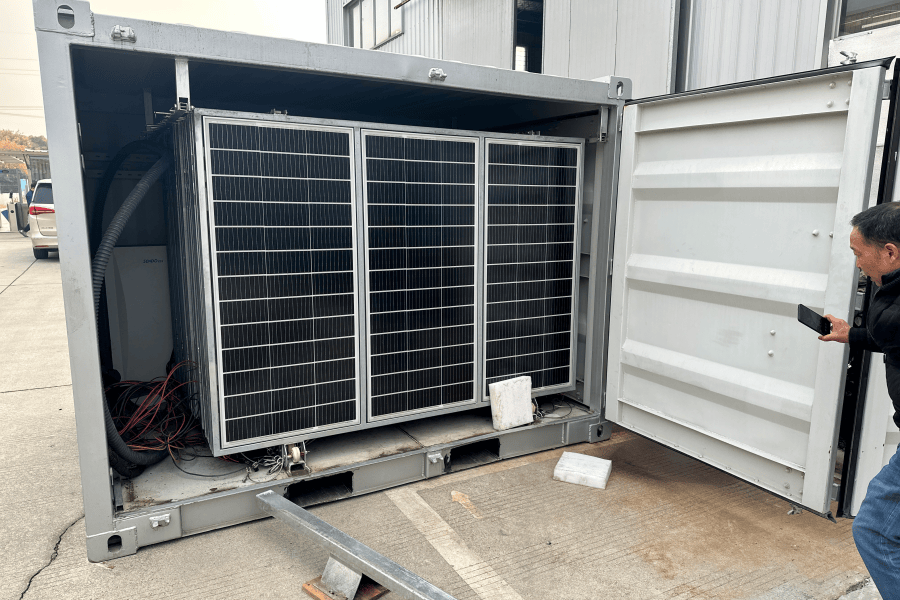
- Battery Storage (BESS): This is the 215kWh or 1MWh unit itself. Current prices are volatile but for a quality, UL/IEC-certified system, you're looking at a range. A 215kWh all-in-one cabinet might be in the ballpark of $85,000 to $130,000. A larger 1MWh containerized solution often scales better, ranging from $280,000 to $450,000+. The big "it depends" here is the battery chemistry (Lithium Iron Phosphate, or LFP, is the dominant, safer choice now) and the power conversion system (PCS) rating.
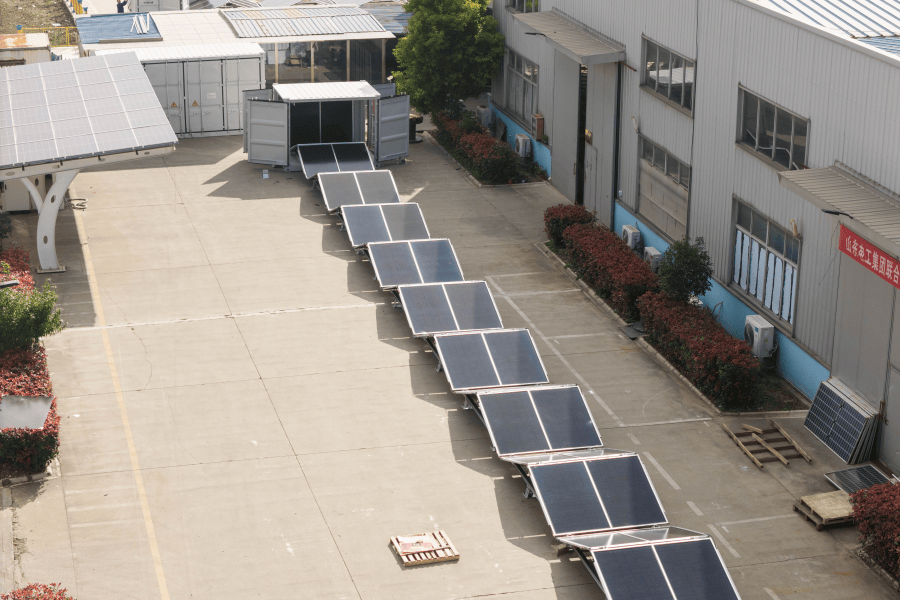
- Solar PV Array: You need to charge those batteries. For a 1MWh battery that cycles daily, you might need 1.2-1.5 MW of solar capacity, costing roughly $0.70 to $1.10 per watt installed, depending on region and mounting.
- Balance of System (BOS): Inverters, transformers, switchgear, HVAC for the container (critical!), and wiring. This can add 20-30% to the storage hardware cost.
The "Soft" & Often Overlooked Costs
This is where budgets get blown. I can't stress this enough.
- Engineering, Permitting, & Interconnection: Getting a system this size approved, especially if you're doing any grid-backfeeding, requires detailed studies and fees. In California or parts of the EU, this process alone can take 6-12 months and cost tens of thousands.
- Installation & Civil Work: Pouring a level concrete pad for a 40-foot container, trenching for DC and AC cables, and skilled electrical labor. Site-specific conditions massively impact this.
- Long-Term Operations & Maintenance (O&M): This is the big one. A good battery system is like a tractor - it needs check-ups. Budget 1-3% of the total system cost annually for professional monitoring, preventative maintenance, and a warranty that actually has local support.

A Real-World Case: The California Vineyard
Let me give you a real example from last year. A 200-acre vineyard in Sonoma County was facing demand charges of over $4,000 monthly just for running irrigation pumps. Their goal: shift to solar and eliminate grid use during peak hours (4-9 PM).
Their Solution: A 1.2 MW ground-mount solar array coupled with an 840kWh BESS (close to your 1MWh target). The total turnkey project cost was ~$2.1 million. The storage system itself (including container, LFP batteries, PCS, and thermal management) was about $340,000. The key was the system design: we oversize the solar a bit to ensure the battery was fully charged by 3 PM even on a slightly cloudy day, ready for the evening irrigation run.
The Outcome: They now cover 95% of their irrigation energy needs on-site. The payback period, factoring in state incentives (like SGIP), is calculated at under 7 years. But more importantly, they have water security during grid outages - a huge risk mitigator in fire-prone areas.
Thinking Beyond the Price Tag: LCOE, Safety, and Longevity
As a technical guy, I need you to think about three things that dramatically affect your real cost over 15-20 years.
1. Levelized Cost of Energy (LCOE): This is the most important metric. It's the total lifetime cost of your system divided by the total energy it will produce. A cheaper battery with a 5-year warranty and 80% depth-of-discharge will have a much worse LCOE than a slightly more expensive one with a 10-year warranty and a gentler 70% cycle. Always ask for the projected LCOE in $/kWh.
2. Thermal Management & C-Rate: Your irrigation pump might need a big surge of power to start. That's the C-rate - how fast you can pull energy from the battery. A 1C rate means you can pull the full capacity in one hour. A 0.5C rate is slower. Higher C-rates generate more heat. If the battery's thermal management (liquid cooling vs. air cooling) can't handle it, the batteries degrade faster. I've seen air-cooled cabinets in Arizona farms lose 30% of their capacity in 3 years because they were constantly thermally stressed. A proper liquid-cooled system, like what we design into Highjoule containers, maintains optimal temperature, extending life and protecting your investment.
3. The Safety & Compliance Non-Negotiable: This is not a place to cut corners. A UL 9540 listed system means it has passed rigorous safety tests for fire and electrical hazards. For agricultural settings, where the system might be unattended for days, this is your insurance policy. It also makes permitting infinitely smoother.
Making It Work For Your Operation
So, what's the next step? Get a site-specific assessment. The cost for a 215kWh vs. a 1MWh system depends entirely on your water needs (pump horsepower, daily run hours), your solar resource, and your local utility rate structure. A good provider won't just sell you a box; they'll model your load profile and simulate 20 years of weather data to right-size the system.
At Highjoule, our approach for agricultural clients always starts with the water pump's data logger. We look at the real energy consumption patterns, then design a system with a conservative C-rate and robust thermal management to ensure it lasts through thousands of irrigation cycles. We also handle the full stack - engineering, UL-compliant hardware, local installation partners, and a performance guarantee with remote monitoring - so you have one point of contact, not ten.
The bottom line? The cost for a 215kWh to 1MWh solar storage system for irrigation is a significant capital decision. But when you factor in rising grid costs, potential incentives, and the value of energy independence for your core operation, the equation is shifting fast. The right question isn't just "How much does it cost?" but "What's the value of reliable, low-cost power for my water?"
What's the single biggest challenge you're facing with energy costs for irrigation on your land?
Tags: UL Standard BESS LCOE Agricultural Irrigation US EU Market Solar Storage Cost
Author
James Zhang
20+ years agricultural energy storage engineer / Highjoule CTO