
215kWh Hybrid Solar-Diesel System Cost for Coastal Sites: A Real-World Breakdown
The Real Cost of Powering Coastal Operations: A Deep Dive into 215kWh Hybrid Systems
Hey there. If you're reading this, chances are you're managing a facility C maybe a remote telecom site, a water treatment plant, or a seaside resort C somewhere along a beautiful, but brutal, coastline. You're likely wrestling with two relentless enemies: sky-high diesel fuel bills and the silent, creeping destruction of salt spray on your equipment. And you're probably asking the question that brought you here: How much does it really cost to deploy a robust 215kWh cabinet-style hybrid solar-diesel system in a coastal salt-spray environment? Honestly, I've been on-site for over two decades, from the Gulf Coast to the North Sea, and I can tell you upfront: the sticker price is just the beginning of the conversation. Let's talk about what it actually takes to build a system that lasts.
Quick Navigation
- The Real Problem: More Than Just Rust
- The Hidden Cost Pitfalls of "Standard" Systems
- The 215kHybrid Cabinet Solution: A Cost Breakdown
- Case Study: A Florida Marine Research Station
- Key Cost Considerations Beyond the Cabinet
- Making the Investment Decision
The Real Problem: More Than Just Rust
We all know salt air corrodes metal. But in my experience, the real aggravation isn't the surface rust you can see; it's the insidious failure of electronics, connectors, and battery management systems (BMS) that happens from the inside out. I've seen "marine-grade" cabinets fail in under 18 months because the internal thermal management system's fans sucked in moist, salty air, coating circuit boards with a conductive film. A study by the National Renewable Energy Laboratory (NREL) on offshore wind infrastructure highlights that corrosion and moisture can accelerate component degradation by up to 300% in coastal environments. That means a system designed for a 10-year lifespan might be on its last legs in 3 or 4.
This isn't just an equipment issue - it's a severe business continuity risk. When your backup power fails during a storm or grid outage, the cost is measured in more than dollars.
The Hidden Cost Pitfalls of "Standard" Systems
Here's where the initial "cost" question gets tricky. A standard 215kWh battery cabinet might quote you one price for an inland industrial park. But for a coastal site, that price is almost irrelevant. Why? Because you'll be layering on massive additional expenses:
- Constant Maintenance & Downtime: Frequent inspections, cleaning, and replacement of corroded parts. I've seen sites where the annual maintenance cost for a poorly specified system reached 15% of its initial capex.
- Premature Replacement: As the NREL data suggests, you might be buying a whole new battery bank or inverter long before you planned to.
- Safety & Insurance Liabilities: Corroded electrical connections are a prime ignition source. Insurers are increasingly savvy about this and may demand premium hikes or specific certifications like UL 9540 for the entire energy storage system.
The initial purchase price, honestly, is just the entry ticket. The Levelized Cost of Energy (LCOE) - the total lifetime cost divided by the energy produced - is the number you need to focus on. A cheaper, non-compliant system will have a catastrophic LCOE in a salt-spray environment.
The 215kWh Hybrid Cabinet Solution: A Cost Breakdown
So, let's get to your question. For a properly engineered, coastal-ready 215kWh cabinet hybrid system (solar + diesel genset + storage), you need to think in terms of a fully integrated solution, not a commodity box.
A realistic cost range for a turnkey system, installed, for a demanding coastal site in the US or Europe typically falls between $180,000 to $280,000. The variance is huge because of the specs. Here's what that buys:
| Cost Component | Standard Inland System | Coastal Salt-Spray Ready System | Why the Difference Matters |
|---|---|---|---|
| Cabinet & Structure | Powder-coated steel | Stainless steel (316 grade) or hot-dip galvanized with specialized coating (e.g., zinc-aluminum). Pressurized & gasketed. | Prevents salt ingress. This is non-negotiable. It's the first and biggest cost adder. |
| Battery Cells & C-Rate | Maybe LFP chemistry, 0.5C standard rate. | LFP (Lithium Iron Phosphate) is the baseline for safety. You need a higher C-rate (e.g., 1C) to handle rapid solar input and quick discharge during genset start-up, reducing diesel runtime. | Higher C-rate batteries cost more but drastically cut fuel consumption and genset wear. I spec this for almost every hybrid project now. |
| Thermal Management | Air-cooled, fan-based. | Liquid-cooled or sealed, passive air-exchange system. Corrosion-proof condensers and fans if used. | Sealed thermal management is critical. It maintains optimal temperature for battery life and keeps the corrosive environment outside. |
| Power Conversion (Inverter/Charger) | Standard IP21 enclosure. | Minimum IP54 (dust and water jet protected), with conformal coated internal boards. UL 1741 SB/IEEE 1547 compliant for grid interconnection. | Ensures reliability during sea spray and storms. UL/IEC compliance is mandatory for permitting and insurance in most markets. |
| Integration & Controls | Basic genset sync. | Advanced controller that prioritizes solar, uses batteries for peak shaving, and starts the diesel genset only as a last resort at optimal load. This is the "brain" that maximizes ROI. | This software intelligence is where you claw back your investment through fuel savings. Don't cheap out here. |
| Certifications | May have basic cell certification. | Full system certifications: UL 9540 (ESS), UL 1973 (batteries), IEC 62619 (international standard). Specific marine or coastal environmental testing reports. | This is your proof of durability. It affects everything from fire code approval to your bank's willingness to finance the project. |
At Highjoule, when we price a system for a site like yours, we build all this in from the start. Our Seaguard cabinet line, for instance, uses a pressurized nitrogen atmosphere and liquid cooling as standard for coastal deployments. It costs more upfront, but I've seen these units operating flawlessly after 5 years in Caribbean resorts, where the previous systems were replaced twice in the same period.

Case Study: A Florida Marine Research Station
Let me give you a real example. We deployed a 215kWh system at an off-grid marine biology station in Florida. Their challenge: a 24/7 critical load for specimen tanks, reliant on a diesel genset running 22 hours a day. Salt corrosion killed their previous lead-acid battery bank in 2 years.
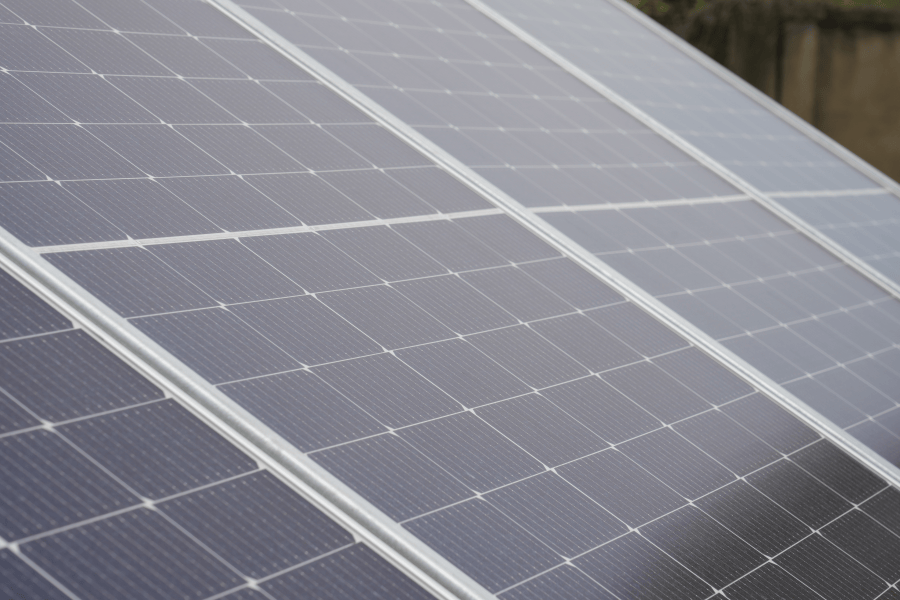
Our solution: A hybrid system with a 120kW solar canopy, the 215kWh Seaguard cabinet, and their existing 100kW genset. The advanced controller was programmed to use solar to directly power loads and charge the battery. The battery handles all overnight load and provides "genset assist," starting the diesel only when the battery hits 30% and running it at its most efficient 80% load for a short burst to recharge.
The result: Diesel runtime dropped from 22 hrs/day to under 6 hrs/day. The fuel savings paid for the system in under 4 years. More importantly, the station now has silent, clean power most of the day and night. The system passed its 3-year inspection with minimal corrosion, thanks to the sealed design. The station director told me his insurance company actually lowered his premium due to the reduced fire risk from the UL 9540-certified system and fewer genset hours.
Key Cost Considerations Beyond the Cabinet
When you get a quote, make sure it explicitly includes or accounts for:
- Site-Specific Engineering: Foundation design for potential storm surge, custom conduit and sealing solutions.
- Local Permitting & Interconnection Fees: These vary wildly by county and utility. In California or the EU, navigating grid interconnection (IEEE 1547/UL 1741 SB) is a significant part of the project cost.
- Long-Term Service Agreement (LTSA): For remote sites, a proactive maintenance plan with remote monitoring is crucial. It's a line item that saves you a fortune in emergency call-outs. Our team at Highjoule offers predictive analytics based on BMS data to warn of issues before they cause downtime.
Making the Investment Decision
So, back to the core question: "How much does it cost?" You now know it's not a simple number. It's the cost of a resilient, certified, intelligently integrated power asset designed to survive its environment and save you money for 15+ years.
The right way to frame it is: What is the cost of not doing it right? Continued fuel volatility, unpredictable downtime, and recurring capital expenditures to replace corroded gear.
My advice? Get detailed quotes that specify every certification and environmental rating. Ask for case studies in similar environments. And run the LCOE model over a 15-year horizon, factoring in your local diesel price, solar irradiance, and estimated maintenance. That final number - the true cost of ownership - is where you'll find your answer and the confidence to invest in a system that truly powers your coastal operation, come rain, shine, or salt spray.
What's the single biggest pain point you're facing with your current coastal power setup? Is it the maintenance surprises or the fuel bills that keep you up at night?
Tags: UL Standard BESS LCOE Salt-Spray Corrosion IEEE Standards Hybrid Solar-Diesel System Energy Storage Cost Coastal Energy
Author
James Zhang
20+ years agricultural energy storage engineer / Highjoule CTO