
Cost of 215kWh Solar Container for Data Center Backup | Expert Breakdown
Quick Navigation
- The Real Question Behind the Price Tag
- Breaking Down the Cost of a 215kWh Solar Container
- The "Hidden" Costs You Can't Afford to Ignore
- A Real-World Snapshot: From Specification to Operation
- How to Think About Your Investment: Beyond $/kWh
- Your Next Step: From Ballpark to Blueprint
The Real Question Behind the Price Tag
Honestly, when a data center operator asks me "How much does it cost for a 215kWh cabinet solar container for backup power?", I know they're not just looking for a number. What they're really asking is, "How do I ensure my most critical loads stay online during an outage, without getting burned by hidden costs or reliability issues?" I've seen this firsthand on site - the tension when grid power flickers, the sheer cost of even a minute of downtime. In the US and Europe, we're not just talking about convenience; we're talking about compliance, contractual SLAs, and protecting multi-million dollar infrastructure.
The market is flooded with containerized BESS solutions, but for a mission-critical environment like a data center, the standard off-the-shelf unit just won't cut it. The real cost isn't in the steel cabinet; it's in the engineering that happens inside it and around it.
Breaking Down the Cost of a 215kWh Solar Container
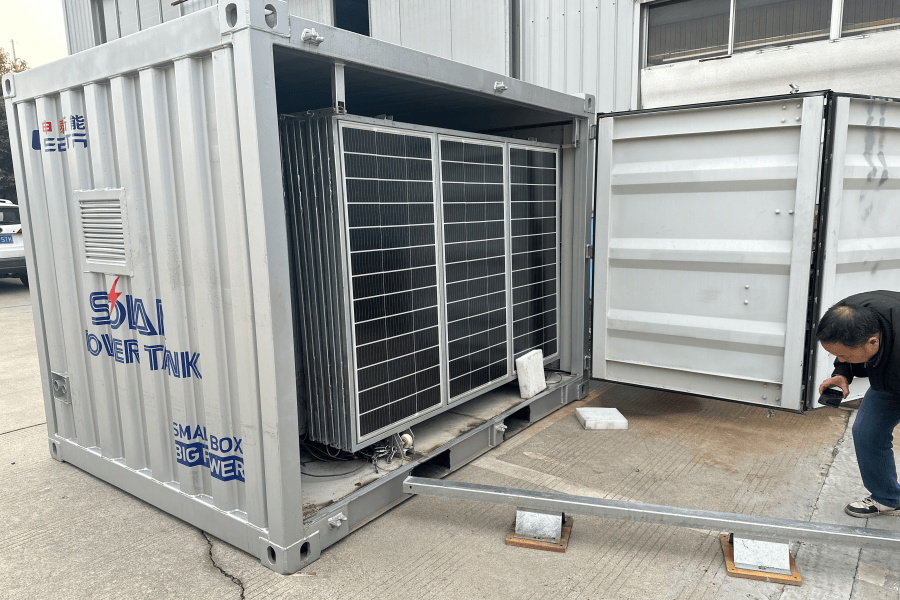
Let's get into the nuts and bolts. A fully functional, code-compliant 215kWh solar-ready container system for backup is a symphony of components. Think of it in three layers:
- The Core Power Block: This is your battery rack (Lithium Iron Phosphate, or LFP, is the industry standard for safety now), the battery management system (BMS), the power conversion system (PCS) that handles AC/DC conversion, and the critical HVAC and thermal management system. For a 215kWh unit, this typically constitutes 60-70% of the hardware cost.
- The Brain and Nervous System: This includes the energy management system (EMS) for control, the fire suppression system (often aerosol-based or clean agent for data center compatibility), and the comprehensive switchgear and protection devices. It's what makes the system smart, safe, and integrable with your existing infrastructure.
- The Container & Integration: The ISO-standard steel shell, modified for cable entry, ventilation, and safety. But here's the kicker - the real cost driver is the integration engineering: designing all these systems to work seamlessly, safely, and in compliance with local codes like the NFPA 855 in the US or the relevant IEC standards in Europe.
So, for a turnkey, UL 9540/9540A listed system designed for data center backup - including basic engineering for interconnection - you're generally looking at a capital expenditure (CapEx) range of $400 to $650 per kWh. That puts a 215kWh system in the ballpark of $86,000 to $140,000 for the containerized system itself, ex-works.

The "Hidden" Costs You Can't Afford to Ignore
This is where I've seen projects get into trouble. The container price is just the beginning. The total installed cost - what we call the "all-in" cost - includes critical add-ons:
| Cost Component | Why It Matters | Potential Impact |
|---|---|---|
| Site Preparation & Foundation | Data centers need level, reinforced concrete pads. You might need crane access planned. | $5,000 - $20,000+ |
| Electrical Interconnection | This is huge. The cost of switchgear, transformers, and labor to tie into your critical bus varies wildly by site complexity. | $15,000 - $50,000+ |
| Permitting & Engineering | Structural, electrical, and fire safety stamps from a licensed Professional Engineer (PE) are non-negotiable. | $10,000 - $25,000 |
| Shipping & Rigging | Moving a 20-40 ft container across the country or ocean isn't trivial. | $5,000 - $15,000 |
| Ongoing O&M | Annual inspections, software updates, and potential performance monitoring services. | 1-3% of CapEx/year |
A recent report from the National Renewable Energy Laboratory (NREL) highlighted that these "balance-of-system" and "soft" costs can add 30-50% to the base equipment cost. For a data center, skimping here is not an option.
A Real-World Snapshot: From Specification to Operation
Let me share a scenario from a project we did for a colocation data center in Frankfurt, Germany. The client needed a 215kWh buffer to cover their cooling system load for 2 hours during short grid interruptions, bridging the gap until their diesel generators were fully online and stable.
The challenge wasn't just capacity; it was speed and grid signal quality. Their legacy UPS couldn't handle the frequent, short-duration sags. We deployed a Highjoule container with a high C-rate battery design (allowing for very rapid discharge when needed) and an advanced PCS that provided instantaneous voltage support. The thermal management was key - we used a redundant, indirect liquid cooling loop to ensure zero heat exhaust into the sensitive data hall environment, a non-negotiable for their facility team.
The "cost" conversation started with the hardware but quickly moved to Levelized Cost of Energy (LCOE) for backup. By extending the life of their diesel gensets (fewer starts, less maintenance) and providing seamless transition, the BESS wasn't just a cost center; it became a reliability asset. The total project cost landed at the higher end of our range due to the custom cooling integration and stringent T1V certification, but the ROI was justified through avoided risk.
Expert Insight: The Tech That Justifies the Price
When we design for data centers, we obsess over two things: thermal management and cycle life. Poor thermal management (like some basic air-cooled systems) can degrade battery life by 50% or more in a high-cycling backup application. That directly destroys your $/kWh economics. We design for a tight temperature band, which costs more upfront in HVAC and controls but saves a fortune in replacement costs.
Secondly, the C-rate - the speed at which you can charge or discharge the battery. A data center backup needs high power (kW) quickly, even if the energy (kWh) requirement is 215kWh. A cheaper battery might only support a 0.5C rate (discharge over 2 hours). A robust one designed for backup can hit 1C or higher, delivering full power in an hour or less. That engineering for power density adds cost but is critical for performance.
How to Think About Your Investment: Beyond $/kWh
So, how much does it cost? The honest answer is: It depends on what you need it to do.
- Is it for pure backup only? You might prioritize power density and reliability over ultimate cycle life.
- Will it also participate in grid services (where allowed)? Then the economics change dramatically, and a higher-spec EMS and interconnection might be justified.
- What is the true cost of downtime for your facility? The Uptime Institute consistently reports outage costs in the hundreds of thousands per incident. Suddenly, investing in a fully certified, robust system with expert support looks different.
At Highjoule, we've found that clients who engage early in the design phase - where we can tailor the BESS's capabilities to their specific electrical one-line diagram and risk profile - end up with the most cost-effective and reliable outcome. Our focus on UL/IEC compliance and designing for a low LCOE over 15+ years isn't a sales pitch; it's what prevents those terrifying 3 AM call-outs.
Your Next Step: From Ballpark to Blueprint
If you're evaluating a 215kWh or similar system, my strongest advice is this: shift the conversation from "commodity price" to "total solution value." Prepare your site's one-line diagram, your backup runtime requirements, and any future energy resilience goals. Then, have a coffee (virtual or real) with an engineering team that speaks your language - both technically and in terms of business risk.
The right partner won't just give you a number; they'll help you understand what's behind it. What's the one non-negotiable requirement for your data center's backup power that you find most vendors don't fully appreciate?
Tags: UL Standard BESS LCOE Solar Container Data Center Backup Energy Storage Cost
Author
James Zhang
20+ years agricultural energy storage engineer / Highjoule CTO