
Air-Cooled Mobile Power Container Cost for Farm Irrigation | 2024 Guide
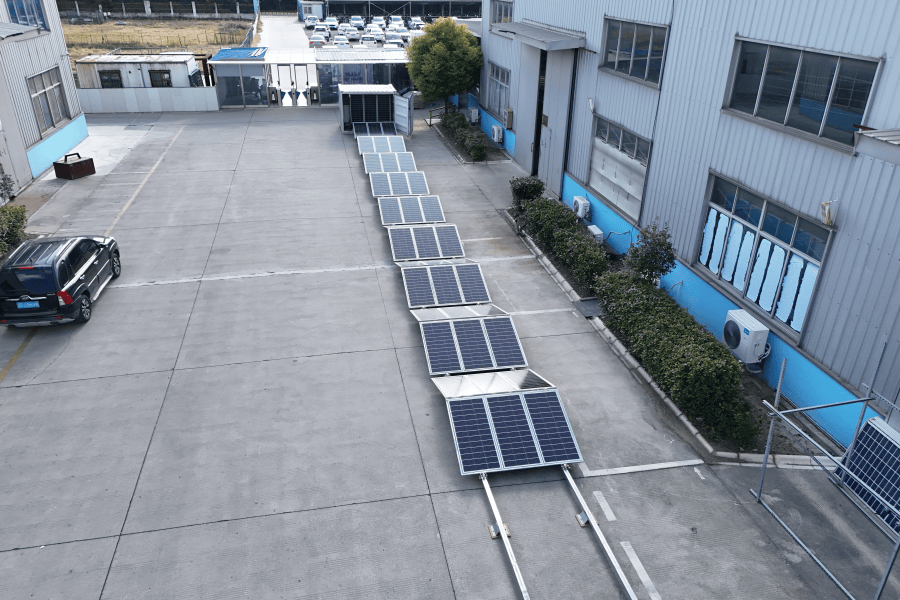
Let's Talk About Powering Your Pivot: The Real Cost of Mobile Energy for Farms
Hey there. If you're reading this, you're probably standing in a field somewhere, looking at an irrigation pivot, and thinking about the grid - or the lack of it. Or maybe you're seeing diesel bills eat into your margins season after season. I've been there, on-site from California's Central Valley to farms in rural Spain, helping folks solve this exact puzzle. So, let's have a straight talk over a (virtual) coffee about one of the most common questions I get: How much does an air-cooled mobile power container for agricultural irrigation actually cost?
Honestly, if someone gives you a simple number upfront, be wary. It's like asking "How much does a tractor cost?" The answer depends entirely on your acreage, your soil, and what you need it to do. The same is true for Battery Energy Storage Systems (BESS). The real number isn't just a sticker price; it's about the total cost of owning a solution that works reliably for your specific operation.
In this article:
- The Real Problem: It's Not Just "No Grid"
- What You're Actually Paying For: The Cost Components
- The Real Metric: Understanding LCOE for Your Farm
- A Case in Point: Solar + Storage in California's Central Valley
- Making It Work: Safety, Standards, and Smarts
The Real Problem: It's Not Just "No Grid"
The obvious challenge is off-grid or weak-grid irrigation. But the deeper, more expensive problem is predictable unpredictability. You have a narrow window to water. A diesel generator might fail. Grid power during peak demand can be prohibitively expensive or subject to curtailment. I've seen a farm in Texas lose a week of critical irrigation because a generator part failed and took days to arrive. That's not an energy cost; that's a crop yield cost.
Furthermore, the push for sustainable agriculture isn't just a trend - it's becoming a market expectation and, in some regions, a regulatory framework. Relying solely on diesel is increasingly seen as a liability. According to the International Energy Agency (IEA), renewables are set to provide nearly 40% of global power generation by 2027. Farming needs to be part of that shift, not just for the planet, but for long-term economic resilience.
What You're Actually Paying For: The Cost Components
So, let's break down the cost of an air-cooled mobile power container. Think of it in three layers:
1. The Core Hardware (The "Box")
This is the battery racks, power conversion system (PCS), thermal management (those big air-cooling units on the side), and the container itself. For a mobile unit designed for agricultural use, you're typically looking at a system sized between 500 kWh to 2 MWh. In 2024, for a quality, UL-certified system, the hardware capex can range from $350 to $550 per kWh.
Why the range? It comes down to chemistry, cycle life, and safety architecture. A battery with a higher cycle life (like LFP chemistry, which we use at Highjoule) might cost more upfront but lasts thousands of cycles longer. The thermal management system is crucial - air-cooling is robust and simpler for mobile applications, but its design efficiency directly impacts battery longevity. A cheap system might overcool or undercool, killing your batteries in a few years.
2. The "Brain" and The Brawn (Software & Integration)
This is what separates a glorified battery from a smart farm asset. The energy management system (EMS) is the brain. It needs to seamlessly integrate with your solar PV (if you have it), start and stop based on soil moisture sensors, and avoid peak demand charges if you're on a partial grid. This software layer and its integration can account for 15-25% of the total project cost, but it's what delivers 80% of the value.
3. The "Last Mile" (Soft Costs)
This is where budgets often get blindsided. It includes:
- Site Prep & Permitting: Pouring a level pad, ensuring proper clearances. In the EU and US, permits require compliance with local electrical codes and standards like UL 9540 for the overall system and IEEE 1547 for grid interconnection.
- Shipping & Commissioning: Getting the container to your remote field and having a certified technician fire it up. This is where a mobile, containerized solution shines - it's literally plug-and-play compared to building a fixed system.
- Ongoing O&M: Who monitors it? Who handles firmware updates? A good provider will offer a remote monitoring package. Honestly, the best systems are the ones you almost forget are there, humming away autonomously.

The Real Metric: Understanding LCOE for Your Farm
Forget just the upfront price. You need to think in Levelized Cost of Energy (LCOE) - the total lifetime cost of the system divided by the total energy it will produce over its life.
Here's a simplified comparison for a 1 MWh mobile system over 10 years:
| Cost Factor | Diesel Genset | Air-Cooled BESS (Solar-Charged) |
|---|---|---|
| Upfront Capital Cost | Lower | Higher |
| Fuel Cost (10 yrs) | Very High & Volatile | Near Zero (Sun) |
| Maintenance Cost | High (Engine wear) | Low (Few moving parts) |
| Estimated LCOE | $0.30 - $0.50/kWh | $0.18 - $0.28/kWh |
See the shift? The BESS, especially when paired with even a modest solar array, flips the script. Its high upfront cost is amortized over decades of near-free "fuel." The mobile container aspect means if your water needs shift to a different quadrant of your land next season, you can move your power source with it. That flexibility has immense, often uncaptured, value.
A Case in Point: Solar + Storage in California's Central Valley
Let me give you a real example. We worked with an almond grower near Fresno. Their challenge wasn't no grid, but prohibitive demand charges and grid instability during heatwaves - precisely when they needed to irrigate most.
Solution: A 1.2 MWh Highjoule air-cooled mobile container, coupled with a 600 kWp existing solar carport. The system was UL 9540 certified, which sped up permitting. The "mobile" aspect was key - they could deploy it near different pump stations as the season progressed.
Outcome: The system automatically avoids drawing grid power during peak afternoon rates (4-9 PM), instead using stored solar energy. In its first year, it cut their peak demand charges by over 60% and provided backup during two brief grid outages. The payback period? Under 7 years, and that's before counting state incentive programs they qualified for. The farmer's main feedback to me last season was, "I don't even know it's working until I see the power bill." That's the goal.

Making It Work: Safety, Standards, and Smarts
As an engineer who's walked these sites for 20+ years, I prioritize three things:
1. Safety is Non-Negotiable: An air-cooled system in a dusty farm environment must be designed for it. Our containers use NEMA-rated filters and positive pressure to keep particulates out. The battery chemistry itself (LFP) is inherently more stable. Compliance with UL/IEC standards isn't a checkbox; it's a blueprint for safe operation.
2. Thermal Management is Everything: Battery life is tied to temperature. A well-designed air-cooled system doesn't just blast cold air; it intelligently manages temperature gradients across the racks. We aim to keep cells within a 5C band. This attention to detail can double the practical life of your asset.
3. Think in Systems, Not Boxes: Your power container shouldn't be an island. It should talk to your irrigation controller, your weather station, and the grid. This integration is what turns a capital expense into a profit center through demand management and resilience.
So, what's the final number? For a turnkey, compliant, air-cooled mobile power container solution for a mid-sized irrigation load, think in the ballpark of $400,000 to $1,000,000+. The variance is huge because your needs are unique.
The better question to start with is: "What's my current cost per acre-inch of water pumped, and how much risk does my current power strategy carry?" Answer that, and the value of a mobile, resilient energy solution - and its true cost - becomes crystal clear.
What's the one power reliability issue that keeps you up at night during irrigation season?
Tags: UL Standard BESS LCOE Europe US Market Agricultural Irrigation Mobile Power Container
Author
James Zhang
20+ years agricultural energy storage engineer / Highjoule CTO