
Air-Cooled Mobile Power Container Cost for Data Center Backup
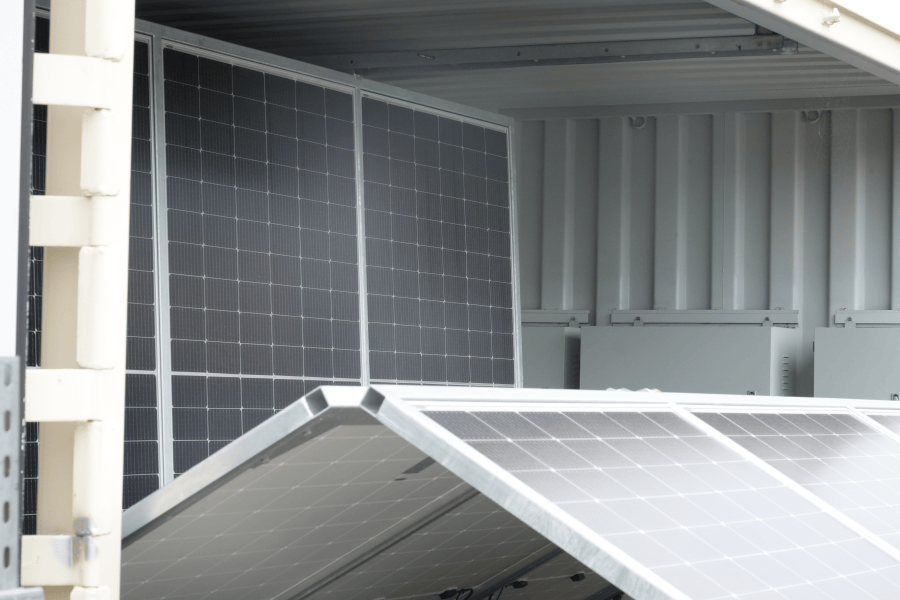
Beyond the Price Tag: The Real Cost of an Air-Cooled Mobile Power Container for Your Data Center
Hey there. If you're reading this, you're probably looking at a critical infrastructure gap and wondering about the price of plugging it. "How much does an air-cooled mobile power container for data center backup actually cost?" I've been asked this question on countless site visits, from Silicon Valley to Frankfurt. Honestly, the sticker price is just the start of the conversation. The real answer lies in understanding what you're buying: not just a box of batteries, but resilience, operational flexibility, and long-term financial sense. Let's talk about it.
Quick Navigation
- The Real Problem: More Than Just a Generator Replacement
- The Cost Breakdown: Sticker Price vs. Total Cost of Ownership
- A Case in Point: A 10MW Site in Northern Virginia
- Key Cost Drivers: What Really Moves the Needle
- Making the Decision: Is a Mobile Container Right for You?
The Real Problem: More Than Just a Generator Replacement
For decades, data centers have relied on diesel gensets for backup. They're a known quantity. But the landscape is shifting. Grid instability is a growing concern - the National Renewable Energy Lab (NREL) has documented increasing frequency of grid disturbances. Environmental regulations are tightening, with cities and states imposing stricter emissions limits on standby generators. And let's be honest, the capital expenditure for a new, multi-megawatt generator farm, plus the ongoing fuel contracts and maintenance, is a massive, inflexible commitment.
I've seen this firsthand on site: a client in Texas needed backup power for a new server hall but faced a 12-month lead time for permanent switchgear and generator installation. Their project timeline couldn't wait. That's the agitation point: the traditional approach is too slow, too rigid, and increasingly, too costly from a compliance and operational standpoint. You're not just buying power; you're buying time and optionality.

The Cost Breakdown: Sticker Price vs. Total Cost of Ownership
So, let's get to the numbers. For a commercial-scale, UL 9540/ IEC 62933-compliant air-cooled mobile power container, you're typically looking at a capital expenditure range. But giving a single number is misleading. A 1MW/2MWh unit will have a vastly different price per kWh than a 5MW/10MWh system. Broadly, for a fully integrated, grid-parallel, code-compliant system ready to hook up, think in the ballpark of $X00 to $X50 per kWh of energy capacity for the containerized system itself. This includes the battery racks, thermal management (air-cooling), power conversion system (PCS), and integrated controls.
But the Total Cost of Ownership (TCO) is where the story changes. Here's a simpler breakdown:
| Cost Component | Traditional Genset Farm | Mobile Air-Cooled BESS |
|---|---|---|
| Upfront Capital Cost | High (Gensets, Fuel Tanks, Sound Walls) | Comparable or Higher (Battery Cost) |
| Installation & Civil Works | Very High (Permanent Foundations, Exhaust Systems) | Very Low (Flat Pad, Quick Connect) |
| Operational (Fuel, Maintenance) | Continuously High & Volatile | Very Low (No Fuel, Minimal Moving Parts) |
| Grid Services Revenue | None | Potential Income (Frequency Regulation, etc.) |
| Deployment Speed | 12-24 months | 8-16 weeks |
| Flexibility / Relocation | Zero | High (Containerized, Mobile) |
This is a game-changer in many markets. A mobile BESS isn't idle. When not backing up your data center, it can participate in grid programs. I've worked with teams at Highjoule to model this for clients, and it can significantly improve the project's financials, effectively lowering that upfront cost over its life.
Understanding the "Air-Cooled" Part of the Cost
You'll see liquid-cooled and air-cooled systems. Air-cooling is simpler. It uses fans and internal ductwork. This means fewer components, lower maintenance complexity, and honestly, a lower upfront cost compared to a liquid-cooled system of similar size. The trade-off? It might be slightly less efficient at peak ambient temperatures, but for most data center backup scenarios - where discharge durations are measured in hours, not seconds, and the system isn't cycling multiple times daily - air-cooling is a robust, cost-optimized choice. It's a workhorse, not a racehorse.
A Case in Point: A 10MW Site in Northern Virginia
Let me share a recent project. A major colocation provider in Virginia needed to ensure backup for a 10MW facility while their primary substation was upgraded. The utility timeline was fixed, and a two-hour outage window was unacceptable. A permanent generator expansion was overkill for a temporary need.
The Solution: We deployed three of our Highjoule MobilPower air-cooled containers, each rated at 4MWh. They were trucked in, placed on a prepared gravel pad, and interconnected in under 10 days. The cost? It was a lease-to-own operational expenditure model. They paid for the service of backup power, avoiding a massive CapEx hit. The system passed all local inspections (key for any US deployment) because it was pre-certified to UL standards. During the 8-month upgrade period, the system also provided daily peak shaving, cutting the facility's demand charges. The client's "cost" became a net saving.
Key Cost Drivers: What Really Moves the Needle
When you get a quote, these are the levers behind the number:
- Energy vs. Power (kWh vs. kW): How long do you need to backup? Two hours? Four? This defines your energy capacity (kWh) and is the biggest battery cost driver. The power rating (kW) defines how fast you can pull that energy out (the C-rate). Data centers need high power fast, which influences the inverter and battery design.
- Grid Interconnection Complexity: Is this a simple switchgear tie-in, or does it require a full utility study? In the EU, grid codes like VDE-AR-N 4110 in Germany add specific requirements that the system must meet, impacting engineering costs.
- Localization & Compliance: This is non-negotiable. A system for California must meet CA Title 24 and Fire Code regulations. One for Germany needs IEC standards and local VdS certification. At Highjoule, we engineer this in from the start. A cheaper, non-compliant unit is a liability, not an asset.
- Service & Warranty: A 10-year performance warranty is standard, but what does the service look like? Who responds if there's an alarm at 2 AM? Factoring in local, expert support is part of the true cost.
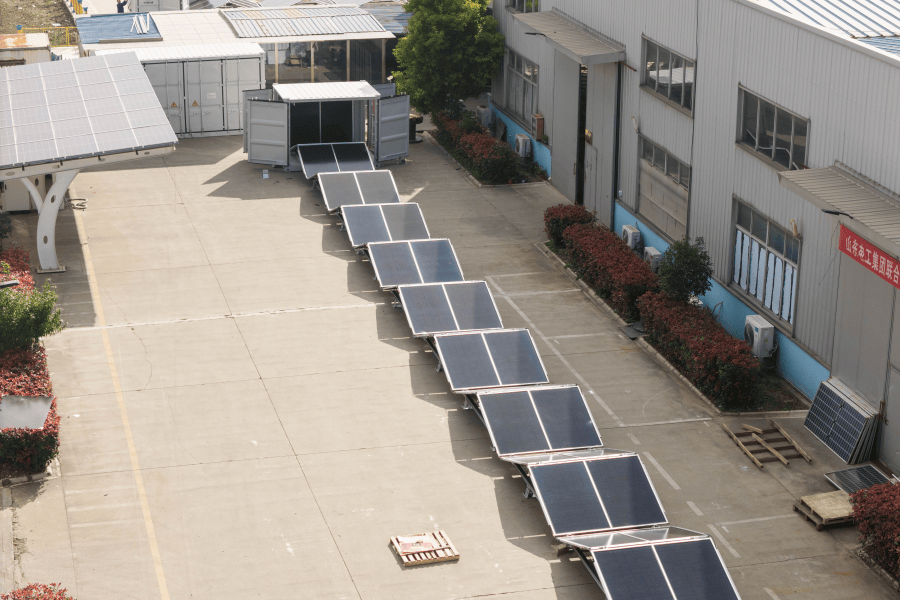
Making the Decision: Is a Mobile Container Right for You?
So, how much does it cost? It costs an investment that gives you speed, optionality, and modern operational efficiency. It's not just about the dollars-per-kWh on the invoice.
Ask yourself: Is your backup need immediate or long-term? Is your site space-constrained? Do you face regulatory pressure to reduce emissions or explore non-fuel alternatives? Are grid power quality or demand charges a problem? If you answered yes, then the calculus shifts from pure capital cost to value.
The best step is to model your specific scenario. What's the financial impact of a 30-minute outage? What could you save on monthly demand charges with a 2MW discharge every afternoon? That's the conversation we should be having. What's the one constraint in your backup power plan that keeps you up at night?
Tags: UL Standard BESS Data Center Backup Air-Cooled Container Mobile Power Cost of Ownership
Author
James Zhang
20+ years agricultural energy storage engineer / Highjoule CTO