
ROI Analysis of 20ft High Cube Industrial ESS Container for Telecom Base Stations
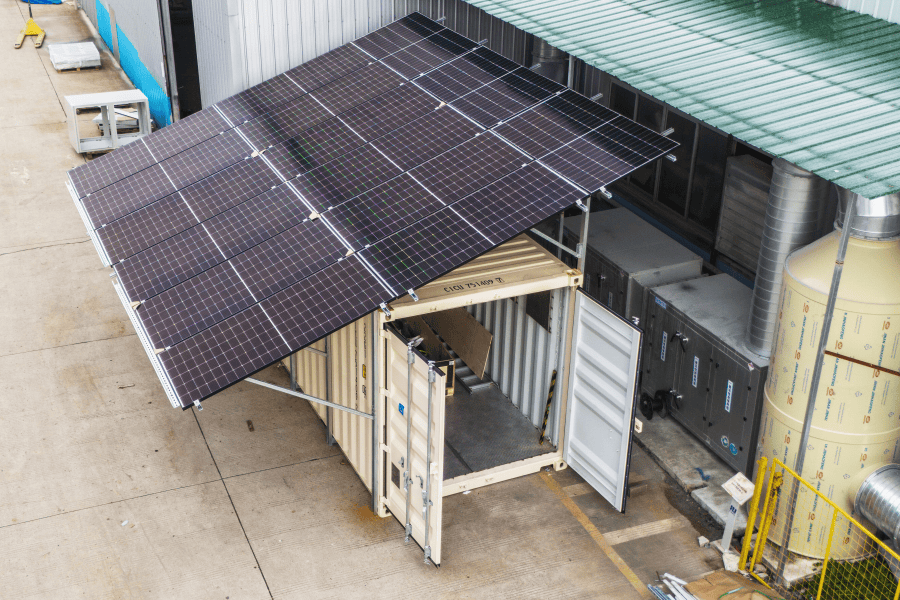
Table of Contents
- The Real Cost of Downtime: More Than Just Dropped Calls
- Why "Custom" Solutions Often Backfire on ROI
- The 20ft High-Cube Container: Your Plug-and-Play ROI Engine
- From Blueprint to Reality: A Case Study in Northern Germany
- Beyond the Battery Box: The Hidden ROI Levers
- Your Next Step: Calculating Your Own Path to Resilience
The Real Cost of Downtime: More Than Just Dropped Calls
Let's be honest. When we talk about energy storage for telecom base stations, the first thing that comes to mind is backup power. But after two decades on site, from the deserts of Arizona to the fjords of Norway, I've learned it's about so much more than just keeping the lights on during a storm. It's about revenue protection, regulatory compliance, and frankly, the sheer financial bleed of an inefficient power setup.
Think about it. The International Energy Agency (IEA) notes that telecom networks are becoming the nervous system of our modern economy. A single site outage can cascade, impacting everything from emergency services to financial transactions. The cost isn't just a service-level agreement (SLA) penalty - it's brand damage and lost customer trust. And with the push for 5G and edge computing, power density at these sites is exploding. The old diesel genset in the corner? It's no longer a cost-effective or compliant solution in most of Europe and North America.
Why "Custom" Solutions Often Backfire on ROI
Here's a common scene I've witnessed firsthand. A network operator faces capacity upgrades. They piece together a solution: batteries from one vendor, power conversion from another, a bespoke thermal management design, and a custom-built shelter. It's a Frankenstein's monster of CapEx. The integration is a nightmare, commissioning takes months, and when something fails, you're stuck in a finger-pointing loop between four different suppliers. Your Total Cost of Ownership (TCO) goes through the roof before the system even cycles once.
The biggest agitation point? Unpredictability. You can't accurately model the ROI of a one-off system. Will the thermal management keep up in a Phoenix summer? Does the design meet the latest UL 9540 and IEC 62933 standards for system safety? Many operators discover these painful answers only after deployment, turning a CAPEX investment into a long-term operational liability.
The 20ft High-Cube Container: Your Plug-and-Play ROI Engine
This is where the shift to a standardized, industrial-scale containerized BESS changes the game. An ROI analysis of a 20ft High Cube Industrial ESS Container for telecom base stations isn't just about the price per kWh of the battery cells. It's about evaluating a complete, pre-engineered power asset.
At Highjoule, we approach this not as box sellers, but as system architects. Our 20ft container solution is designed from the ground up for the telecom edge environment. What does that mean for your ROI?
- Radically Simplified Deployment: It arrives on a flatbed, pre-tested and pre-certified. We're talking weeks from delivery to grid synchronization, not months. This slashes soft costs and gets you generating value (or saving costs) immediately.
- Built-in Risk Mitigation: Every unit is designed to comply with UL and IEC standards from the outset. The thermal management system isn't an afterthought - it's an integral, factory-validated design that maintains optimal C-rate performance whether it's -20C or +45C outside. This directly translates to longer cycle life and a lower Levelized Cost of Storage (LCOS).
- Revenue Stacking, Not Just Backup: With the right grid-interactive inverters, this asset can earn. Participate in demand charge management, frequency regulation, or local energy arbitrage. Suddenly, your ESS is a revenue center, paying back its investment while still being mission-ready for backup.

From Blueprint to Reality: A Case Study in Northern Germany
Let me give you a real example. A major tower company in Germany's windy Schleswig-Holstein region had a dual challenge: ensuring absolute reliability for their tenants while dealing with volatile local grid constraints. They needed to integrate on-site renewables and avoid costly grid reinforcement.
The challenge was classic: space was limited, local regulations stringent, and the financial model had to be crystal clear. We deployed one of our 20ft High-Cube containers with a grid-forming inverter. The system does three things simultaneously: it provides seamless backup during outages, it soaks up excess wind power from a nearby turbine to charge, and it dispatches energy during peak tariff periods.
The ROI calculation became compelling. The CapEx was predictable. The operational savings from peak shaving were quantifiable from day one. And because the system was pre-certified to German VDE standards (aligned with IEC), the inspection and sign-off process was smooth. The client didn't buy a battery; they bought a guaranteed, compliant outcome - resilience with a clear payback period.
Beyond the Battery Box: The Hidden ROI Levers
As a technical expert, I always drill into the specs that matter. When you're reviewing an ROI analysis, look for these often-overlooked factors:
- Thermal Management & C-Rate: A system that runs cooler can sustain a higher C-rate (charge/discharge speed) without degradation. This means you can dispatch more power, faster, for revenue programs, and your batteries last longer. Our design uses a closed-loop liquid cooling system that maintains even cell temperature - this is a huge hidden value driver for lifetime ROI.
- LCOS vs. Upfront Cost: Don't just compare sticker prices. A cheaper system with poor thermal management will degrade faster, increasing your effective cost per cycle over 10 years. We engineer for the lowest LCOS, which often means a slightly higher initial investment for a vastly superior long-term payoff.
- Localized Service & Software: The ROI story doesn't end at commissioning. Can the system's performance be remotely monitored? Is there local technical support for preventative maintenance? At Highjoule, our platform provides real-time insights into system health and financial performance, and our partner network across the US and EU ensures quick response. This maximizes uptime and protects your investment.
Your Next Step: Calculating Your Own Path to Resilience
The conversation around energy storage for telecom is evolving from a tactical cost to a strategic investment. The right 20ft container isn't an expense; it's a durable, multi-function asset that hardens your network, cuts operational expenses, and can even open new revenue lines.
The most successful operators I work with start with a simple question: "What is the true cost of not having a resilient, intelligent power system at my site?" From there, the ROI of a standardized, high-performance solution like an industrial ESS container becomes clear.
What's the single biggest variable in your own site's energy cost equation today? Is it demand charges, diesel refueling logistics, or the capital tied up in underutilized backup gear? Let's model that.
Tags: UL Standard BESS LCOE ESS Container Microgrid ROI Analysis Telecom Energy
Author
James Zhang
20+ years agricultural energy storage engineer / Highjoule CTO