
Air-Cooled Mobile Power Container Cost for Eco-Resorts: The Real Numbers
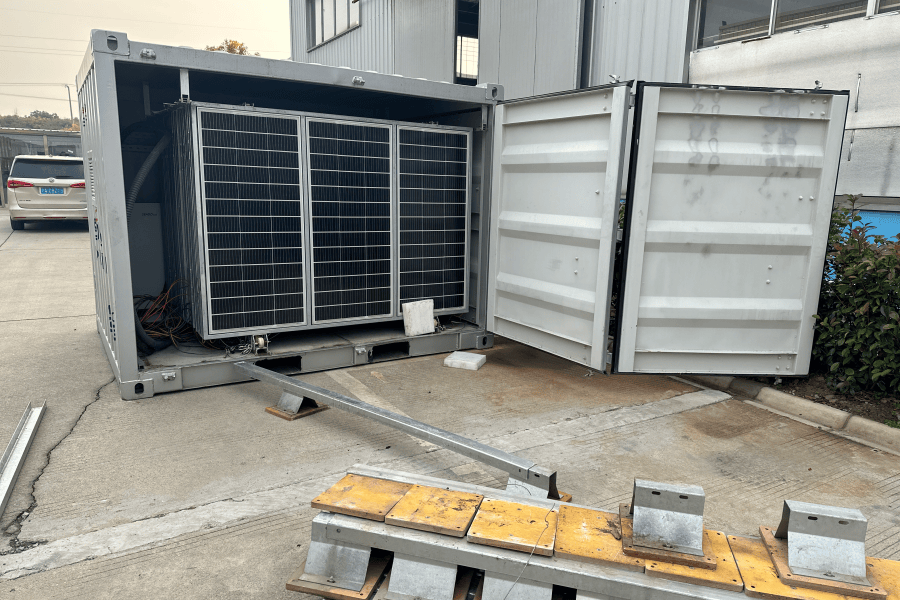
Navigating the Real Cost of Power Independence for Your Eco-Resort
Let's be honest. When you're developing or managing an eco-resort, the question "How much does it cost for an air-cooled mobile power container?" is almost always the first one that comes to mind. And I get it. You've got budgets, investors, and a sustainability promise to keep. But in my 20+ years of deploying these systems from the Caribbean to California, I've learned that the most expensive mistake you can make is focusing solely on the upfront price tag. The real conversation we should be having is about the cost of reliable, safe, and sustainable energy independence.
Quick Navigation
- The Real Problem: It's More Than Just a Price Quote
- What Really Drives the Cost? Breaking Down the Container
- A Real-World Case: Off-Grid Luxury in the Mediterranean
- Expert Insight: The Hidden Levers of Long-Term Value
- Making the Decision: The Right Questions to Ask
The Real Problem: It's More Than Just a Price Quote
Here's the scene I've seen too many times. A beautiful, remote resort faces a triple threat: sky-high diesel generator costs, an unreliable grid connection (if one exists at all), and a core brand identity built on being "green." The initial thought is, "Let's get a battery container." The immediate shock is the capital outlay. According to a recent NREL analysis, while battery pack prices are falling, the total installed cost of a commercial BESS includes much more than just cells C we're talking balance of plant, engineering, and compliance, which can account for over 30% of the total.
The pain gets worse when you choose based on sticker price alone. A system not designed for your specific humidity and temperature cycles? You'll face accelerated degradation. A container that doesn't meet UL 9540 or IEC 62619 standards? Good luck with insurance and local permits, especially in strict jurisdictions like California or the EU. That "cheaper" option can quickly become a stranded, underperforming asset. Honestly, I've been on site to troubleshoot systems where the thermal management couldn't keep up, leading to forced derating right in the middle of peak season C a revenue and guest satisfaction disaster.
What Really Drives the Cost? Breaking Down the Container
So, let's pull back the curtain. A mobile, air-cooled power container isn't a commodity you buy by the pound. Its cost is a function of several key pillars:
- Energy & Power (kWh & kW): This is the core. How many hours of backup do you need? What's your peak load (think air conditioning, kitchen, pools)? A system sized for 500kWh/250kW has a different starting point than a 2MWh/1MW system.
- Safety & Certification: This is non-negotiable. A system built with UL-listed components and certified to UL 9540 for the entire assembly is engineered to mitigate risk. This engineering and testing have a cost, but it's infinitely less than the cost of a safety incident.
- Thermal Management: The "air-cooled" part. A sophisticated, N+1 redundant fan system with proper CFD-modelled airflow is crucial. A cheap, undersized system will let heat build up, killing battery life and performance. This is a key area where we at Highjoule have optimized for reliability in harsh environments.
- Mobility & Site Readiness: True "plug-and-play" means more than wheels. It includes integrated medium-voltage switchgear, pre-configured grid interconnection interfaces, and a design that doesn't require a massive concrete pad. Reducing civil works is a huge cost saver.

A Real-World Case: Off-Grid Luxury in the Mediterranean
Let me share a project that illustrates this well. We worked with an off-grid resort on a Greek island. Their challenge: replace three aging, noisy diesel generators (?0.45/kWh fuel cost) with a silent, clean solution that could handle 24/7 load and a new solar PV carport installation.
The initial quotes they received varied wildly. The lowest bid was for a non-UL container with basic ventilation. We proposed a 1.2MWh, UL 9540-certified, air-cooled mobile container with a high C-rate capability to handle the resort's massive evening load spike from pools and restaurants.
The upfront cost was about 15% higher. But look at the operational math: The system integrates with their new solar, cutting their energy cost to under ?0.12/kWh. The mobile design allowed for phased deployment without disrupting guests. Most importantly, the robust thermal design ensures performance even during 40C+ summer peaks. The ROI, factoring in diesel savings and maintenance, dropped below 5 years. The resort's "green" premium and reliability became a marketing powerhouse.
Expert Insight: The Hidden Levers of Long-Term Value
When we talk cost on site, we always shift the conversation to Levelized Cost of Storage (LCOS) C the total cost of owning and operating the system over its life. Two technical factors massively impact LCOS:
- C-rate: Think of this as the "athleticism" of the battery. A 1C rate means a 1MWh battery can deliver 1MW of power for one hour. A 0.5C system would be slower, less powerful, but often cheaper. For a resort with sudden load spikes (everyone returns from tours and turns on AC), a higher C-rate is critical to avoid dipping into backup generators. You pay for that performance, but it ensures seamless guest experience.
- Thermal Management & Degradation: Every 10C above 25C can halve battery cycle life. A premium air-cooling system with active monitoring and zoning doesn't just prevent shutdowns; it protects your capital investment by extending the system's useful life by years. This is where that upfront premium pays for itself multiple times over.
Our approach at Highjoule is to engineer for these long-term levers. We don't just sell a container; we model your specific load and weather patterns to right-size the cooling and the power electronics, ensuring you get the lowest possible LCOS, not just the lowest purchase order.
Making the Decision: The Right Questions to Ask
So, when you're evaluating "how much it costs," arm yourself with these questions for any vendor:
- "Can you provide the full system's UL 9540 or IEC 62619 certification documents, not just component listings?"
- "What is the projected annual degradation rate under my specific climate, and how does the thermal system manage it?"
- "What is the included scope? Does the quote cover interconnection studies, commissioning, and first-year remote monitoring?"
- "Can you show me an LCOS analysis comparing your system to my current power source over 10 years?"
The market for eco-resort power is maturing. The leaders aren't buying cheap boxes; they're investing in predictable, auditable, and sustainable energy infrastructure. The right mobile power container isn't an expense; it's the engine of your resort's resilience and brand promise.
What's the one operational headache in your resort's power system that keeps you up at night? Is it the noise, the cost, or the fear of a blackout during peak season?
Tags: UL Standard BESS LCOE Renewable Energy Mobile Power Container Eco-Resort Energy Storage Cost
Author
James Zhang
20+ years agricultural energy storage engineer / Highjoule CTO