
Optimizing LFP Battery Storage for High-Altitude PV Systems
Optimizing LFP (LiFePO4) Photovoltaic Storage System for High-altitude Regions
Hey there. Let's grab a virtual coffee. Over my 20-plus years in the field, from the Swiss Alps to the Rockies, I've seen a quiet revolution. We're pushing renewable energy into places we once thought were too challenging. High-altitude sites C think mountain resorts, remote mining operations, alpine communities C are prime candidates for solar-plus-storage. The sun is intense, the space is available, but honestly, the environment throws some serious curveballs. The biggest mistake I see? Treating a battery system for 3,000 meters above sea level the same as one for sea level. It just doesn't work, and it costs a fortune in lost efficiency and premature wear. Today, let's talk about getting it right with LFP technology.
Quick Navigation
- The Thin Air Problem: It's Not Just About Power
- Why LFP is Your Natural Ally Up High
- Thermal Management, Reinvented
- Optimization Goes Beyond the Battery Cell
- A Real-World Case: Lessons from the Rockies
- Making It Work For Your Project
The Thin Air Problem: It's Not Just About Power
So, what's the big deal with altitude? We all know it gets colder. But the real story is more nuanced. First, thermal stress. Diurnal temperature swings are extreme. I've seen sites with 30C (54F) differences between day and night. This constant expansion and contraction stress every component, from busbars to seals. Second, reduced air density and pressure. This isn't just a problem for people; it's a massive challenge for air-cooled systems. The cooling capacity of air drops significantly. A fan spinning at the same RPM might only move 70% of the heat it would at sea level. This leads to hot spots and forces systems to derate power, killing your ROI.
Then there's UV radiation. It's brutally intense. Standard materials degrade, cables become brittle, and enclosure colors fade, affecting thermal absorption. Finally, let's talk safety and standards. Many off-the-shelf systems are certified for operation up to 2000m. Go beyond that, and you're in a regulatory gray area. Arc fault behavior changes in thin air, and clearance distances for electrical components need reassessment per standards like IEEE and IEC. Deploying a non-compliant system isn't just risky; it can void insurance and create liability nightmares.
Why LFP (LiFePO4) is Your Natural Ally Up High
Given these challenges, the chemistry choice isn't just a detail; it's foundational. Lithium Iron Phosphate (LFP) isn't just "another option" for high-altitude C in most cases, it's the most pragmatic one. Here's why, from an engineer's perspective:
- Thermal & Chemical Stability: The phosphate bond in LFP is incredibly robust. It has a much higher thermal runaway onset temperature than other chemistries. In an environment where cooling is less efficient, this intrinsic safety margin is priceless. I've seen firsthand on site how this stability reduces the complexity and energy needed for the thermal management system.
- Wider Operating Temperature Range: A quality LFP battery can operate efficiently in a -20C to 60C range. For a mountain site where the ambient can be -15C at dawn and the container interior hits 40C by midday, this tolerance is critical. It means less energy wasted on heating pads in winter and less panic cooling in summer.
- Longevity Under Stress: The lower stress on the cathode material translates to a longer cycle life. According to a 2023 NREL analysis, well-managed LFP systems in demanding environments can retain >80% capacity after 6,000 cycles. This directly attacks the Levelized Cost of Energy (LCOE), which is the ultimate metric for any commercial or industrial operator.

Thermal Management, Reinvented for Thin Air
Choosing LFP is step one. Optimizing its environment is step two, and it's where most projects cut corners. At altitude, you must move beyond basic air-cooling.
Liquid Cooling is a Game-Changer: For installations above 1500m, I increasingly recommend liquid-cooled LFP racks. The coolant, circulating in a closed loop, is unaffected by air density. It precisely controls cell temperature, minimizing the delta T across the pack. This uniformity is key for longevity and maximizing usable capacity. Yes, it has a higher upfront cost, but when you factor in the avoided derating and extended lifespan, the LCOE math almost always works out.
The "Thermal Buffer" Strategy: For air-cooled systems, you need to oversize. We design systems with 30-40% more cooling capacity than the sea-level calculation suggests. We also use insulated, thermally buffered enclosures. They don't just keep the cold out; they slow the heat ingress during the day, smoothing out those drastic temperature swings. It's about creating a microclimate for your batteries.
Optimization Goes Beyond the Battery Cell
A battery is more than its cells. The Balance of System (BOS) needs altitude-specific design.
| Component | High-Altitude Consideration | Our Standard Practice at Highjoule |
|---|---|---|
| Power Conversion (PCS) | Derating for cooling; dielectric strength. | Using components rated for 3000m+, with oversized cooling fans and UL 1741-SA certification for grid support. |
| Enclosure & Materials | UV resistance, corrosion, pressure equalization. | Powder-coated steel with UV-stable finishes; pressure relief vents to prevent condensation and strain. |
| System Controls | Adaptive algorithms for temperature/pressure. | Proprietary algorithms that adjust charge/discharge C-rates and cooling cycles based on real-time ambient and internal conditions. |
| Safety Systems | Arc fault detection, fire suppression gas dispersion. | Enhanced arc detection and IEC 62933-compliant design, with calculated gas dispersion models for low-pressure environments. |
A Real-World Case: Lessons from the Rockies
Let me share a recent project. A ski resort in Colorado, USA, at 2,800m elevation. They had a 500kW solar array and needed storage for load-shifting and backup power for critical lifts. The challenge: brutal winters, intense summer sun, and a requirement for UL 9540 certification for insurance.
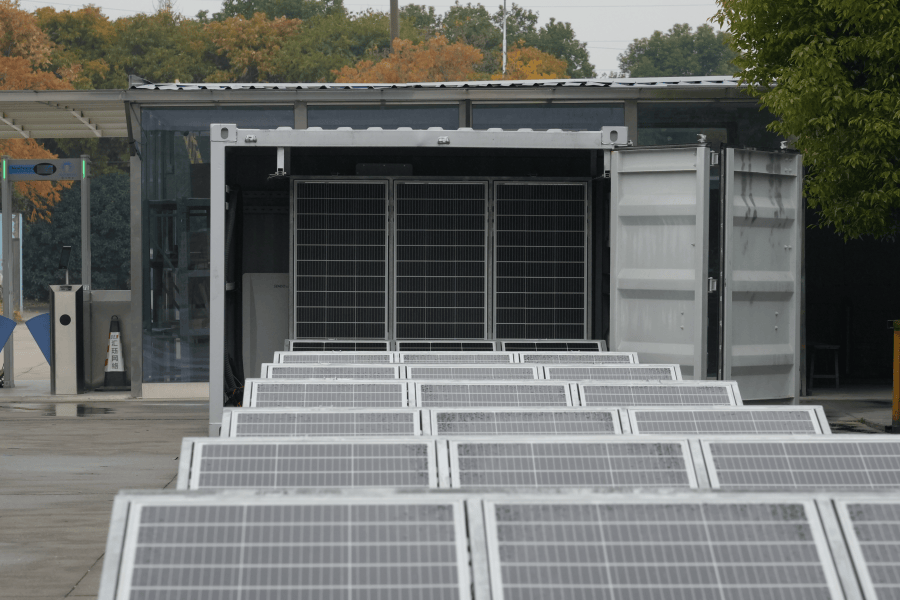
The initial bids used standard, air-cooled NMC systems. Our team proposed a liquid-cooled LFP solution from Highjoule. The key differentiators weren't just the chemistry, but the holistic design: a pre-fabricated, thermally buffered container, all components pre-certified for the altitude, and an active thermal management system that could pre-heat the batteries using excess solar before a cold night.
The result? Two years in, the system's round-trip efficiency has remained within 2% of its sea-level specification, while a competitor's air-cooled system at a nearby site has derated by 15% during peak summer conditions. The resort's energy manager told me the predictability of performance was worth the slight premium. That's the LCOE optimization story in action C total cost over 15 years, not just day one.

Making It Work For Your Project
So, how do you translate this into a successful deployment? It starts with asking the right questions in your RFP. Don't just ask for "a 500kW/1MWh BESS." Specify:
- "System must be certified for continuous operation at [Your Altitude] meters."
- "Provide detailed thermal management design and expected performance derating curves across the site's temperature range."
- "Demonstrate compliance with UL 9540/A and IEC 62933 for high-altitude deployment."
Work with a partner that doesn't just sell boxes, but understands integrated system physics. At Highjoule, our deployment kits include altitude-specific commissioning checklists and our remote monitoring platform is tuned to flag altitude-related performance anomalies C like a gradual increase in fan runtime indicating reduced cooling efficiency.
The high-altitude frontier for renewables is open for business. But it demands respect. By pairing the inherent strengths of LFP chemistry with a purpose-built, standards-driven system design, you're not just installing storage. You're building a resilient, profitable asset that will perform for decades, no matter how thin the air gets. What's the first altitude-related challenge your project is facing?
Tags: UL Standard BESS LCOE Thermal Management Renewable Energy LFP Battery US Market Europe Market High-Altitude
Author
James Zhang
20+ years agricultural energy storage engineer / Highjoule CTO