
Air-Cooled Pre-Integrated PV Container for EV Charging: Cost & Value Analysis
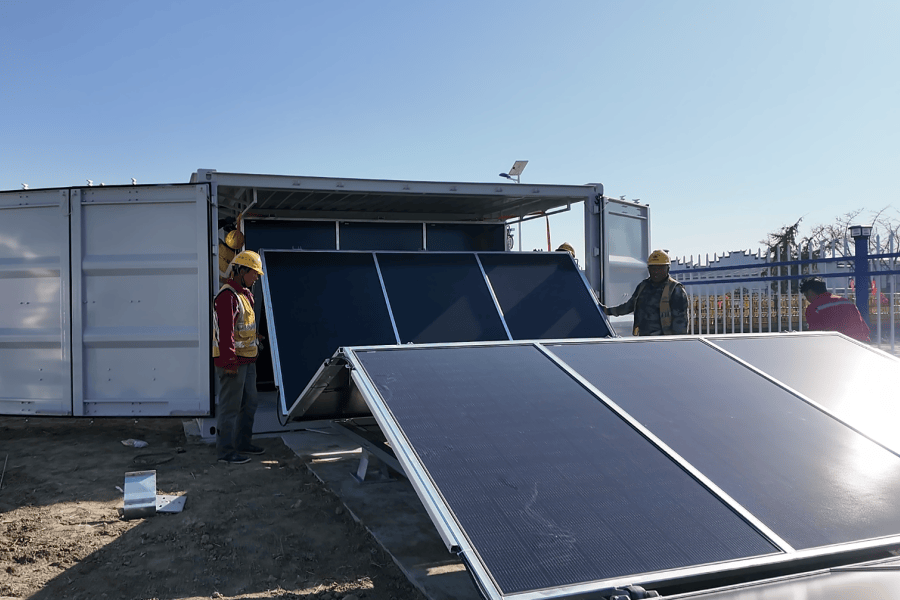
Table of Contents
- The Real Question Isn't Just "How Much?"
- The Hidden Costs of "Do-It-Yourself" EV Charging Power
- What You're Actually Buying: The Pre-Integrated Container Explained
- Breaking Down the Numbers: Key Cost Drivers
- A Tale of Two Sites: Project Case Study
- Beyond the Price Tag: The Lifetime Value Equation
- Your Next Step: Framing the Right RFP
The Real Question Isn't Just "How Much?"
Honestly, when a client asks me "How much does it cost for an air-cooled pre-integrated PV container for EV charging stations?" over coffee, I know they're really asking something else. They're asking, "How do I power my fleet or public charging hub reliably without getting killed by demand charges?" or "Can I actually hit my sustainability targets without a massive, complex construction project?" The upfront price tag is just the tip of the iceberg. What we're really talking about is the cost of certainty C certainty of power, certainty of safety, and certainty of return.
The Hidden Costs of "Do-It-Yourself" EV Charging Power
The phenomenon I see across the US and Europe is the scramble to deploy EV charging, especially for commercial fleets and highway corridors. The immediate thought is to pull more power from the grid. But that's where the pain begins. I've seen this firsthand on site: a logistics depot in Germany planned 10 DC fast chargers. The utility quote for a grid upgrade was astronomical and had an 18-month lead time. That's a complete business model killer.
Then there's the operational cost. According to the National Renewable Energy Laboratory (NREL), demand charges can constitute 50-90% of a commercial site's electricity bill when adding high-power charging. You're not just paying for the electrons, you're paying for the privilege of a high peak draw. A traditional, piecemeal approach - sourcing PV panels, inverters, a separate battery system, and a cooling unit - creates a integration nightmare. You're managing multiple vendors, wrestling with compatibility issues, and facing a sprawling site plan that drives up civil works costs. The soft costs - engineering, procurement, commissioning - can balloon to 30% or more of the total project. That's the hidden tax of complexity.
What You're Actually Buying: The Pre-Integrated Container Explained
So, when we talk about an air-cooled pre-integrated container, we're not just talking about a box with gear inside. You're buying a power plant on a skid. Think of it like buying a fully equipped, tested kitchen instead of buying individual ovens, sinks, and cabinets and hoping they fit together. Our units at Highjoule arrive with the PV inverters, battery storage (with its management system), the thermal management system, and all safety controls pre-wired and pre-tested in a single, UL 9540/ IEC 62933 certified enclosure.
The "air-cooled" part is crucial for cost and reliability. Honestly, liquid cooling has its place, but for most C&I EV charging applications, a well-designed air-cooled system is simpler. It means fewer moving parts, no coolant leaks, and easier maintenance. The key is intelligent thermal management - using sensor data and smart software to proactively manage cell temperature, which directly impacts battery life and safety. We design for the specific C-rate (the speed of charge/discharge) needed for EV charging bursts, without oversizing.

Breaking Down the Numbers: Key Cost Drivers
Alright, let's get to the ballpark figures. For a pre-integrated system powering a 4-6 stall DC fast charging site, you're typically looking at a capital expenditure range. But that number moves based on a few levers:
- Energy Capacity (kWh): This is your "fuel tank." How many EVs do you need to bridge between solar hours or shave those peak grid demands? More kWh = higher cost, but also more flexibility.
- Power Rating (kW): This is the "size of the hose." How fast can you discharge energy to meet simultaneous charging sessions? Higher power inverters and battery specs increase cost.
- Grid Interconnection & Local Standards: Meeting UL 9540 in the US or the upcoming EU Battery Directive adds essential safety and certification costs. Skipping this is not an option.
- Site-Specifics: Foundation, final electrical hookup, and permitting. The beauty of a pre-integrated unit is it slashes these costs. It's one permit, one crane lift, one electrical connection point.
So, while a bare-bones container might seem cheaper, you must compare total installed cost. The pre-integrated approach can reduce installation time by up to 40%, which is a massive direct cost saving.
A Tale of Two Sites: Project Case Study
Let me give you a real example from California. A retail chain wanted to add EV charging to attract customers. They evaluated two paths: a traditional component-based system and a Highjoule pre-integrated air-cooled container.
The traditional approach had a lower equipment quote but required separate crews for concrete pad, electrical fitting, battery install, and PV integration. It faced delays due to component shipping mismatches and needed extensive on-site commissioning. The project dragged on for 11 months.
Our container solution arrived on a truck. It was placed on a simple gravel bed (in some cases), connected to the pre-run grid tie-in and the PV array, and was operational in under 3 days post-delivery. The total project was done in 4 months. The Levelized Cost of Energy (LCOE) - the total lifetime cost divided by energy output - was about 22% lower for the containerized system, thanks to faster deployment, lower labor, and optimized operation. The client avoided demand charges from day one, turning the charging stations from a cost center into a customer attraction tool with a clear ROI.

Beyond the Price Tag: The Lifetime Value Equation
This is where the expert insight comes in. As an engineer on site, my job isn't just to make it work, it's to make it last and pay for itself. The upfront cost is a single line item. The lifetime value is what matters. A pre-integrated, factory-tested system drastically reduces operational headaches. The system's software is designed to autonomously navigate energy markets (where allowed), perform demand charge management, and ensure the battery is cycled in a way that maximizes its lifespan.
We bake this into our design. By optimizing the thermal management and C-rate for the specific duty cycle of EV charging, we prevent the accelerated degradation that comes from constant, high-stress peaks. This means your asset delivers value for 15+ years, not 7 or 8. That's the real cost calculation: Cost per reliable kWh over the system's lifetime.
Your Next Step: Framing the Right RFP
So, when you're ready to move forward, don't just ask suppliers for a "price for a container." Frame your request around your business outcome. Provide your average daily EV traffic, your local utility rate structure (especially demand charge details), your site layout, and your sustainability goals. Ask for a Total Cost of Ownership (TCO) analysis over 10 years, including estimated installation, maintenance, and energy savings.
The right partner will want to have that conversation. They'll ask about your grid connection capacity, your solar profile, and your long-term plans. At Highjoule, that's the coffee chat we prefer - it moves us from talking about price to designing value. What's the one constraint in your next EV charging project that keeps you up at night?
Tags: UL Standard BESS LCOE Europe US Market EV Charging Infrastructure Renewable Energy Pre-integrated Container
Author
James Zhang
20+ years agricultural energy storage engineer / Highjoule CTO