
Optimize Air-cooled BESS Containers for Rural & Remote Electrification
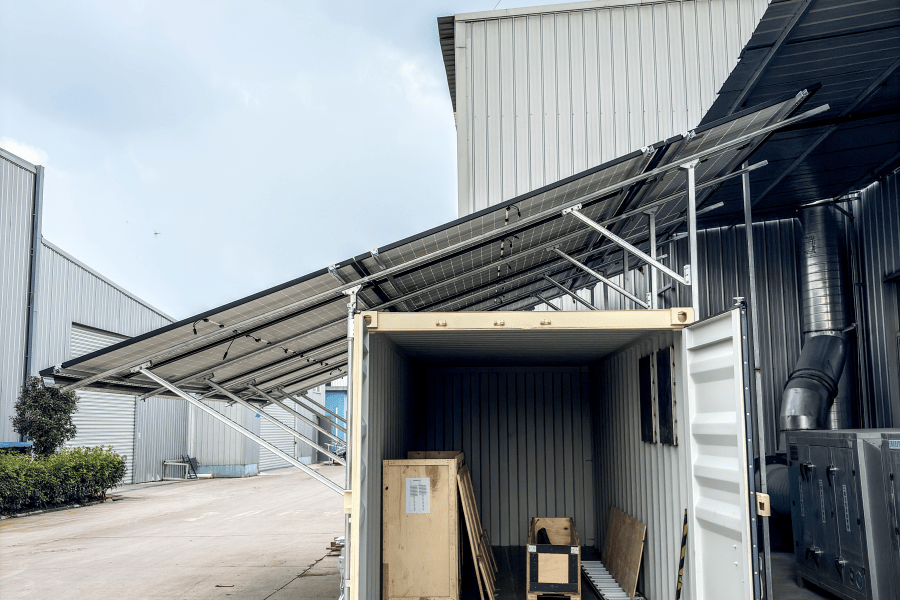
Table of Contents
- The Unspoken Challenge in Remote & Rural Deployments
- Why "Simple" Air-Cooling Isn't Always Simple
- Lessons from the Field: Adapting to Extreme Conditions
- The Technical Levers for Optimization
- Making It Work for Your Project
The Unspoken Challenge in Remote & Rural Deployments
Let's be honest. When we talk about battery energy storage in North America or Europe, the conversation often centers on large-scale grid assets or sleek residential units. But there's a whole other world out there C remote industrial sites, agricultural microgrids, island communities, even disaster relief setups. These are the places where power isn't just about convenience; it's about economic survival and basic services. And honestly, the challenges there make a suburban installation look like a walk in the park.
The core problem? You need a system that's incredibly robust and low-maintenance, but the budget isn't infinite. You can't rely on a specialist driving out every week for checks. The environment might be harsh C salty coastal air, desert dust, or high humidity. And the financial model is razor-thin; every kilowatt-hour counts. I've seen projects where a poorly optimized thermal system alone can erode the projected lifetime savings by 15-20%. That's the difference between a project that gets funded and one that gets shelved.
Why "Simple" Air-Cooling Isn't Always Simple
Now, for these tough, often off-grid applications, liquid cooling gets a lot of buzz for its precision. But for many of our clients, the simplicity, lower capex, and easier maintenance of a well-designed air-cooled containerized BESS is the winning ticket. The keyword here is well-designed. Throwing some fans and filters on a standard container and calling it a day is a recipe for headaches.
The agitation comes when that "standard" unit hits the field. Dust ingress clogs filters faster than scheduled maintenance, leading to overheating. Inconsistent airflow creates hot spots inside the rack, causing cells to degrade at wildly different rates C a phenomenon we call cell divergence. Before you know it, you're losing capacity, dealing with premature failures, and your Levelized Cost of Energy (LCOE) C the true measure of your system's economic value C goes through the roof. According to a NREL analysis, improper thermal management can accelerate battery degradation, impacting project returns significantly.
This isn't theoretical. I was on site at a mining operation in Nevada. They had a container that kept tripping on high-temperature warnings. The issue? The intake vents were positioned downwind of the site's prevailing dust flow. A simple redesign of the air path and a different filter specification C changes rooted in lessons from deployments in arid climates C solved it. That's the kind of optimization we're talking about.
Case in Point: The Microgrid That Almost Wasn't
Take a project we supported in a remote part of Northern California. A community microgrid aimed to pair solar with storage for resilience against wildfires and PSPS events. The initial BESS design was an off-the-shelf air-cooled unit. But the site had huge daily temperature swings and high pollen/dust. Our team, drawing directly from experience optimizing systems for similar tropical and dusty environments (think places like the Philippines), flagged the risk.
We pushed for a custom air-handling unit with three-stage filtration and a smart ventilation strategy that varied fan speed based on both internal cell temperature and external particulate load. We also insisted on a slight de-rating of the C-rate C the speed at which the battery charges and discharges C to reduce internal heat generation during peak cycles. It added maybe 2% to the upfront cost. But the data from the first two years of operation shows a degradation rate 30% lower than the baseline projection. That saved the asset owner tens of thousands in future replacement costs, securing the project's long-term economics.

Lessons from the Field: Adapting to Extreme Conditions
Here's my firsthand insight: optimizing for markets with extreme climates forces you to solve problems that later become huge value-adds in more temperate markets. The relentless heat and humidity of Southeast Asia, or the dust storms in certain regions, are the ultimate stress tests. What we learn there directly informs how we build systems for a heatwave in Texas or a dusty wind farm in West Texas.
For example, a common optimization for high-humidity coastal areas (common in island nations) is using positive pressure inside the container. By keeping the internal pressure slightly higher than the outside, you prevent moist, salty air from being sucked in through every tiny seam. This is a non-negotiable for corrosion protection. It's a feature that's equally valuable for a BESS deployed on the Gulf Coast of the US.
The Technical Levers for Optimization
So, how do you actually optimize an air-cooled solar container? It's a systems engineering approach, not a single magic bullet. Let's break it down in plain terms:
- Thermal & Airflow Modeling: Before anything is built, we simulate the entire container's airflow. Using CFD software, we model fan placement, ducting, and rack layout to eliminate dead zones and ensure every cell gets consistent cooling. This is the foundation.
- Intelligent C-rate Management: The C-rate is like the engine's RPM. Pushing it hard all the time generates more heat. A smart BESS controller will dynamically adjust charge/discharge rates based on the battery's internal temperature, preserving its life. It's about working smarter, not harder.
- Environmental Hardening: This is where field experience pays off. It's about the specs you don't always see: corrosion-resistant coatings on all internal metalwork, IP-rated cable glands, and HVAC-grade filters that can handle specific contaminants. At Highjoule, our standard builds already incorporate many of these features because we've seen what happens without them.
- LCOE-Driven Design: Every decision is run through an LCOE lens. Does a more efficient fan system with a higher upfront cost save more in extended battery life? Usually, yes. We're optimizing for the total cost over 15-20 years, not just the installation invoice.
And none of this works if it's not built to the safety standards that let you sleep at night. Every system we design is engineered to comply with UL 9540 and IEC 62933, with cell-level fusing and advanced EMS monitoring as standard. Safety isn't an optimization; it's the baseline.
Making It Work for Your Project
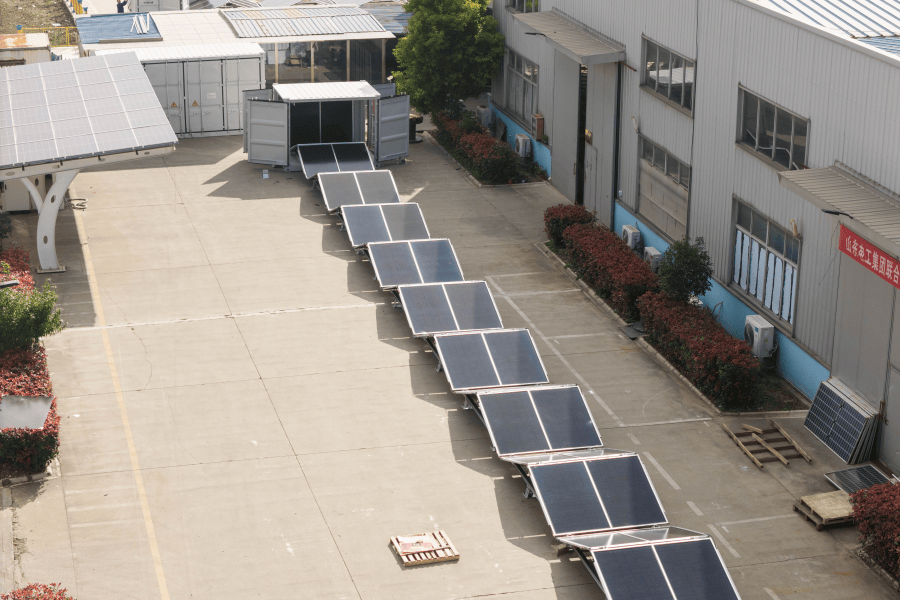
The beauty of applying these ruggedized, field-proven optimization principles is that they de-risk projects in what are often considered "difficult" locations. Whether you're looking at a rural electrification project in Eastern Europe, a backup system for a Canadian telecom tower, or a microgrid for a US agricultural cooperative, the fundamentals are the same.
You need a partner who thinks about the entire lifecycle, not just the delivery. A partner whose engineering team can look at your site's specific climate data and dust profiles C maybe from a local weather station C and tailor the air-cooling solution accordingly. That's the service layer we've built around our product at Highjoule. It's not just about selling a container; it's about ensuring that container performs to its financial promise for decades, with minimal fuss.
So, what's the environmental challenge keeping you up at night for your next remote storage deployment? Is it salt spray, silica dust, or just brutal daily temperature cycles? Getting the cooling strategy right from day one is the single biggest lever you have for long-term success.
Tags: UL Standard BESS LCOE Thermal Management Rural Electrification Microgrid
Author
James Zhang
20+ years agricultural energy storage engineer / Highjoule CTO