
ROI Analysis: Why Fire Safety is Your BESS's Best Investment
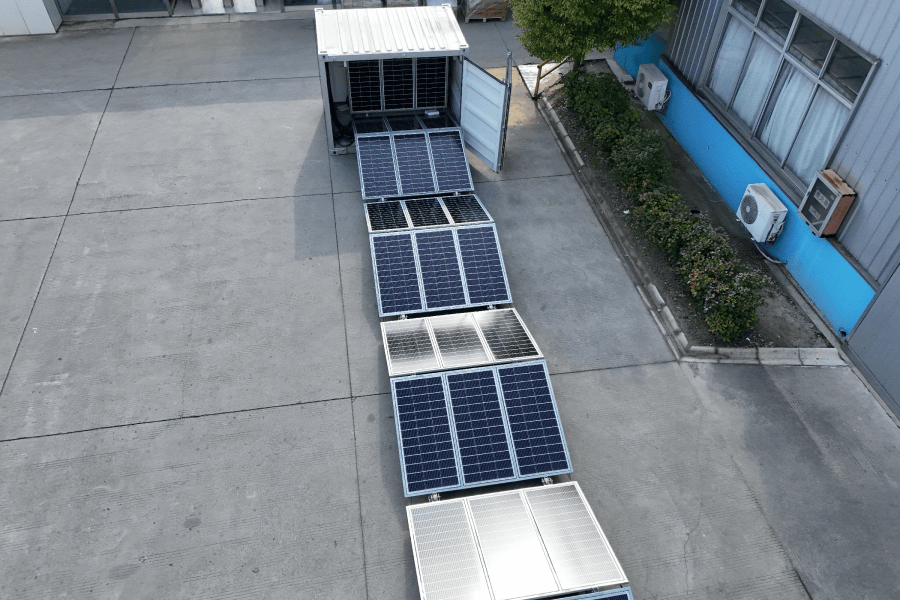
Fire Safety Isn't a Cost. It's Your Smartest BESS Investment.
Honestly, after two decades on sites from California to rural communities worldwide, I've learned one thing the hard way: the most expensive component in your battery energy storage system isn't the battery itself. It's the risk you didn't account for. Today, I want to chat about a topic that often gets sidelined in ROI calculations until it's too late - fire suppression - and why a deep dive into its financials is the smartest business decision you can make.
Quick Navigation
- The Hidden Cost of "Good Enough" Safety
- ROI: It's Beyond the Battery Cell
- A Real-World Lens: The Philippines Case
- Why a Solution Like Novec 1230 Makes Financial Sense
- Bringing It Home: What This Means for Your Project
The Hidden Cost of "Good Enough" Safety
Let's be real. In the race to deploy BESS and meet ambitious renewable targets, fire safety can sometimes feel like a compliance checkbox. You look at UL 9540, IEC 62933, maybe local fire codes, and you aim to meet them. But here's the agitation: meeting the minimum standard is a financial gamble. I've seen firsthand on site how a single thermal runaway event, even a small one contained within a single module, can trigger costs that obliterate years of projected revenue.
Think about it: the direct asset loss is just the start. Then comes the indefinite downtime, the complex and costly environmental cleanup (especially with certain suppressants), the skyrocketing insurance premiums, and the reputational damage that can stall future projects. The National Renewable Energy Laboratory (NREL) has highlighted that system-level failures, often stemming from thermal events, are a primary driver of increased Levelized Cost of Storage (LCOS). You're not just protecting batteries; you're protecting cash flow and project viability.
ROI: It's Beyond the Battery Cell
When we talk about Return on Investment for a BESS, we naturally focus on energy arbitrage, capacity payments, or grid services. But a robust ROI analysis must include risk mitigation as a revenue line - or more accurately, a cost-avoidance line. This is where advanced, clean-agent fire suppression systems, like those using Novec 1230 fluid, shift from a "cost" to a strategic asset.
Their value proposition is clear: rapid suppression without residue, meaning no secondary damage to expensive electronics and far quicker site recovery. This directly protects your uptime, the single biggest factor in your project's internal rate of return (IRR). It also future-proofs your installation against evolving, stricter insurance requirements and safety standards, which are a certainty in our industry.
A Real-World Lens: The Philippines Case
Let's take the analysis out of the spreadsheet and into the field. Consider the challenges of rural electrification in a place like the Philippines: high humidity, remote locations with limited fire service access, and a critical need for reliable, off-grid power. A standard containerized BESS solution might get the lights on, but it carries immense operational risk.
A detailed ROI analysis for such a project, factoring in the Novec 1230 Fire Suppression Energy Storage Container, changes the calculus entirely. The premium for the advanced system is offset not just by potential disaster avoidance, but by tangible, ongoing benefits: lower insurance costs (a major OpEx factor), reduced need for exotic and expensive cooling systems in the tropical climate, and the ability to secure financing more easily because de-risking the asset makes bankers sleep better at night. This isn't theoretical. The principles applied here - protecting high-value assets in logistically challenging environments - are directly transferable to microgrids in California wildfire zones or critical industrial backup power in the Midwest.

Why a Solution Like Novec 1230 Makes Financial Sense
From a technical standpoint, the choice of suppressant matters. Novec 1230 is a fluorinated ketone with a remarkably low Global Warming Potential (GWP) and zero ozone depletion. Why should a financial decision-maker care about chemistry? Because it translates to long-term regulatory compliance and lower environmental liability. More importantly, its fast heat absorption knocks down a thermal event before it cascades, preserving the majority of your battery asset.
At Highjoule, when we design our containerized solutions for the US and European markets, this holistic risk management is baked in. We don't just bolt on a suppression tank. We integrate the detection and suppression system with the battery management system (BMS) and thermal management loop. This allows for early warning and targeted action, which again, minimizes damage and cost. Our containers are built to UL 9540 and IEC standards from the ground up, because we know that's the baseline for your insurance and permitting. Honestly, trying to retrofit this level of integrated safety later costs 3-4 times more.
Bringing It Home: What This Means for Your Project
So, what's the takeaway for your next BESS deployment in Texas or Germany? Don't let fire suppression be a line item you minimize to hit a CAPEX target. Model it properly. Run the ROI scenario that includes:
- Reduced Insurance Premiums: Engage with your insurer early. A UL-certified system with advanced suppression can lead to significant savings.
- Downtime Cost Avoidance: Calculate the value of lost revenue for every day your BESS is offline. A clean-agent system can get you back online in hours, not weeks.
- Asset Longevity: Protecting cells from secondary damage extends their useful life, directly improving your LCOE.
The business case for top-tier fire protection is stronger than ever. It turns a safety system from a cost center into a cornerstone of your project's financial resilience. The question isn't "Can we afford it?" It's "Can we afford the risk without it?"
I'm curious - how are you modeling operational risk and insurance costs in your current project finance models? It's a conversation worth having over coffee.
Tags: UL Standard BESS LCOE Energy Storage Renewable Energy Fire Safety
Author
James Zhang
20+ years agricultural energy storage engineer / Highjoule CTO