
LFP Mobile Power Container for Military Bases: Real-world Case Study & Insights
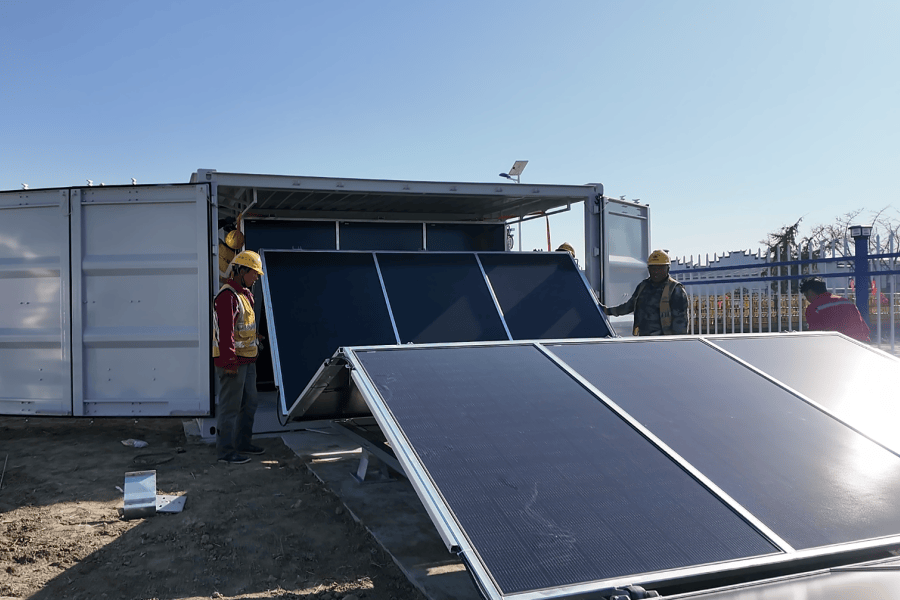
Beyond the Grid: How Mobile LFP Power is Redefining Energy Security for Critical Operations
Hey there. If you're reading this, you're probably looking at energy resilience not just as a project, but as a mission-critical imperative. Over two decades of deploying BESS systems from remote industrial sites to hurricane-prone communities, I've learned one thing: when the lights must stay on, conventional thinking falls short. Today, over a coffee, let's talk about a real-world shift I'm seeing firsthand C the move towards rugged, mobile, and inherently safe power solutions. Specifically, let's dive into a Real-world Case Study of LFP (LiFePO4) Mobile Power Container for Military Bases, because the lessons learned there are reshaping best practices for all of us in critical infrastructure.
Quick Navigation
- The Silent Problem: Static Infrastructure in a Dynamic Threat World
- Why This Hurts: Cost, Complexity, and Compromised Security
- The Mobile LFP Answer: More Than Just a Battery on Wheels
- A Case in Point: Deployment in a European NATO Forward Operating Base
- Expert Breakdown: The Tech That Makes It Work (Plain English)
- What This Means for Your Operation
The Silent Problem: Static Infrastructure in a Dynamic Threat World
For years, the go-to for base energy security has been large, fixed-location diesel generators paired with sometimes-undersized battery rooms. The model is simple: a centralized, single point of failure. I've walked these sites. You see the massive fuel logistics chain, the emission control headaches, and the sheer acoustic and thermal signature of these setups. In an era where hybrid threats and climate volatility are the norm, this static model creates vulnerability. What happens during a rapid redeployment? Or if a primary fuel depot is compromised? The IEA consistently highlights energy security as a pillar of national resilience, and static systems can ironically become a weak link.
Why This Hurts: Cost, Complexity, and Compromised Security
Let's agitate this a bit, honestly. The pain isn't just theoretical.
- Sky-High LCOE (Levelized Cost of Energy): Diesel is expensive, volatile, and its true cost includes securing its supply line. I've seen budgets blown on fuel transport alone for remote bases.
- Operational Drag: Scheduled maintenance on a fixed generator can mean planned downtime for critical ops. Unplanned failure? A catastrophe.
- Safety & Standards Quagmire: Older battery chemistries in confined spaces require elaborate ventilation and fire suppression. Meeting evolving UL 9540 and IEC 62619 standards for stationary systems is complex and costly. Now imagine doing that for a temporary forward base.
- Strategic Inflexibility: Your energy asset can't move, but your operational needs do. This mismatch is a strategic liability.
The Mobile LFP Answer: More Than Just a Battery on Wheels
This is where the case for mobile LiFePO4 (LFP) power containers becomes compelling. The solution isn't just "a battery in a box." It's a paradigm shift towards distributed, resilient, and silent power. LFP chemistry is the game-changer here C its thermal and chemical stability is orders of magnitude higher than older NMC variants. This inherent safety translates directly into simpler, more robust container design. We're talking about a self-contained unit with integrated power conversion, climate control, and safety systems, all pre-certified to the mobile and stationary standards that matter, like UL 9540A for fire safety. It's a plug-and-play energy asset that can be deployed in hours, not months.

A Case in Point: Deployment in a European NATO Forward Operating Base
Let me share a scenario that mirrors many real engagements. A NATO member state needed to rapidly establish a forward operating base with minimal logistical footprint and near-silent watch capabilities. The challenge: power for communications, surveillance, and living quarters without the constant drone of diesel gensets and weekly fuel convoys.
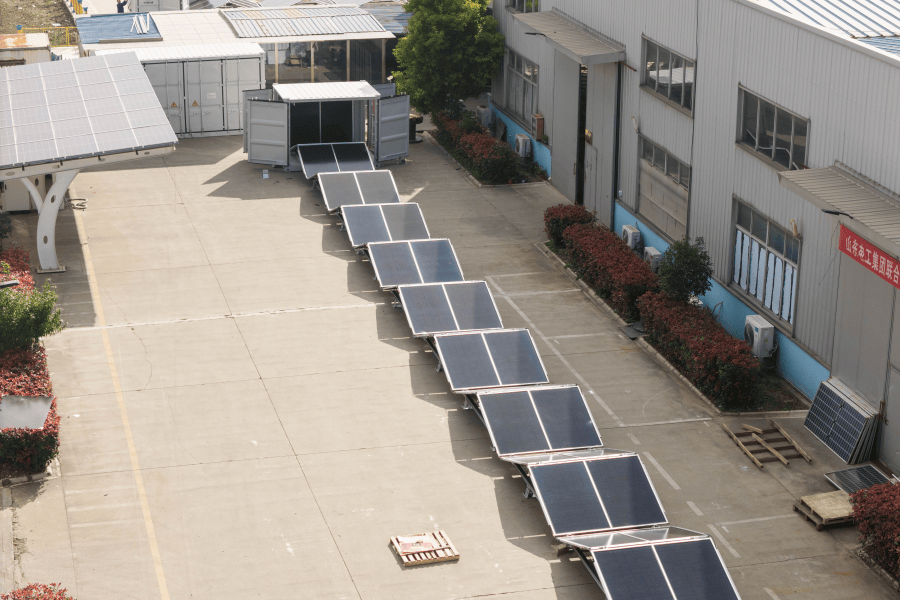
The Setup: Two 40-foot Highjoule LFP Mobile Power Containers were deployed. Each was pre-configured with grid-tie and off-grid capabilities, allowing them to integrate with local solar PV (when available) and act as the primary microgrid hub. The Outcome:
- Fuel Reduction: Diesel generator runtime was cut by over 80%, slashing both cost and vulnerability.
- Stealth & Comfort: Silent watch capability was extended from hours to days, enhancing security and troop rest.
- Rapid Deployment: From arrival to full power was under 6 hours. The units' built-in lifting and hitch points were a simple but critical design win on the ground.
- Compliance Handled: Because the containers were built from the ground up to exceed UL and IEC standards, site inspection and acceptance was straightforward. No on-site engineering headaches.
Expert Breakdown: The Tech That Makes It Work (Plain English)
For the non-engineer decision-maker, here's what matters under the hood:
- LFP Chemistry = Built-in Safety Margin: Think of it as a less volatile energy storage medium. It doesn't heat up as aggressively under stress, which massively reduces thermal runaway risk. This is why it's the preferred choice for environments where safety is non-negotiable.
- C-rate C The "Endurance" Factor: C-rate is basically how fast you can charge or discharge the battery safely. A 1C rate means a full discharge in 1 hour. These mobile units are often optimized for a moderate C-rate (like 0.5C-1C), which is the sweet spot for durability and providing sustained power over many hours, not just short bursts. It's about marathon endurance, not a sprint.
- Thermal Management C The Climate Control: This isn't just a fan. It's a precision cooling/heating system that keeps every battery cell in its happy zone (around 25C/77F) whether it's in the desert or the Arctic. I've seen systems fail because this was an afterthought. In our designs, it's the heart of the system, ensuring performance and longevity year-round.
- LCOE C The True Cost Over Time: While the upfront cost of a high-quality LFP system can be higher, the Levelized Cost of Energy tells the real story. With near-zero fuel cost, minimal maintenance (no engine parts!), and a lifespan often exceeding 6000 cycles, the total cost over 10-15 years plummets. You're buying predictable, stable energy costs.
What This Means for Your Operation
Whether you're securing a military base, a hospital campus, or a remote industrial site, the principles are the same. The future of critical power is modular, mobile, and resilient by design. At Highjoule, our approach is shaped by these real-world deployments. It means building every mobile power container not just to a spec sheet, but to the expectation that it will be deployed in harsh conditions, by personnel who need reliability above all else. Our focus on LFP, rigorous compliance with UL and IEC standards from the design phase, and a service model that supports the entire lifecycle isn't just marketing - it's what we've learned is necessary when you're the one getting called at 2 a.m. about a system alarm.
The question isn't really if mobile, resilient power will become the standard for critical operations. Based on what I'm seeing on site, that shift is already underway. The real question is: how will your next energy security project adapt to this new, more dynamic reality?
Tags: UL Standard BESS LCOE Europe US Market Renewable Energy Mobile Power Container Military Energy Security LiFePO4
Author
James Zhang
20+ years agricultural energy storage engineer / Highjoule CTO