
All-in-One Solar Container Cost for Construction: A Real-World Breakdown
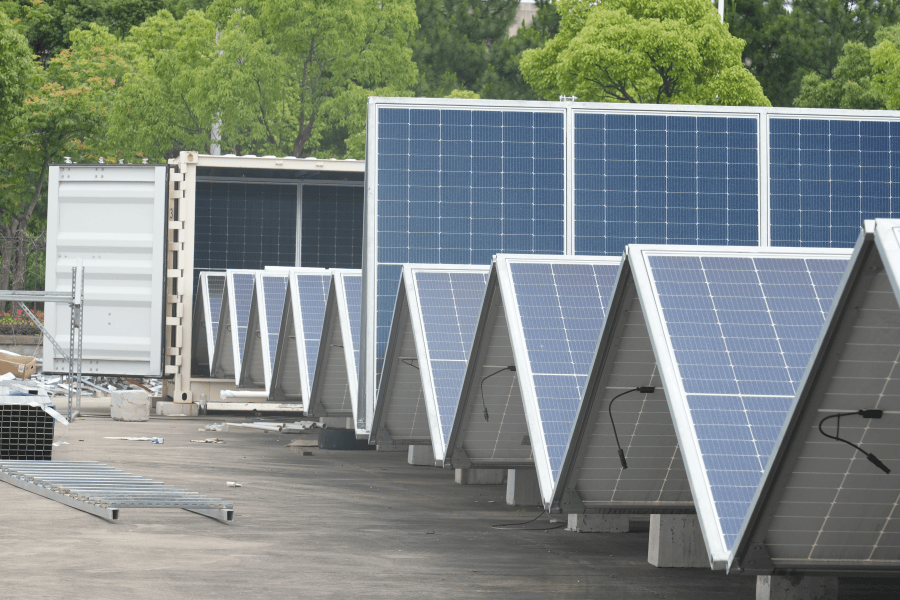
Table of Contents
- The Real Problem: It's Never Just About the Price Tag
- The Honest Cost Breakdown: What You're Really Paying For
- From Theory to Dirt: A Case Study in Cost Savings
- Expert Insight: The Hidden Factors That Make or Break Your Budget
- Making the Decision: Is It Worth It for Your Site?
The Real Problem: It's Never Just About the Price Tag
Let's be honest. When you, as a project manager or site supervisor, ask "How much does it cost for an All-in-one Integrated Solar Container?", you're not just looking for a number. You're trying to solve a headache. I've been on enough muddy, noisy construction sites from California to Bavaria to know the real question behind the question: "Can I power my tools, my trailers, and my temporary offices reliably without getting killed by diesel costs, endless utility permits, or unexpected downtime?" The initial sticker price is just the tip of the iceberg.
The real cost problem on remote or temporary sites is the total cost of chaos. It's the weekly diesel delivery that's late because of road closures. It's the generator that fails at 2 AM, halting your curing process. It's the man-hours spent coordinating with the local utility for a temporary hook-up that takes eight weeks instead of four. According to the National Renewable Energy Laboratory (NREL), fuel and maintenance for traditional gensets can consume over 70% of their total lifetime cost. That's a financial bleed you can see and smell.
The Honest Cost Breakdown: What You're Really Paying For
So, let's talk numbers. A pre-integrated, plug-and-play solar and battery storage container for a typical mid-sized construction site isn't a commodity you buy off a shelf. Its cost - anywhere from $120,000 to $400,000+ - is a package deal. Here's what that investment actually covers:
- The Core Hardware: This includes the battery rack (Lithium Iron Phosphate, or LFP, is the industry safety standard now), the PV inverters and charge controllers, the power conversion system (PCS), and of course, the solar panels themselves, often mounted on the container or as a nearby array.
- The "All-in-One" Brain: The integrated energy management system (EMS) is what you're paying a premium for. This is the software and controls that make it truly "plug-and-play," automatically balancing solar generation, battery storage, and any backup generator you might have.
- The Safety & Compliance Premium: This is non-negotiable, especially in the US and EU. A unit built to UL 9540 (US) and IEC 62933 (EU) standards for the overall system, with cells and components certified individually, costs more to manufacture. I've seen firsthand on site how inspectors will shut down a non-compliant system in a heartbeat. This cost is your insurance policy.
- Site-Specific Engineering & Logistics: Delivery, craning into place, and final connection. A good provider like ours at Highjoule bundles this into a clear quote, so you're not hit with surprises.
The real metric, though, isn't the upfront capital expenditure (CapEx). It's the Levelized Cost of Energy (LCOE) - the total lifetime cost of owning and operating the system, divided by the energy it produces. For a solar container, the "fuel" is free sun, and maintenance is minimal. So while the CapEx might be higher than a diesel genset, the LCOE over a 2-3 year project often plummets, sometimes by 40-60%.
From Theory to Dirt: A Case Study in Cost Savings
Let me give you a real example. We deployed a 250kW/500kWh Highjoule Solar Container for a highway infrastructure project in Northern Germany. The challenge? The site was in an environmentally sensitive area with strict noise and emissions limits, and the nearest grid connection point was 2 kilometers away.
The initial cost for our container solution was higher than leasing several large diesel generators. But look at the operational math: Zero diesel costs (saving ~?45,000 annually), zero fuel logistics, and compliance with local regulations from day one. The system's integrated EMS was programmed to prioritize solar, use the battery at night, and only signal the one small backup generator during a long stretch of bad weather. The project manager later told me the single biggest saving was in administrative and operational hassle - they just forgot about the power system and focused on building the road.

Expert Insight: The Hidden Factors That Make or Break Your Budget
Beyond the specs sheet, here are two technical factors I always check on site that dramatically affect cost and performance:
- C-Rate is Your Throughput: Think of the battery's C-rate as its "power bandwidth." A 1C rate means a 100kWh battery can deliver 100kW of power. For construction sites with heavy equipment like pile drivers or cranes, you need a high C-rate (0.5C to 1C) to handle those sudden, high-power surges. Spec'ing a battery with too low a C-rate means it can't discharge fast enough to power your big tools, forcing the generator to kick in more often - increasing your runtime costs. A properly sized high-power battery might cost more upfront but saves massively on fuel over time.
- Thermal Management is Longevity: A battery's lifespan is tied directly to its operating temperature. I've opened containers where the cooling was an afterthought, and the batteries were cooking, degrading years off their life. A robust, active liquid cooling or precision air-conditioning system is a must. It adds to the initial cost but protects your core asset. A battery that lasts 6,000 cycles instead of 3,000 has a much lower cost per kWh over its life.
At Highjoule, we design our containers with these frontline realities in mind. Our thermal management systems are over-engineered for reliability, and we're obsessive about component-level safety certifications. It means our units might not be the absolute cheapest on day one, but they're built to deliver the lowest possible LCOE and zero headaches on your site.
Making the Decision: Is It Worth It for Your Site?
So, back to your original question. The cost of an All-in-One Solar Container is an investment in predictability. It's not for every single short-term site. But if your project has one or more of these factors, the math starts to look very compelling:
- Duration > 12 months
- High diesel costs or logistical challenges
- Remote or weak grid connection
- Strict environmental (noise/emissions) regulations
- A need for absolutely reliable, 24/7 silent power for site offices or sensitive processes
The best way to get a true, apples-to-apples cost? Don't just ask for a price. Share your site's specific load profile, daily kWh consumption, and peak power needs with a reputable provider. A good engineering team can then model the exact system size and give you a clear picture of total cost of ownership - not just a purchase order number.
What's the one piece of site power infrastructure you wish you could stop worrying about tomorrow?
Tags: Construction Site Power UL Standard Off-grid Power BESS Cost Energy Storage System All-in-One Solar Container
Author
James Zhang
20+ years agricultural energy storage engineer / Highjoule CTO