
Black Start BESS Cost for Utilities: A Real-World Breakdown
Navigating the Real Cost of a Black Start BESS for Your Grid
Honestly, when a utility planner asks me "How much does it cost for a Black Start Capable BESS?", I never give a simple number. It's like asking "How much does a house cost?" Well, is it in California or Texas? What's the foundation like? Do you need a storm-proof roof? The answer is a conversation, not a quote. Having been on-site for more than two dozen of these deployments across North America and Europe, I've seen firsthand that the sticker price of the battery containers is just the opening act. The real story - and the real cost - is in the engineering, the software brains, and the relentless focus on grid codes and safety standards like UL 9540 and IEC 62933 that our markets demand.
Table of Contents
- The Real Problem: It's Not Just About the Batteries
- The Cost Breakdown: Hardware, Brains, and Compliance
- A Case in Point: Lessons from a German Microgrid
- Driving Down Cost & Driving Up Value: The Expert's View
- Making Sense of the Investment
The Real Problem: It's Not Just About the Batteries
The pain point for most utilities isn't really the capital expenditure. It's the operational risk. You're investing in an insurance policy for your entire grid. A traditional diesel-powered black start generator has a known, if messy, playbook. A battery system that must autonomously detect a blackout, island itself, establish a stable voltage and frequency (creating a "live grid" from absolute zero), and then sequence other assets online? That's a different beast entirely. The cost of failure here isn't just a delayed restart; it's potential equipment damage and eroded public trust. According to the National Renewable Energy Laboratory (NREL), the complexity of controls and grid-forming inverter technology is the single largest technical hurdle - and cost adder - for advanced grid services like Black Start.
The Cost Breakdown: Hardware, Brains, and Compliance
So let's break down that "house" we're building. The foundation is the Core BESS Hardware. This is the lithium-ion battery racks, the thermal management system (crucial for maintaining performance and lifespan, by the way), the power conversion system (PCS), and the container itself. For a utility-scale Black Start system, you're looking at a system with a high C-rate capability - meaning it can discharge a lot of power very quickly to crank those first large generators. That requirement alone pushes you towards more advanced, and yes, more expensive, cell chemistry.
Then comes the Grid-Forming Inverter & Advanced Controls. This is the brain and the nervous system. A standard grid-following BESS waits for a signal from the grid. A Black Start system needs grid-forming inverters. They create the grid signal. This software-defined functionality, compliant with IEEE 1547-2018 for interconnection, is a massive chunk of the engineering cost. I've seen projects where this control system suite can add 15-25% to the baseline BESS cost.
Finally, the silent budget eater: Integration, Compliance & Testing. You're not just buying a product; you're funding a process. This includes:
- Site-Specific Engineering: Every substation is different. The cabling, switchgear integration, and protection coordination studies are custom work.
- Certification & Witness Testing: Proving to your regulator and insurer that the system meets UL 9540A (fire safety) and can perform its Black Start sequence flawlessly. We once spent three days on a live, off-grid test for a 50 MW system - that's crew time, fuel for the test load, the whole nine yards.
- Training & Long-Term Service Agreement (LTSA): Your operators need to trust this new tool. A comprehensive LTSA ensures system health and performance over its 15-20 year life, which actually lowers your total Levelized Cost of Energy (LCOE) from the asset.
So, while a standard grid-tied BESS might be in the range of $XXX to $XXX per kWh installed, a Black Start capable system, with all its hardened capabilities, typically starts at a premium of 30-50% above that. The payoff? Speed, reliability, zero emissions during start-up, and a modern asset that provides daily grid services (frequency regulation, voltage support) while it waits for its "big moment."
A Case in Point: Lessons from a German Microgrid
Let me give you a real example from an industrial park in North Rhine-Westphalia. The challenge was to create a resilient microgrid that could black-start a combined heat and power (CHP) plant after a major fault. The initial bids focused on battery size (MWh). But the real challenge was the in-rush current needed to start the CHP's large motors. We had to spec a system with a much higher peak power (MW) rating relative to its energy capacity. 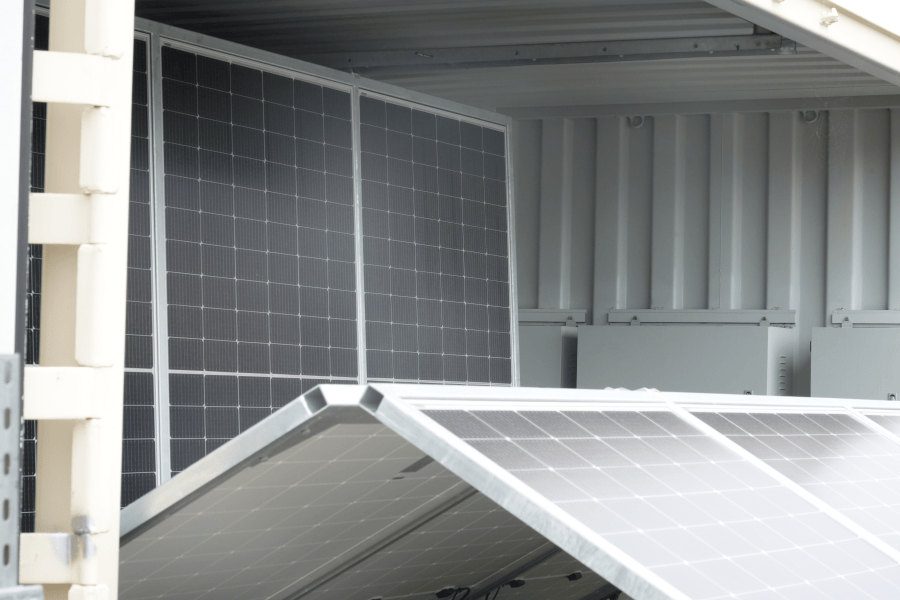
Honestly, the hardware was the easy part. The months of work went into modeling the load sequences and programming the control logic to meet the strict VDE-AR-N 4110 German grid code. The "cost" here was expertise and time. The system went live in 2023 and has already performed two unplanned, successful islanding events, keeping critical processes running. That's the value that transcends the initial invoice.
Driving Down Cost & Driving Up Value: The Expert's View
Here's my insight from the field: the cheapest upfront option is often the most expensive long-term. When we at Highjoule design a Black Start BESS, we obsess over the total lifecycle cost. A superior thermal management system might add 5% to the CAPEX, but it can double the cycle life of the batteries, crushing your LCOE. Using UL 9540A listed components from the get-go simplifies fire suppression design and insurance approval, avoiding costly retrofits later.
The key is to partner with a provider whose engineers speak both the language of battery chemistry and utility protection schemes. You need someone who can sit with your planning team and model fault currents, not just talk battery cycles. That integration depth is what turns a capital expense into a strategic, value-generating asset.
Making Sense of the Investment
So, how much does it cost for a Black Start Capable BESS for a Public Utility Grid? You now know it's a multi-layered question. The final number is built on your specific grid requirements, the local standards you must meet, and the intelligence built into the system beyond the cells.
The better question to start with is: "What is the value of guaranteed grid restoration in under 10 minutes versus several hours?" Once you quantify that - in terms of lost revenue, community impact, and regulatory penalties avoided - the conversation about the cost of a robust, compliant, and truly capable Black Start BESS becomes much clearer. It's not an expense line item; it's the cornerstone of your grid's resilience strategy.
What's the single biggest grid stability concern you're looking to address with this kind of investment?
Tags: UL Standard LCOE Grid Resilience Black Start BESS IEEE 1547 BESS Cost Utility-Scale Energy Storage
Author
James Zhang
20+ years agricultural energy storage engineer / Highjoule CTO