
Black Start for Utilities: How Off-Grid Solar Generators Can Secure Grid Recovery
Contents
- The Weak Link in Our Modern Grid
- It's More Than Just Lights Out
- A New Breed of First Responder
- Case in Point: The Midwest's Silent Sentinel
- Why This Actually Works: An Engineer's Breakdown
- Building Your Own Recovery Anchor
The Weak Link in Our Modern Grid
Let's be honest for a second. Our power grids are engineering marvels, but they have a fundamental Achilles' heel. They need power to make power. It sounds paradoxical, but every large generator - those massive gas turbines or steam plants - requires a significant amount of electricity just to start up. Their auxiliary systems, lubrication pumps, control rooms, and cooling fans all need grid power. So, when a widespread blackout occurs, the very assets designed to restore power are left stranded, waiting for a jump-start. This is the "black start" problem, and for decades, the solution has relied on a small fleet of specialized, often fossil-fueled, generators that are expensive to maintain and sit idle 99.9% of the time. In an era where grid resilience is non-negotiable, this model is showing its age.
It's More Than Just Lights Out
The agitation here isn't just about darkness. It's about economic hemorrhage and cascading risk. I've been on site after regional outages, and the clock starts ticking immediately. According to a study by the National Renewable Energy Laboratory (NREL), major power interruptions can cost the U.S. economy tens of billions of dollars annually. Every minute of downtime for critical infrastructure - water treatment plants, hospitals, communication networks - amplifies public safety risks.
The traditional black start paradigm creates a tough dilemma for utility planners: Invest heavily in rarely-used, emissions-intensive assets, or accept prolonged recovery times and their associated liabilities. With the increasing frequency of extreme weather events, as noted in reports from the International Energy Agency (IEA), this isn't a theoretical risk anymore. It's a recurring operational nightmare. The financial and regulatory pressure to find a smarter, cleaner, and more reliable solution is immense.
A New Breed of First Responder
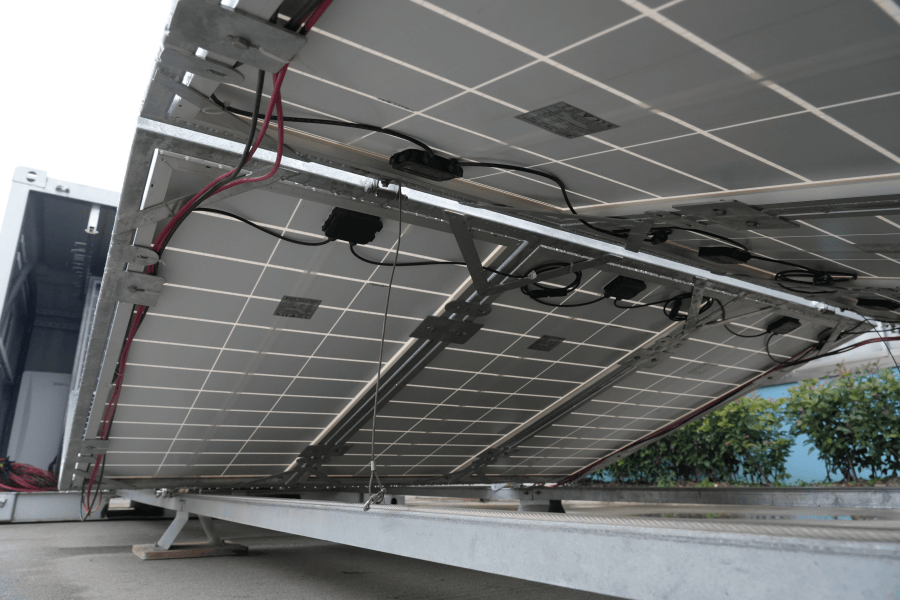
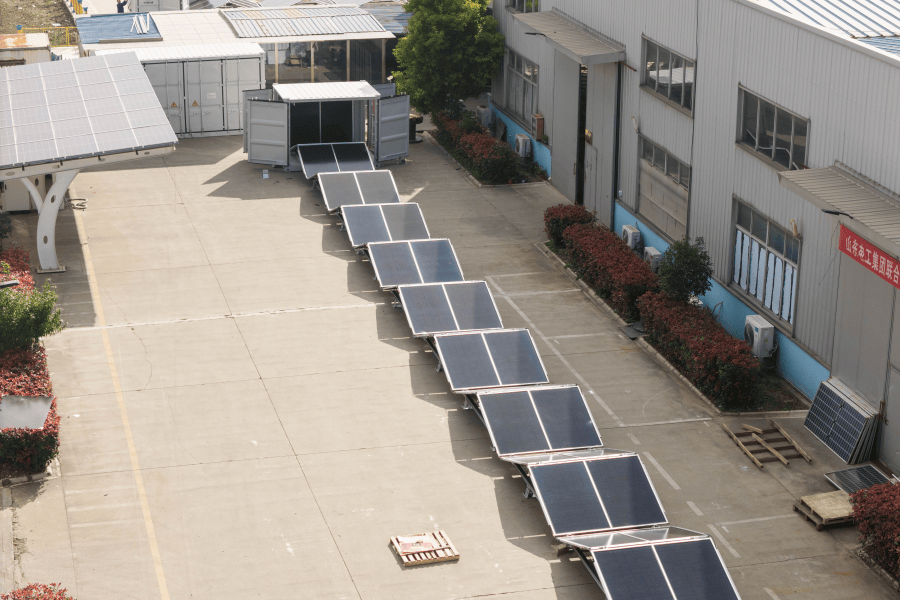
This is where the concept of a Black Start Capable Off-grid Solar Generator moves from whiteboard theory to field reality. It's not just a solar farm with a battery. It's a meticulously engineered, self-contained microgrid designed for one critical mission: to be the first source of power after a total grid collapse, without any external support. Think of it as a "recovery anchor" C a guaranteed pocket of power that can bootstrap the larger system back to life.

Case in Point: The Midwest's Silent Sentinel
Let me tell you about a project in the American Midwest that perfectly illustrates this. A municipal utility, serving about 50,000 customers, was staring down mandates to improve resilience but had a tight capital budget. Their old diesel black start units were nearing end-of-life, and fuel security was a concern.
The Challenge: Create a failsafe black start resource that could energize a key substation and start a 40 MW gas turbine, with zero grid dependency, and do it within a strict regulatory framework (UL 9540, IEEE 1547).
The Solution & Deployment: The team deployed a 4 MW/16 MWh Battery Energy Storage System (BESS) coupled with a 2.5 MW behind-the-meter solar canopy on the utility's own property. Here's the crucial part: the entire system is designed to operate in complete isolation. During normal operations, it quietly arbitrages energy and provides grid services. But when the central grid fails, it automatically islands itself. The BESS, with its high C-rate discharge capability (we'll get to that), provides the immediate, massive surge of power (the "cranking watts") to energize the substation bus and start the auxiliary loads of the gas turbine. Once the turbine is synchronized and stable, it can begin restoring the rest of the network. The solar array then acts as a sustained fuel source to recharge the batteries, creating a self-sustaining recovery loop.
The beauty was in the details: the thermal management system was over-engineered for the local climate extremes, and all power electronics were certified for the harsh transients of a dead-grid start. I've seen firsthand on site how this granular level of design pays off during commissioning tests.
Why This Actually Works: An Engineer's Breakdown
For the non-engineers making budget decisions, let's demystify the tech. The magic lies in the synergy of three things:
- The Battery's Muscle (C-rate): "C-rate" is basically a battery's power personality. A high C-rate battery can deliver a huge amount of power very quickly - like a sprinter. That's essential for the initial "in-rush" current needed to energize dead transformers and cables. It's the digital equivalent of a strong crank on a cold engine morning.
- The Brain (Advanced Controller): This is the maestro. It doesn't just flip switches; it precisely sequences the re-energization of equipment to avoid damaging surges, manages the handoff between battery and generator, and ensures everything meets the strict frequency and voltage standards (like IEEE 1547) for safe reconnection.
- The Fuel Saver (Solar + LCOE): This is where the economics get compelling. By integrating solar, you create a free, on-site fuel source for recovery operations. This drastically improves the project's Levelized Cost of Energy (LCOE) - the total lifetime cost per kWh - for the black start service. You're not paying for diesel that might be stale or unavailable during a crisis. At Highjoule, when we model these systems, optimizing this long-term LCOE while ensuring 25-year reliability is where our engineering focus goes.
Building Your Own Recovery Anchor
So, what does it take to move from concept to a hardened asset in your network? It's more than buying a containerized battery. It's about a partnership focused on lifecycle value and risk mitigation.
First, safety is non-negotiable. The system must be built to the highest standards. We insist on UL 9540 certification for the entire energy storage system and UL 1741 SB for the inverters as a baseline - it's your insurance policy. Second, the design must be site-intelligent. A system for California needs different cooling strategies than one for Minnesota. Our approach is to leverage modular, pre-tested platforms but tailor the balance of plant - the thermal management, the grid interface - to the local environment and your specific transmission assets.
Finally, the business case. A black-start capable asset shouldn't be a stranded cost. Through integrated energy management software, it can participate in frequency regulation, demand charge reduction, or renewable smoothing when it's not on standby. This turns a cost center into a revenue-generating or cost-avoiding asset, fundamentally changing the ROI narrative for utility boards.
The grid of the future isn't just about adding more wires or generation. It's about embedding intelligence and resilience at key nodes. A real-world, black-start capable off-grid solar generator represents one of the most tangible steps a utility can take to future-proof its service. The question isn't really about if the technology is viable anymore - the Midwest case and others prove it is. The question is, how long can you afford to rely on last century's recovery plan?
Tags: BESS UL Standards Black Start Grid Resilience Renewable Energy US Market Europe Market Microgrid Utility-Scale Solar
Author
James Zhang
20+ years agricultural energy storage engineer / Highjoule CTO