
Essential Maintenance Checklist for 20ft Hybrid Solar-Diesel BESS in Remote Microgrids
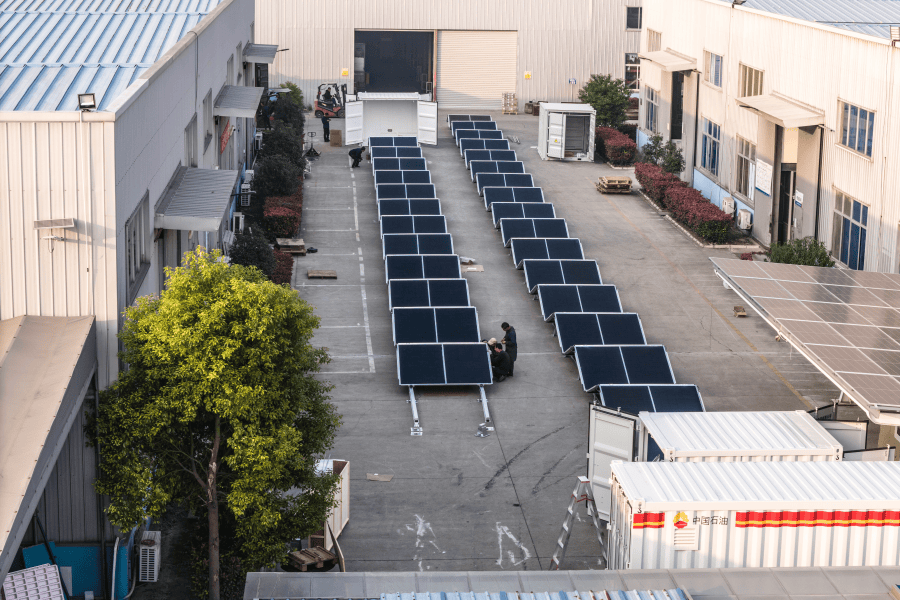
Your Remote Island Microgrid Deserves Better Than a "Set and Forget" Mentality
Honestly, I've been on-site in enough remote locations to know the single biggest mistake operators make with their 20ft High Cube Hybrid Solar-Diesel System. It's not the initial installation or the tech specs - it's what happens after the commissioning party ends. That crucial shift from a capital project to a long-term operational asset. I've seen firsthand a beautifully engineered system in the Caribbean lose 30% of its capacity in under two years because its maintenance plan was an afterthought, a simple calendar reminder to "check the batteries." For island communities and industrial operations relying on these containers, that oversight translates directly to higher diesel bills, unpredictable power, and a nasty shock when the system finally needs a major - and expensive - corrective repair.
Quick Navigation
- The Hidden Cost of "Reactive" Maintenance
- Beyond the Basics: What a Real Checklist Covers
- A Framework That Works: The Highjoule Approach
- Case in Point: Lessons from a Pacific Island
- What Should Your Next Step Be?
The Hidden Cost of "Reactive" Maintenance
Let's talk about the real problem. In remote microgrids, your hybrid solar-diesel system isn't just backup; it's the backbone of energy security and cost control. The industry often focuses on upfront CAPEX, but the Levelized Cost of Energy (LCOE) - the total lifetime cost per kWh - is what keeps CFOs up at night. According to a National Renewable Energy Laboratory (NREL) analysis, operations and maintenance (O&M) can constitute 15-25% of a standalone storage system's lifecycle cost. For a remote island system integrating solar, storage, and legacy diesel gensets, poor O&M can balloon that figure, erasing all the promised savings from your solar PV.
The pain points are specific:
- Thermal Runaway Risks: A 20ft container is a dense energy pack. Inconsistent cooling system checks or clogged filters in a tropical, salty environment can lead to thermal hotspots. This isn't just an efficiency drop - it's a severe safety risk that standards like UL 9540 and IEC 62485 are designed to mitigate.
- Diesel Gen-set Sync Issues: The magic of a hybrid system is seamless handoff between sources. A poorly maintained battery bank with unbalanced cells or degraded capacity can cause the diesel generator to kick in more often, and under unstable load conditions. This increases fuel consumption, emissions, and generator wear-and-tear.
- Data Blindness: Many systems collect data but lack a structured maintenance checklist to translate it into actionable insights. Is that voltage drift normal? Is the C-rate (the charge/discharge current relative to battery capacity) during peak solar hours accelerating degradation? Without a scheduled, disciplined check, you're flying blind.
Beyond the Basics: What a Real Checklist Covers
A generic checklist might tell you to "inspect cables" and "log voltages." For a mission-critical island microgrid, you need a living document that aligns with IEEE 2030.7 standards for microgrid controllers and digs into system symbiosis. At Highjoule, our field-proven checklists for a 20ft High Cube Hybrid Solar-Diesel System are built around three pillars:
1. Safety & Compliance First (The Non-Negotiables)
- Arc Flash & DC Isolation Verification: Before any hands-on work, confirming safe isolation of both AC and DC sides, especially where solar PV and battery strings meet.
- Containment Integrity: Checking the container's environmental seals, fire suppression gas pressure, and venting pathways. Salt air is a relentless enemy.
- Grounding & Bonding Resistance Test: Corrosion can compromise grounding. This is a quarterly must-do, not an annual maybe.

2. Performance & Health Diagnostics (The Predictive Core)
- Battery Management System (BMS) Log Deep Dive: Reviewing cell-level voltage, temperature, and impedance trends. We look for outliers, not just averages.
- Thermal Management System Load Test: Verifying coolant levels, pump operation, and heat exchanger cleanliness under full load, not just idle conditions.
- Power Conversion System (PCS) Efficiency Test: Measuring AC-DC and DC-AC conversion losses at different load points. A 2% drop in efficiency means more diesel burnt over a year.
- Generator Interface Logic Test: Simulating grid failures and renewable dips to ensure the diesel genset starts, synchronizes, and loads within specified parameters.
3. External & Integration Checks (The System View)
- PV Array Soiling & I-V Curve Spot Check: Reduced solar input forces the battery to cycle more deeply. It's all connected.
- Fuel Quality & Day Tank Inspection: Contaminated fuel from long storage is a top cause of generator failure during critical BESS recharge events.
- Communication Link & Cybersecurity Log Review: Ensuring the remote monitoring is actually secure and reliable. No data means no diagnostics.
A Framework That Works: The Highjoule Approach
Our philosophy isn't to sell you a container and a PDF. It's to engineer resilience into your entire operation. That's why our Maintenance Checklist is more than a document - it's part of a service envelope. We bake in:
- UL & IEC Compliance as a Baseline: Every checkpoint references the relevant standard. Your audits become straightforward.
- LCOE-Optimized Scheduling: We don't recommend maintenance based just on time. We analyze your operational data to schedule checks before seasonal high-load periods or after extreme weather events.
- Localized Spare Parts Logic: For remote islands, having the right spare on-site is everything. Our checklist helps define a minimal but critical spare parts kit - like specific cooling system hoses or communication modules - based on actual failure mode analysis.
Case in Point: Lessons from a Pacific Island
Let me give you a real example. We took over maintenance for a 5-year-old hybrid system at a resort on a Pacific island. The previous O&M was basic. We implemented our structured checklist and found two critical issues in the first quarterly visit: (1) a failing cell balancer in one battery rack, causing progressive capacity loss, and (2) slightly misaligned parameters in the microgrid controller that caused the diesel gensets to "hunt" (rapidly ramp up and down) during cloud transients.
By fixing the balancer, we restored 50kWh of usable capacity. By retuning the controller, we reduced generator runtime by 15 hours a month, cutting fuel costs by nearly $4,000 monthly. The total corrective cost was less than one month's saved fuel. That's the power of a diagnostic, not a superficial, checklist. It turned a system that was becoming a liability back into a high-performing asset.

What Should Your Next Step Be?
If you're managing a remote or island-based microgrid, ask yourself: Is my current maintenance protocol a true diagnostic checklist or just a liability waiver? Does it proactively protect my LCOE and safety compliance, or is it just ticking boxes?
The complexity of a 20ft High Cube Hybrid Solar-Diesel System demands respect. Its maintenance shouldn't be an off-the-shelf template, but a customized, living process. I'd recommend pulling your last 12 months of system performance logs and your current checklist. Can you trace every performance dip to a specific action item? If not, maybe it's time we talk. The goal isn't just to keep the lights on today, but to ensure your investment is still delivering a decade from now, under that same tropical sun.
Tags: UL Standard BESS LCOE Off-grid Power Renewable Energy Battery Storage Solar-Diesel Hybrid IEEE Standards Remote Microgrids Maintenance Checklist
Author
James Zhang
20+ years agricultural energy storage engineer / Highjoule CTO