
Black Start Capable PV Storage for Data Centers: Cost & Key Considerations
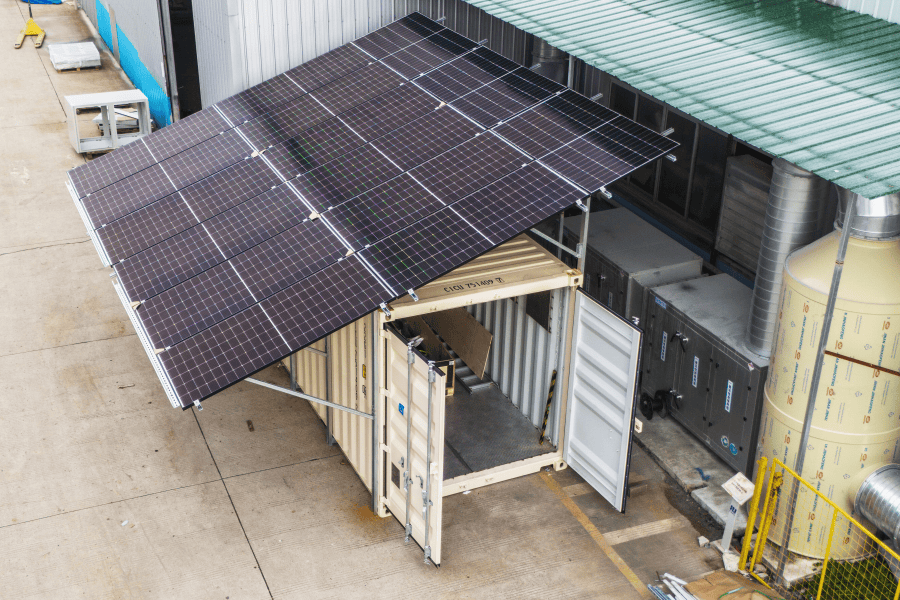
Table of Contents
- The Real Question Behind the Price Tag
- What Really Drives the Cost? It's More Than Just Batteries
- A Case in Point: A 5MW Microgrid in Northern Virginia
- Our Approach: Engineering for Total Cost of Resilience
- So, What's Your Next Step?
The Real Question Behind the Price Tag
Honestly, when a data center operator asks me "How much does it cost for a black start capable photovoltaic storage system?", I know they're not just looking for a number. What they're really asking is, "How do I justify this capital expenditure to my board while guaranteeing 99.999% uptime through a grid blackout?" I've seen this firsthand on site: the pressure is immense. A traditional diesel genset backup is a known quantity, but it's loud, has emissions, and relies on a fuel supply chain that can be disrupted. A solar-plus-storage system with black start capability - meaning it can boot itself up from a complete shutdown without the grid - is the modern answer. But its cost is a complex equation, not a simple line item.
What Really Drives the Cost? It's More Than Just Batteries
Let's break it down. If you're thinking just about the price per kilowatt-hour of battery storage, you're only seeing maybe 50-60% of the picture. For a mission-critical black start system, several other factors massively influence the final investment.
The "Black Start" Premium: Not every battery system can black start. It requires specialized inverters with advanced grid-forming capabilities. These aren't your standard grid-following models; they can create a stable voltage and frequency waveform from scratch, acting as the "heartbeat" for your data center's electrical system to synchronize to. This hardware and its complex control software add a significant cost layer.
Battery Chemistry & C-rate: For backup, power (kilowatts) is often as critical as energy (kilowatt-hours). You need to spin up massive chillers and server loads instantly. This demands a high C-rate - the speed at which a battery can discharge. Lithium Iron Phosphate (LFP) is the industry standard for safety and cycle life, but ensuring it can deliver that surge of power (say, a 2C or 3C rate) requires careful engineering of the cell-to-pack design and, crucially, the thermal management system. An undersized cooling system will throttle your power output when you need it most. According to a NREL report, thermal management can account for up to 20% of a BESS's auxiliary load and is a key factor in long-term degradation.
Compliance is Non-Negotiable (and Costly): In the US and EU, you're looking at a web of standards: UL 9540 for the overall energy storage system, UL 1973 for batteries, IEEE 1547 for grid interconnection, and specific local fire codes. The engineering, documentation, and third-party testing to achieve this compliance, especially for a system meant to operate as an island (in microgrid mode), is a substantial project cost. It's not just a checkbox; it's months of work.
System Integration & Software: This is where many budget estimates fall short. You're not buying a commodity; you're building a system. The cost includes the medium-voltage switchgear, the master controllers that orchestrate between PV, storage, and backup gensets (if hybrid), and the energy management system (EMS) software. This EMS needs sophisticated logic: when to island, when to shed non-critical load, how to prioritize solar self-consumption, and how to sequence the black start procedure. I've seen projects where this integration work rivaled the hardware cost.

A Case in Point: A 5MW Microgrid in Northern Virginia
Let me give you a real-world example from a project we were involved in (under NDA, so I'll keep it generic). A hyperscale operator in Virginia needed black start capability for a critical data hall. Their challenge was grid congestion and a desire to reduce Scope 2 emissions.
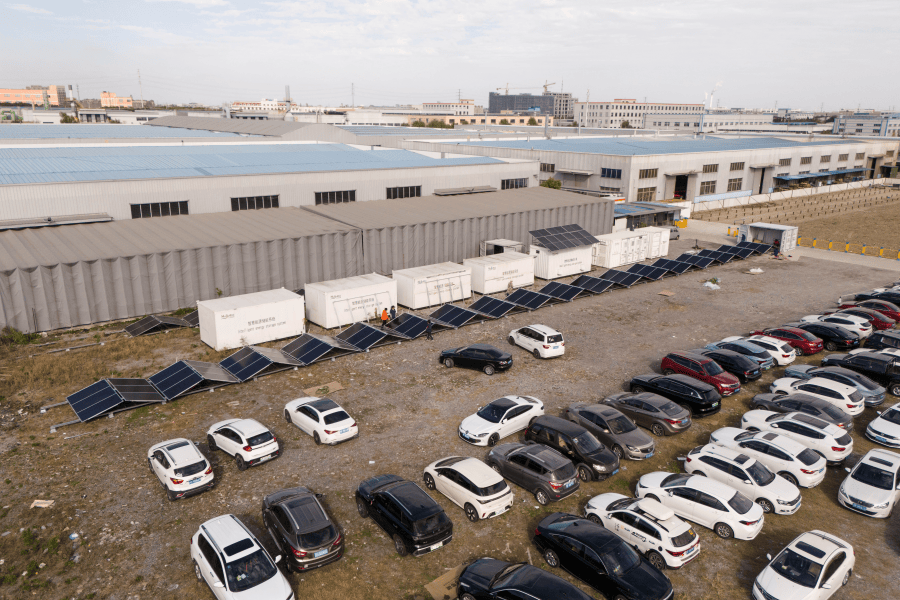
- Scope: 4 MW of rooftop PV, 3 MW / 9 MWh LFP storage with black start, integrated with existing 2MW diesel generators.
- The Cost Drivers: The single largest cost adder wasn't the batteries - it was the custom switchgear and protection relays to enable seamless transition between grid-tied, islanded, and black start modes while meeting NEC and local utility requirements. The control system logic alone took thousands of engineering hours.
- Outcome: The system provided 72 hours of critical backup. But more importantly, by using solar to offset grid demand daily, they improved their PUE and created a predictable long-term Levelized Cost of Energy (LCOE) for that portion of their load. The backup became an asset that paid back every single day, not just during an outage.
Our Approach: Engineering for Total Cost of Resilience
At Highjoule, after 20 years in the field, we've learned to shift the conversation from upfront capital cost to Total Cost of Resilience. This includes:
- Safety by Design: Our containerized solutions are built from the cell up to meet UL/IEC standards. We design thermal runaway propagation prevention into the module, not as an afterthought. This reduces insurance premiums and de-risks the entire project.
- LCOE Optimization: We model your load profile and solar generation to right-size the system. Maybe you need more power (kW) for black start and less energy (kWh) for backup, allowing us to optimize the battery block configuration for cost. We ensure the system earns its keep through daily energy arbitrage or demand charge management.
- Localized Deployment: Our project teams understand the permitting landscape in places like California, Texas, or Germany. We know which inspectors care about what. This local knowledge prevents costly delays and change orders during construction.
So, if you push me for a number? For a fully integrated, compliant, black-start capable PV and storage system for a multi-megawatt data center, you're typically looking at a range of $1.2 million to $2.5 million per MW of discharge power, heavily dependent on the duration (MWh) and site-specific integration complexities. The solar PV portion adds another layer. But that number is meaningless without the context of the value: uninterrupted operations, carbon reduction, and long-term energy price certainty.
So, What's Your Next Step?
Don't start with an RFP for "5 MWh of batteries." Start with a conversation about your resilience goals, your site's constraints, and your sustainability targets. Bring in your facilities team, your risk manager, and your finance lead. The right partner will help you navigate from that holistic need to a system design that makes both technical and business sense. What's the one critical load you absolutely cannot afford to lose, and how long does it need to run? Let's start there.
Tags: LCOE UL Standards Data Center Backup Power Photovoltaic Storage Black Start Microgrid BESS Cost
Author
James Zhang
20+ years agricultural energy storage engineer / Highjoule CTO