
High-Voltage DC 1MWh Solar Storage Cost for Data Center Backup | Highjoule

Beyond the Price Tag: What a 1MWh High-Voltage DC Solar Storage System Really Costs for Data Center Resilience
Honestly, when a data center operator or facility manager first asks me about the cost of a 1MWh High-Voltage DC (HVDC) solar-coupled storage system for backup, I know they're asking the wrong question. Or rather, an incomplete one. Over two decades of deploying these systems from Silicon Valley to Stuttgart, I've learned the sticker price is just the entry point of the conversation. The real question we should be asking is: what's the cost of not having resilient, efficient, and safe power? Let's grab a coffee and talk through what really drives the investment for a system like this.
Quick Navigation
- The Real Problem Isn't Just Backup
- The 1MWh Cost Puzzle: It's Never Just One Number
- Case in Point: A Frankfurt Colocation Facility
- What in the Tech Actually Drives Cost? (In Plain English)
- The Bigger Picture: Costs Beyond the Hardware
- Making Sense of Your Quote
The Real Problem Isn't Just Backup; It's OpEx and Risk
The phenomenon I see across the U.S. and Europe is a tense balancing act. Data centers face unprecedented pressure on two fronts: brutal reliability demands (we're talking about 99.999% uptime) and skyrocketing energy costs. A traditional diesel genset backup? It solves one problem while exacerbating the other. It's a CAPEX sink that sits idle 99.9% of the time, requires expensive maintenance, and does nothing for your peak demand charges or sustainability goals.
This is where the pain gets amplified. According to the International Energy Agency (IEA), data centers are among the most energy-intensive building types, consuming 1-1.5% of global electricity. That cost is volatile. Pair that with local grid instability - something I've seen firsthand in California with PSPS events and in Germany with regional congestion - and your "backup" strategy suddenly needs to be a "always-on" resilience strategy. The financial risk of downtime, which can run into millions per hour, makes a pure diesel solution look... frankly, archaic and financially risky.
The 1MWh Cost Puzzle: It's Never Just One Number
So, let's tackle the headline. "How much for a 1MWh HVDC system?" If I gave you a single figure like $300,000, I'd be doing you a disservice. That number is meaningless without context. Here's why the range is so broad ($250k to $500k+):
- Grid Services vs. Pure Backup: A system designed only to kick in during a blackout is simpler. But if you want it to also perform peak shaving, frequency regulation, or participate in a local microgrid - functions that actually generate revenue or savings to offset its cost - the power conversion system (PCS) and controls become more sophisticated (and costly).
- The "High-Voltage DC" Advantage: HVDC battery stacks (typically operating around 800-1500V DC) are a game-changer for efficiency. They reduce conversion losses compared to traditional low-voltage systems. As one NREL study on BESS cost benchmarks suggests, system-level engineering for higher voltages can significantly impact the balance-of-system (BOS) costs. You pay a bit more upfront for top-tier cells and robust safety isolation, but you save massively on energy losses over 15+ years.
- Safety is Non-Negotiable (and It Costs): Any quote must include rigorous compliance with UL 9540 (ESS standard), UL 9540A (fire test), and IEC 62933. This isn't just paperwork. It means specific - and expensive - thermal management systems, gas-based fire suppression, and continuous monitoring. I've walked through installations where the BMS (Battery Management System) and thermal controls accounted for nearly 20% of the hardware cost. Skipping here is not an option.
Case in Point: A Frankfurt Colocation Facility
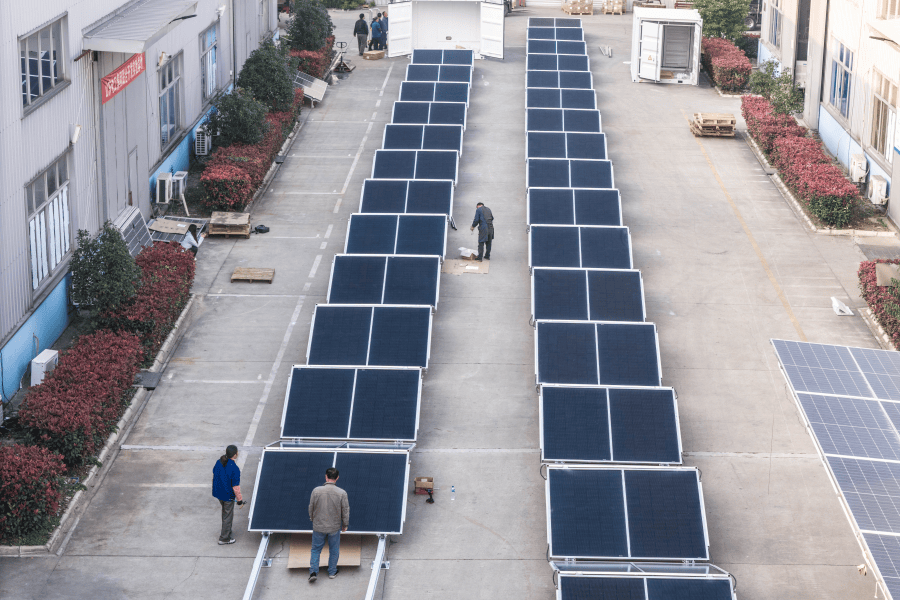
Let me make this real. We recently deployed a 1.2MWh HVDC system coupled with a rooftop PV array for a colocation provider near Frankfurt. Their challenge wasn't just backup; their grid connection fees were tied to peak demand, and they had aggressive carbon neutrality targets.
The solution was a hybrid one: The HVDC BESS provides seamless transition during grid loss (<4ms), but its primary daily job is peak shaving. It discharges during the afternoon price peak, cutting their demand charges by over 18% annually. The solar DC-coupled design minimized conversion losses, maximizing the use of their on-site generation.
The cost breakdown was revealing: About 50% was in the battery racks, PCS, and enclosure. Another 25% went to system integration, grid interconnection studies, and the specialized DC-DC converters for the solar input. The final 25% was all about "future-proofing": software for energy market forecasting, remote???? by our Highjoule team, and the comprehensive UL/IEC certification package. The project's real metric? A projected LCOE (Levelized Cost of Storage) of about $0.12/kWh over its life, factoring in demand charge savings - far cheaper than the cost of grid power during peaks or using a generator.
What in the Tech Actually Drives Cost? (In Plain English)
Let's demystify some jargon that heavily influences your quote:
- C-rate: Think of this as the "sprint vs. marathon" setting. A 1C rate means your 1MWh battery can discharge fully in 1 hour. A 0.5C rate means it takes 2 hours. For backup, you often need high power (high C-rate) fast, which requires more robust (costlier) cells and cooling. For daily cycling (peak shaving), a lower C-rate is fine and more cost-effective.
- Thermal Management: This is the unsung hero. Liquid cooling vs. advanced air cooling? Liquid is more expensive upfront but maintains optimal temperature far better, extending battery life significantly. In Arizona or Spain, this isn't a luxury; it's a necessity for hitting the 10-year warranty mark. This is a core part of our design philosophy at Highjoule - we never cut corners on thermal.
- LCOE (Levelized Cost of Storage): This is the number you should obsess over, not the upfront price. It's the total cost of owning and operating the system over its life, divided by the total energy it discharged. A cheaper system with poor efficiency and a 7-year life has a worse LCOE than a more expensive, robust 15-year system. Our goal is always to engineer for the lowest possible LCOE.
The Bigger Picture: Costs Beyond the Hardware
Here's what often gets missed in initial budgets:
| Cost Component | What It Encompasses | Why It Matters |
|---|---|---|
| Site Preparation & Civil Works | Concrete pad, fencing, utility trenches, fire safety zoning. | Local regulations (like in California or EU building codes) can vary wildly and add 10-15%. |
| Grid Interconnection & Studies | Feasibility studies, impact studies, utility approval fees. | This can be a lengthy, costly process. Having a partner with experience navigating ISOs/RTOs (like PJM or E.ON) is crucial. |
| Ongoing Software & Monitoring | Energy management system (EMS) updates, cybersecurity, performance analytics. | This is your window into ROI. A system without smart software is like a generator you never maintain. |
| Long-Term Service Agreement (LTSA) | Preventive maintenance, performance guarantees, remote monitoring. | This is insurance for your investment. It fixes your operational costs and ensures availability. |
Making Sense of Your Quote: The Highjoule Lens
When we at Highjoule design a 1MWh HVDC solution for a data center, we're not selling a commodity. We're engineering a resilience asset. Our approach inherently focuses on lowering your total LCOE. That means:
- Designing to the strictest iterations of UL and IEC standards from day one - no retrofits, no surprises during inspection.
- Insisting on liquid-cooled thermal management for mission-critical applications, because battery degradation is a silent budget killer.
- Providing the software and service backbone to let the system earn its keep through grid services or demand management, where local markets allow.
So, the next time you look at a proposal, don't just look at the bottom-line number. Look at the projected LCOE. Look at the warranty terms and what the C-rate implies. Ask about the thermal strategy. Most importantly, ask your provider: "How will this system make or save me money when the grid is on, not just when it fails?"
That's the conversation worth having. What's the one operational headache in your facility's power setup that keeps you up at night?
Tags: UL Standard BESS LCOE Data Center Backup Microgrid Solar Storage IEC Standard High-voltage DC Energy Storage Cost
Author
James Zhang
20+ years agricultural energy storage engineer / Highjoule CTO