
Liquid-Cooled BESS Container Cost for Coastal Salt-Spray Environments
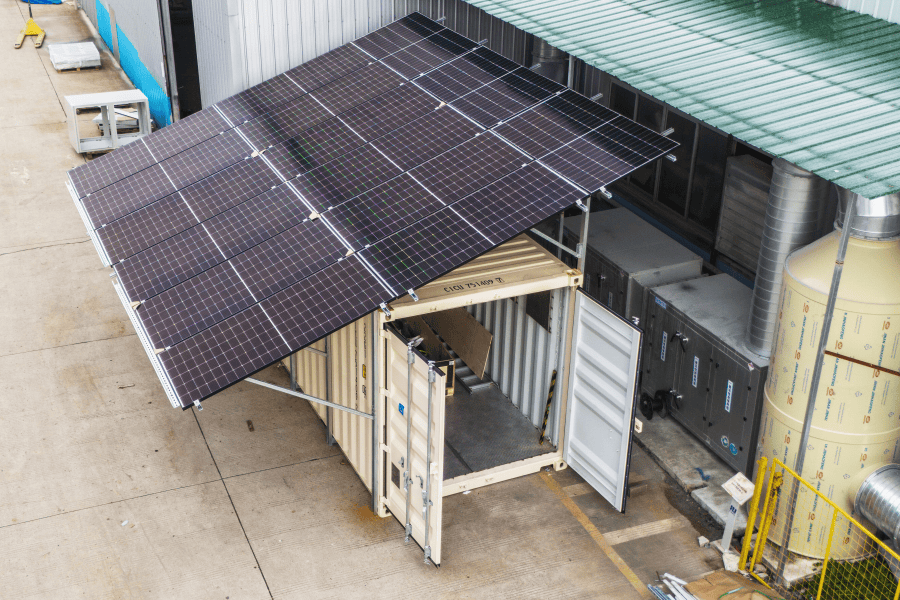
Beyond the Price Tag: The Real Cost of a Salt-Spray Ready BESS
Honestly, if you're looking at deploying a battery energy storage system (BESS) near the coast and you're just asking for a container price, you're asking the wrong question. I've been on-site from the North Sea to the Gulf Coast, and I've seen firsthand what salt spray does to equipment that wasn't built for it. The initial sticker shock of a "premium" system fades fast when you're facing corrosion failures, derated performance, and safety scares just a few years in. Let's talk real numbers and long-term value.
Quick Navigation
- The Hidden Cost of "Savings" in Coastal Air
- Why Liquid Cooling Isn't Just a Feature, It's a Necessity
- Breaking Down the "How Much"
- A Case in Point: The North Sea Microgrid
- Making the Smart Financial Decision
The Hidden Cost of "Savings" in Coastal Air
Here's the industry phenomenon: a lot of projects, especially first-time deployments, look at standard air-cooled containers as a way to keep CapEx low. On paper, it makes sense. But coastal salt-spray is a different beast. It's not just moisture; it's a highly conductive, corrosive aerosol that gets into everything. According to a NREL report on BESS durability, corrosion from environmental factors is a leading cause of premature performance degradation in non-hardened systems.
The agitation? It hits your bottom line in three ways:
- Accelerated Degradation: Salt corrosion on busbars, connectors, and even cell casings increases electrical resistance. This creates hotspots, reduces efficiency, and kills your cycle life. You might be buying 15% less energy throughput over the system's life.
- Sky-High Opex: Constant maintenance. I've seen sites where technicians are cleaning filter mats weekly instead of quarterly, and still fighting corrosion on cooling fans and internal components. The labor cost alone is staggering.
- Safety & Warranty Risks: Corrosion can lead to insulation failure and thermal runaway paths. Most standard warranties have clauses that void coverage for "harsh environment" damage. You're left holding the bag.
Why Liquid Cooling Isn't Just a Feature, It's a Necessity
This is where the solution comes into sharp focus. A purpose-built, liquid-cooled energy storage container for coastal environments isn't an upsell; it's the cost-effective choice over a 10-year horizon. Here's why:
First, the thermal management. Liquid cooling is far more efficient than air, maintaining a tight, uniform temperature across all cells. This is critical for high C-rate applications (like frequency regulation or peak shaving) where heat generation is intense. Stable temps mean better performance and longer life. But for coastal sites, the magic is in the sealed design. The battery rack is in a closed-loop, dry environment. The corrosive air never touches the critical components.
At Highjoule, our containers for these environments go further. We use marine-grade coatings (think ship hulls) on the exterior and all structural components. Our cooling units are specifically selected and treated for salt-mist resistance, tested beyond the standard UL and IEC salt-fog requirements. It's this holistic design that brings down the real cost - the Levelized Cost of Energy Storage (LCOE).

Breaking Down the "How Much"
Alright, let's get to it. How much does it cost? For a fully engineered, salt-spray hardened, liquid-cooled BESS container meeting UL 9540 and IEC 62933 standards, you're looking at a premium of 15-25% over a standard air-cooled unit for the same energy/power capacity.
But that's the container. The total installed cost picture includes:
| Cost Component | Standard Air-Cooled BESS | Hardened Liquid-Cooled BESS |
|---|---|---|
| Container & System (CapEx) | Base Price | +15-25% |
| Site Prep & Foundation | Standard | Similar |
| Annual Maintenance (Opex) | High (filter changes, corrosion cleaning) | Low (sealed system, minimal intrusion) |
| Performance Degradation | Higher (est. 1.8-2.2% per year in harsh env.) | Lower (est. 1.5-1.8% per year) |
| Warranty Coverage | Potential voids | Full, unambiguous coverage |
When you run the LCOE model - factoring in the higher energy throughput, lower opex, and guaranteed warranty over, say, 15 years - the hardened liquid-cooled system often has a lower total cost of ownership. You're paying more upfront to save massively down the line.
A Case in Point: The North Sea Microgrid
Let me give you a real example. We worked on an island microgrid project off the German coast. The challenge was brutal: constant high humidity, strong winds carrying salt, and a critical need for reliability. The initial bid from a competitor using adapted air-cooled containers was 18% lower than our liquid-cooled, hardened solution.
Two years in, the story changed. The air-cooled system on the island was already showing significant corrosion on its HVAC units. They had to install a custom wind baffle and start a rigorous quarterly cleaning regimen, adding tens of thousands in unplanned opex. Their available capacity had also dipped slightly more than projected due to temperature inconsistencies.
Our Highjoule system? It's just humming along. The sealed liquid cooling loop is isolated from the harsh air. The exterior looks like new. The project operator told me last quarter that the predictable performance and near-zero added maintenance have made their financial model far more stable. That initial "savings" evaporated in less than 24 months.

Making the Smart Financial Decision
So, when you evaluate "cost," shift your mindset from purchase price to lifetime value. Ask your vendor these specific questions:
- Can you provide the specific UL/IEC salt-mist certification reports for the container and the cooling subsystem?
- What is the warranty coverage for corrosion-related failures in a C5-M (Marine) environment per ISO 12944?
- Can you share an LCOE projection comparing a standard vs. hardened system for my specific duty cycle and location?
Our engineering team at Highjoule runs these analyses daily. We don't just sell a box; we model its financial and operational life in your exact environment. Because honestly, the cheapest container today could be the most expensive asset on your balance sheet in five years. What's the real risk of "saving" money now for your project?
Tags: UL Standard BESS LCOE Salt-Spray Environment Energy Storage Cost
Author
James Zhang
20+ years agricultural energy storage engineer / Highjoule CTO